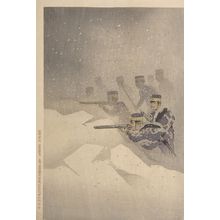
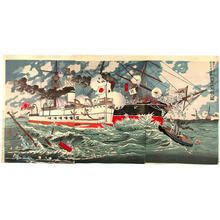
Despite the Snow the Japanese Army Perseveres to Hold Their Strong Position at Wei-hai-wei (Yuki o okashite waga gun Ikaiei no kenrui o nuku zu), Meiji period, dated 1895
- Medium:
- Woodblock print
- Source:
- Harvard Art Museum
- Image courtesy of
- Harvard Art Museum
Description
A sensō-e (war print) from the First Sino-Japanese War, this print depicts Japanese forces holding their position at Wei-hai-wei (Weihaiwei, in Shandong Province) during winter conditions. The Chinese naval base fell to Japanese forces in February 1895 after sustained fighting across snow-covered terrain. The composition likely presents infantry in formation against a pale expanse of snow, with rifle fire, artillery smoke, and fortifications rendered against the diffuse light of an overcast winter sky. Kiyochika's characteristic deployment of atmospheric contrast—developed across his Tokyo light-picture series—here serves a martial subject, using the white ground as a tonal field against which dark military figures and muzzle flash are organized. The print participates in the sensō-e genre that proliferated rapidly during 1894–95, with publishers issuing battle prints in quick succession to satisfy domestic audiences following each military engagement. This is one of multiple recorded impressions of the composition, suggesting strong commercial demand at the time of publication.
More Prints by Kobayashi Kiyochika
More Snow Scenes Prints
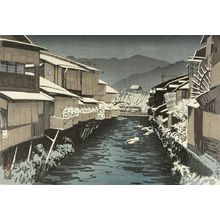
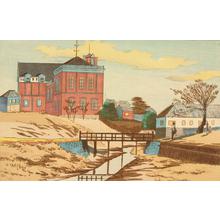
Fair Weather After Snow at Yamato Bridge, Kyoto (Yamato bashi no yukibare), Taishô period, dated 1924
Woodblock print

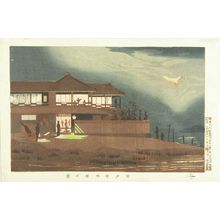
The Compound of the Tenman Shrine at Kameido in the Snow (Kameido Tenmangu keidai no yuki), from the series "Famous Places in the Eastern Capital (Toto meisho)"
c. 1832/38
Color woodblock print; oban

Miyajima in Snow (Yuki no Miyajima)
Yuki no Miyajima
1929
Color woodblock print; oban
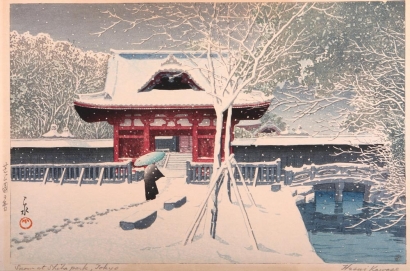
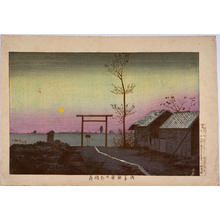
Evening Snow at Shiha Park, Tokyo
1932
Woodblock print
Frequently Asked Questions
Despite the Snow the Japanese Army Perseveres to Hold Their Strong Position at Wei-hai-wei (Yuki o okashite waga gun Ikaiei no kenrui o nuku zu), Meiji period, dated 1895 was created by Kobayashi Kiyochika (小林清親).
Despite the Snow the Japanese Army Perseveres to Hold Their Strong Position at Wei-hai-wei (Yuki o okashite waga gun Ikaiei no kenrui o nuku zu), Meiji period, dated 1895 depicts snow scenes.