
Senbongui and Ryōgoku Bridge
- Date:
- 1880
- Medium:
- Woodblock print (nishiki-e), ink and color on paper
- Format:
- Oban
- Dimensions:
- 23.8 × 35.6 cm
- Source:
- Minneapolis Institute of Art
Description
Senbongui — the "Thousand Piles," a landmark cluster of wooden pilings in the Sumida River used as a current-break near Ryōgoku — appears alongside the great Ryōgoku Bridge in this 1880 nishiki-e. The pilings, which caught river debris and created a distinctive mid-river feature visible from the bridge, provided Kiyochika with an unusual compositional element: geometric structures breaking the water surface in the manner of Monet's haystacks or bridge series. The print documents both a functional river management feature and a distinctively Edo urban landscape.
More Prints by Kobayashi Kiyochika
More Landscapes Prints

Lake Kugushi in Wakasa Province (Wakasa Kugushiko), from the series Souvenirs of Travel I (Tabi miyage dai isshu)"
Wakasa Kugushiko
1920
Color woodblock print; oban
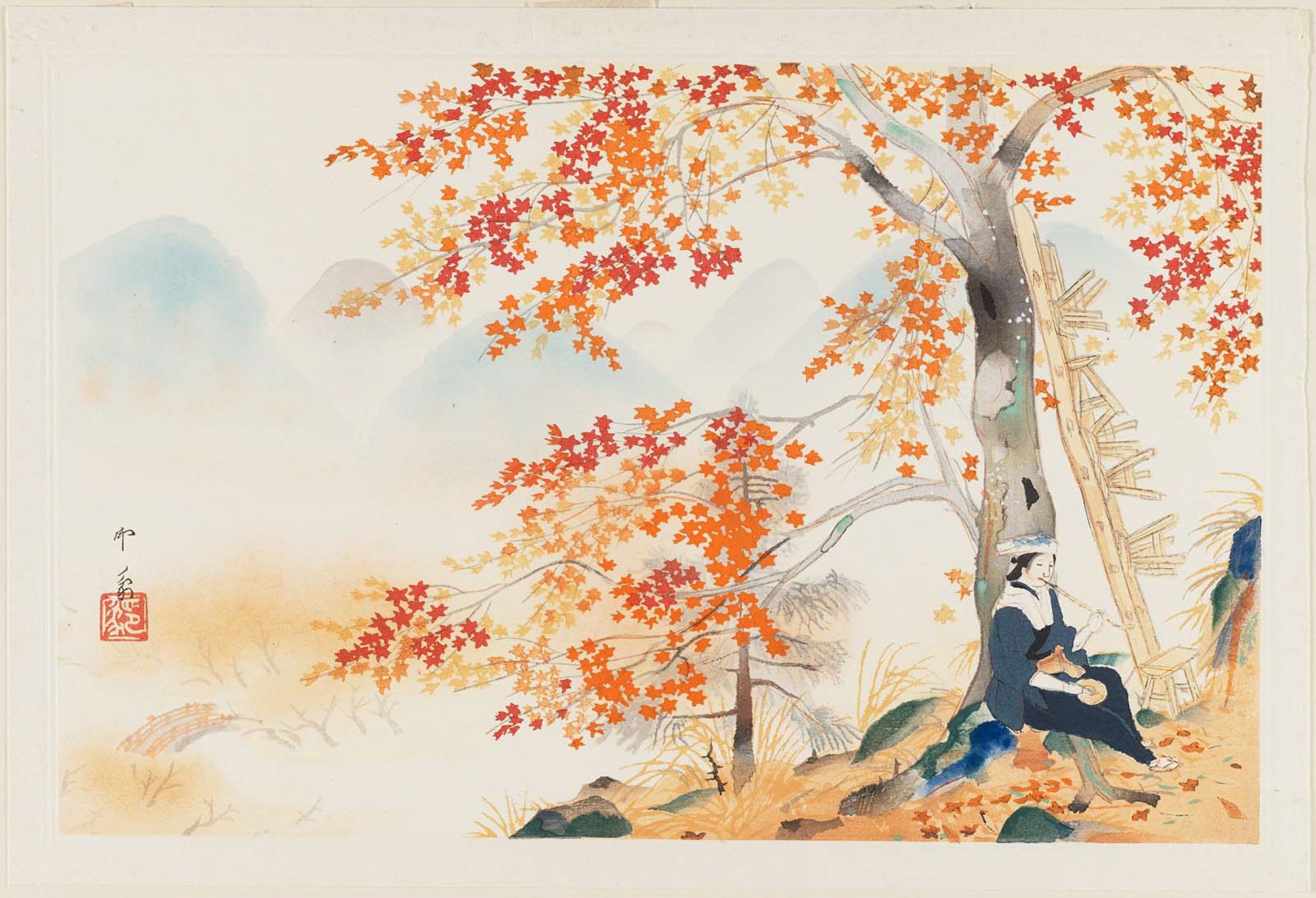
Autumn Maple Leaves at Takao, from the album Eight Views of Kyoto (Kyôto hakkei)
Woodblock print

The Beach at Kaiganji in Sanuki Province (Sanuki Kaiganji no hama), from the series "Collection of Views of Japan II, Kansai Edition (Nihon fukei shu II Kansai hen)"
1934
Color woodblock print; oban

Tea Kettle, section of a sheet from the series "Mirror of Stone Rubbings of Views of the Provinces" (Kohon meihitsu ishizuri kagami)
n.d.
Woodblock print; ishizuri-e, section of harimaze sheet
Featured in Collections
Curated cross-cuts that include this print.
Frequently Asked Questions
Senbongui and Ryōgoku Bridge was created by Kobayashi Kiyochika (小林清親) in 1880.
Senbongui and Ryōgoku Bridge depicts landscapes and bridges.
Senbongui and Ryōgoku Bridge measures 23.8 × 35.6 cm (Oban format).