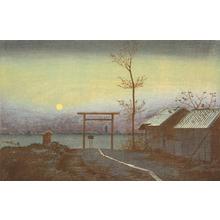
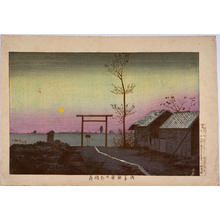
The Taro Inari Shrine in the Rice Fields at Asakusa
- Medium:
- Woodblock print
- Source:
- Chazen Museum of Art
- Image courtesy of
- Chazen Museum of Art
Description
This print depicts the Taro Inari Shrine set within the agricultural landscape of Asakusa, the district in northeastern Tokyo long associated with the great Senso-ji temple complex. In the Meiji period, Asakusa retained pockets of the rice fields and market gardens that had characterized Edo's outer districts, and the juxtaposition of small Inari shrines — dedicated to the fox deity associated with agriculture and commerce — against this rural setting offered Kiyochika a subject combining landscape, religious architecture, and the older face of the city before industrialization reshaped it. Inari shrines of this type typically feature one or more torii gates in orange-red lacquer, stone or bronze fox guardian figures, and a modest hokora (small shrine enclosure). Kiyochika's treatment would balance the geometric formality of the shrine architecture against the softer textures of paddy or field, likely using seasonal light or weather — perhaps a low winter sun or misty afternoon — to create the atmospheric depth characteristic of his best meisho-e work.
More Prints by Kobayashi Kiyochika
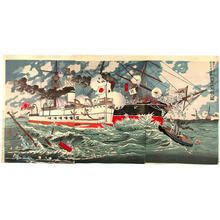
More Snow Scenes Prints
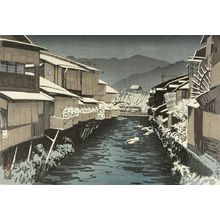
Fair Weather After Snow at Yamato Bridge, Kyoto (Yamato bashi no yukibare), Taishô period, dated 1924
Woodblock print

The Compound of the Tenman Shrine at Kameido in the Snow (Kameido Tenmangu keidai no yuki), from the series "Famous Places in the Eastern Capital (Toto meisho)"
c. 1832/38
Color woodblock print; oban

Miyajima in Snow (Yuki no Miyajima)
Yuki no Miyajima
1929
Color woodblock print; oban
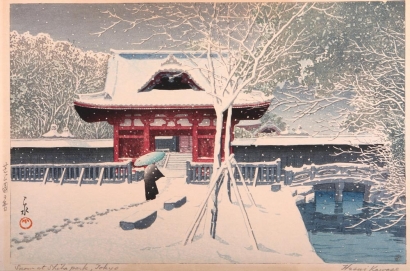
Evening Snow at Shiha Park, Tokyo
1932
Woodblock print
Frequently Asked Questions
The Taro Inari Shrine in the Rice Fields at Asakusa was created by Kobayashi Kiyochika (小林清親).
The Taro Inari Shrine in the Rice Fields at Asakusa depicts snow scenes.