Bando Tamasaburo V as Ama Matsukaze
- Medium:
- Woodblock print on ganpi paper with mica
- Dimensions:
- 24.8 × 38.7 cm
- Image courtesy of
- Ronin Gallery
Description
Matsukaze is among the most celebrated figures in classical Japanese theater, originally the subject of a noh play by Zeami and later adapted for kabuki. The role centers on an ama (fisherwomen-diver) who pines for a noble courtier long departed. Bando Tamasaburo V (born 1950) is the most recognized onnagata of the late twentieth and early twenty-first centuries, and his interpretations of classical female roles have defined the form for a generation. Kokei prints Tamasaburo on ganpi paper with mica ground, a combination that allows the delicate fiber texture of the support to show through pale ink layers while mica applied to the background imparts a faintly luminous quality appropriate to the romantic melancholy of the Matsukaze narrative. The ama costume — simple working garments contrasting with the psychological complexity of the role — would be rendered through restrained color blocking against the metallic ground.
More Prints by Tsuruya Kokei

Kataoka Nizaemon XIII as Ishikawa Goemon in the play Sanmon Gosan no Kiri
Mokuhanga (Japanese woodblock)
The Tayu (High-ranking Courtesan)
Woodblock print on ganpi paper with mica
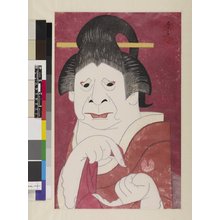
Onoe Baiko VII as Masaoka 七世尾上梅幸の乳人政岡 / Bust portraits VIII (Design 4) 第八期大首絵シリーズの4
Woodblock print
Ichikawa Danshiro IV as Akushichibyoe Kagekiyo
Woodblock print on ganpi paper with mica
More Kabuki Prints
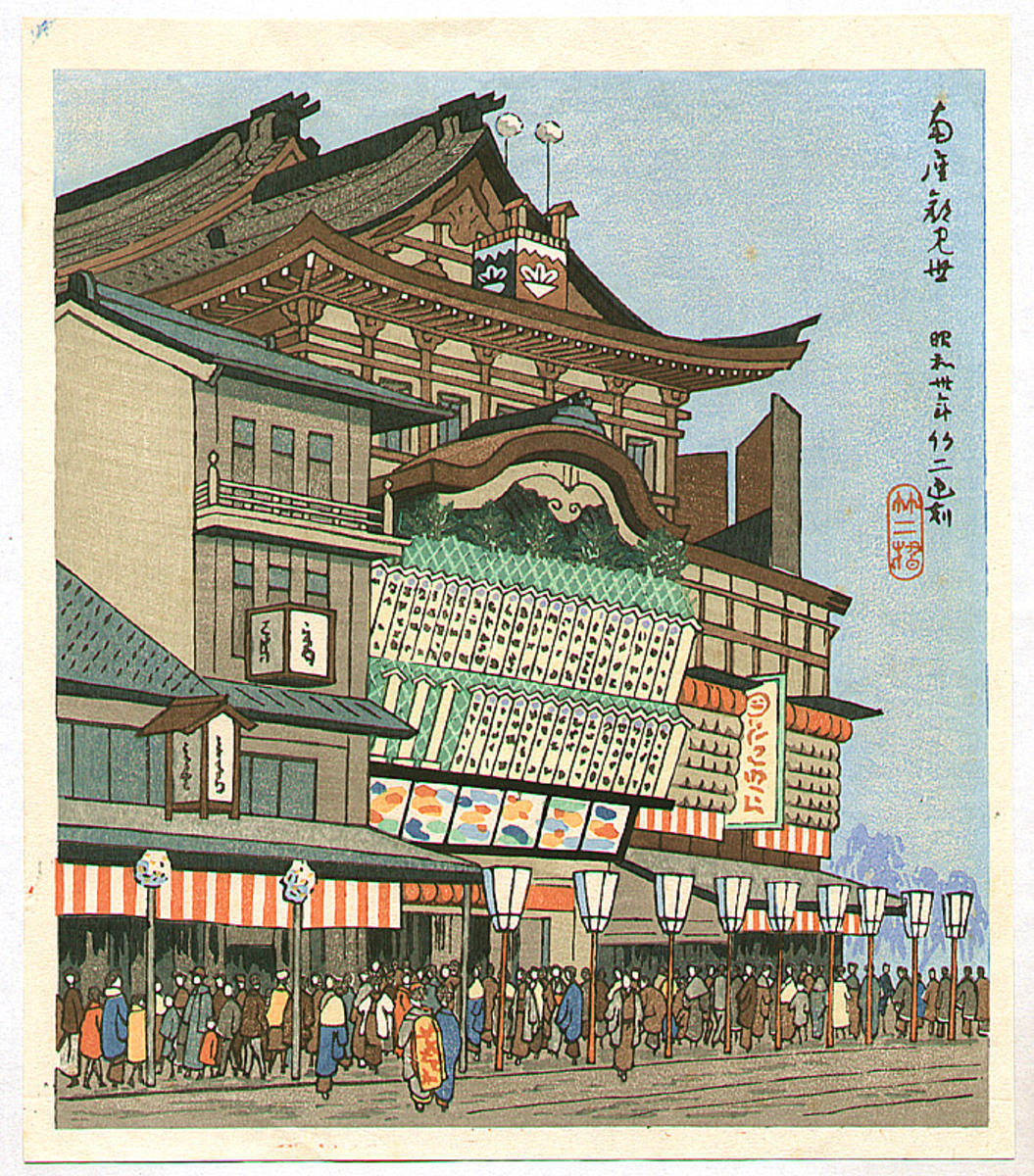
Kabuki Theater
歌舞伎
Woodblock print
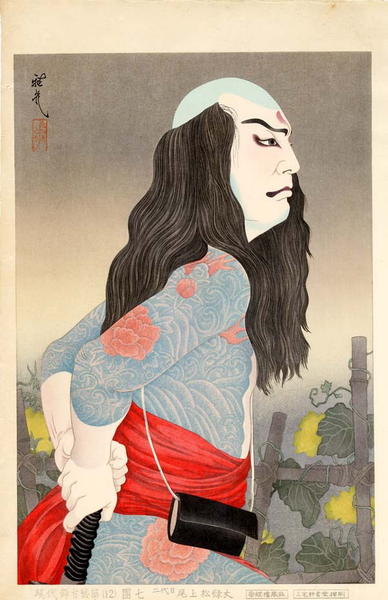
Onoe Shoroku II as the tattooed villain Danshichi
1955
Woodblock print

View of Kabuki Theater from Matsuya (Ginza Matsuya yori Kabukiza), no. 3 from the series "Pictures of Ginza, First Series (Gashu Ginza dai isshu)"
1928
Color lithograph

Distant View of Mitsukoshi Movie Theater in Shinjuku from the Sixth Floor of Hoteiya (Hoteiya rokkai kara Shinjuku Mitsukoshi Musashi no kan enbo zu), no. 1 from the series "Scenery of Shinjuku (Gashu Shinjuku fukei)"
1930
Color lithograph
Featured in Collections
Curated cross-cuts that include this print.
Frequently Asked Questions
Bando Tamasaburo V as Ama Matsukaze was created by Tsuruya Kokei (弦屋光溪).
Bando Tamasaburo V as Ama Matsukaze depicts kabuki and portraits.
Bando Tamasaburo V as Ama Matsukaze measures 24.8 × 38.7 cm.