
Cherry Blossoms and Seal-box with Ink and Ruler
by Kubo Shunman
- Date:
- 19th century
- Medium:
- Part of an album of woodblock prints (surimono); ink and color on paper
- Source:
- Metropolitan Museum of Art
Description
Cherry Blossoms and Seal-box with Ink and Ruler combines a poignant seasonal motif with a set of practical writing implements, and the juxtaposition is itself a small essay in the kind of layered allusiveness Kubo Shunman favored. Dated to around 1800 and held by the Metropolitan Museum of Art, the print pairs cherry blossoms, the canonical emblem of spring and impermanence in Japanese poetry, with the equipment a calligrapher or seal-maker might use to inscribe a verse, formal letter, or impression. The implicit narrative ties together the visual world of nature and the literary world of poetry, suggesting that the same hand that admires the blossoms also wields the brush. For a kyoka poet receiving this surimono, the message would have read clearly: spring inspires verses, and verses depend on the everyday instruments of writing. Shunman's drawing is precise and quiet, his palette restrained, and the composition arranged so that blossoms and tools occupy the sheet without competition. The printing typical of refined Edo ukiyo-e surimono, with careful registration and likely embossed or metallic passages, would have rewarded close inspection. As a kyoka-e, the picture exemplifies Kubo Shunman's ability to align natural beauty with cultural practice in a single, tightly framed image, and to do so in ways that gave the kyoka circle's poets ample material to work with in the printed verses that completed the design.
More Prints by Kubo Shunman

Righteousness (Gi), from the series "Five Designs for the Katsushika Poetry Circle (Katsushika goban)"
early 1810s
Color woodblock print; shikishiban, surimono

Soga no Goro, Oiso no Tora, and Kewaizaka no Shosho
1809
Color woodblock print; surimono
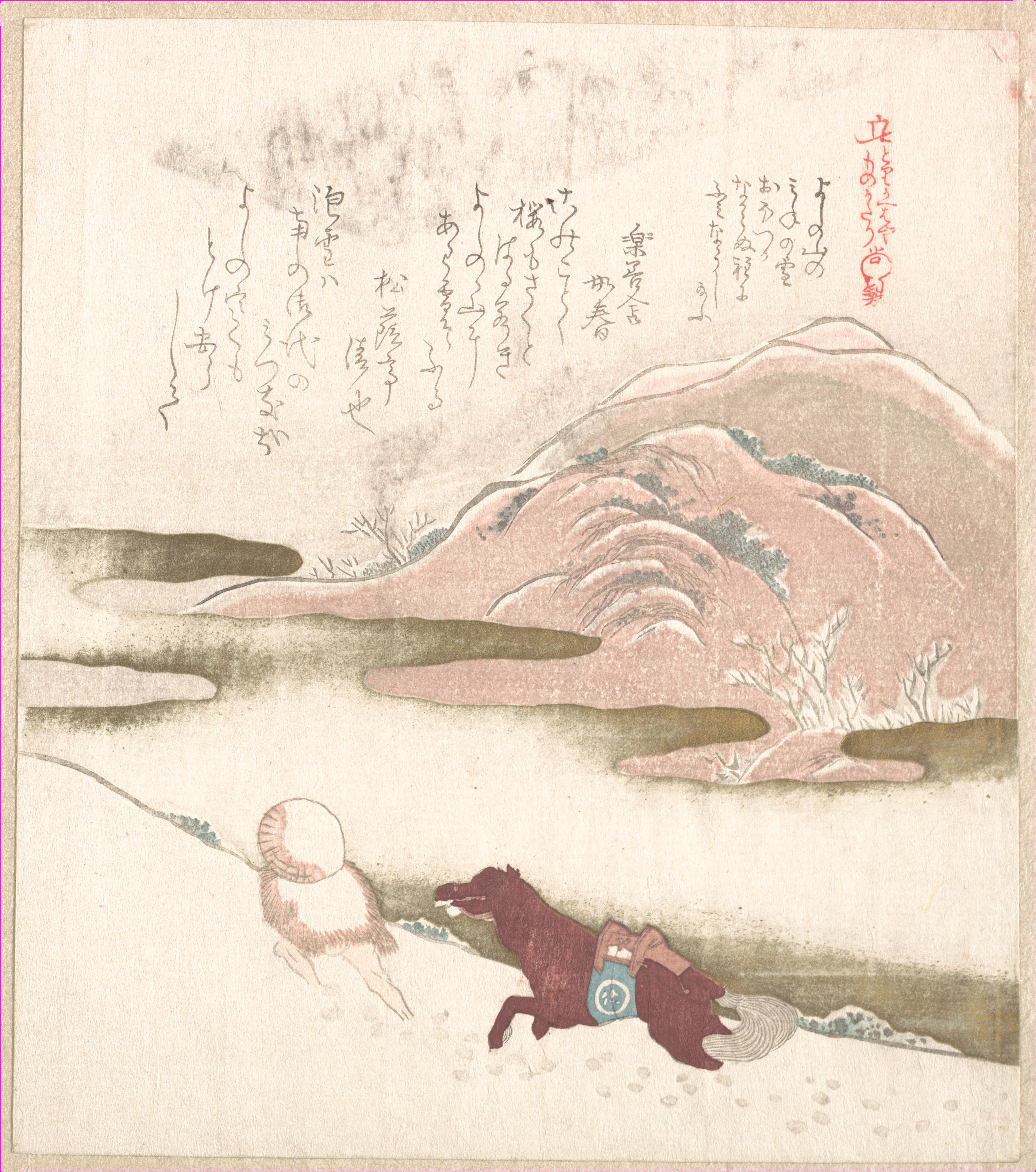
Snowy Landscape
19th century
Woodblock print (surimono); ink and color on paper
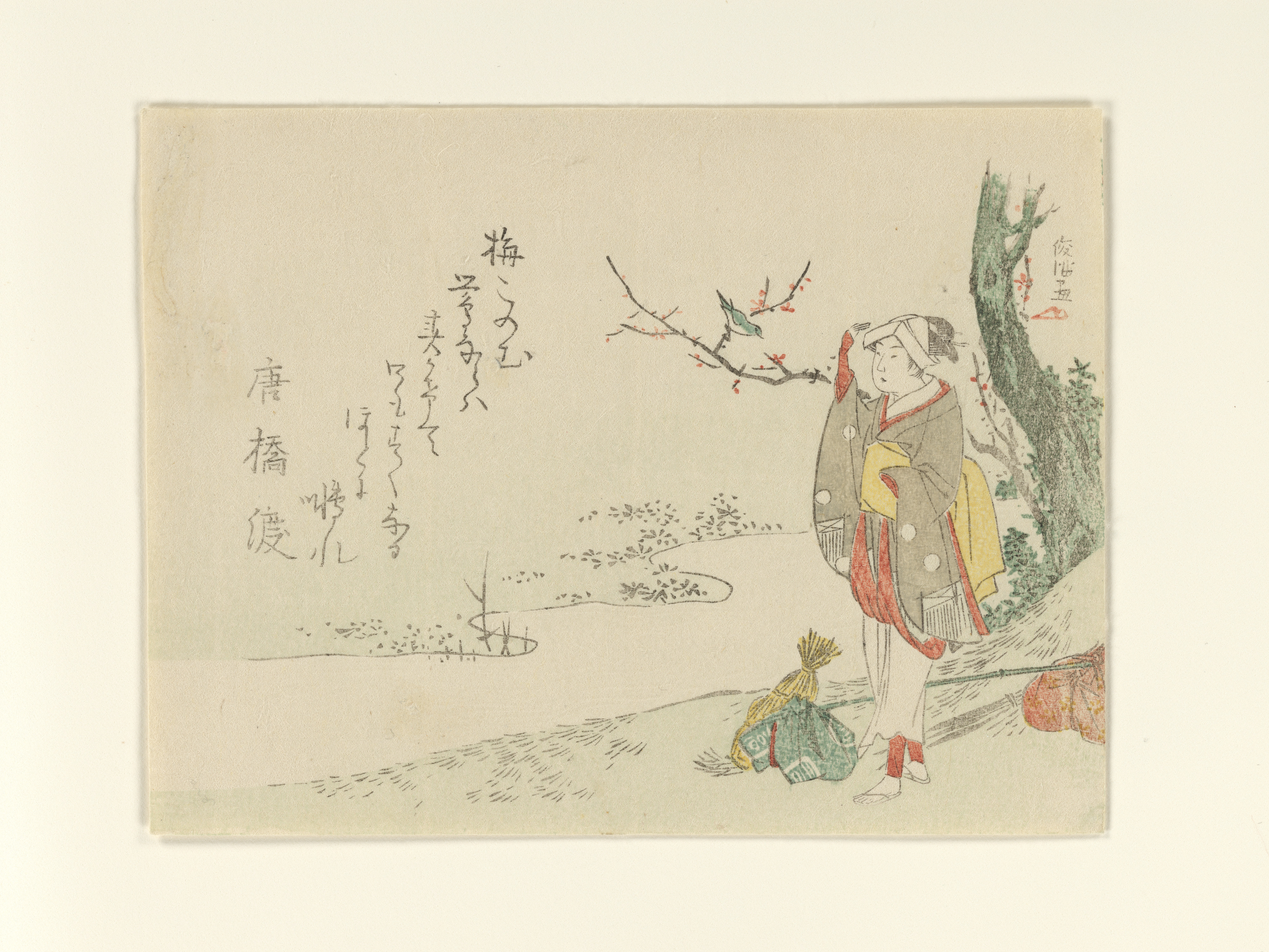
Traveling Woman Pauses to Listen to a Warbler
1797
Woodblock print (surimono); ink and color on paper
More Spring Prints

Frequently Asked Questions
Cherry Blossoms and Seal-box with Ink and Ruler was created by Kubo Shunman (窪俊満) in 19th century.
Cherry Blossoms and Seal-box with Ink and Ruler depicts spring.