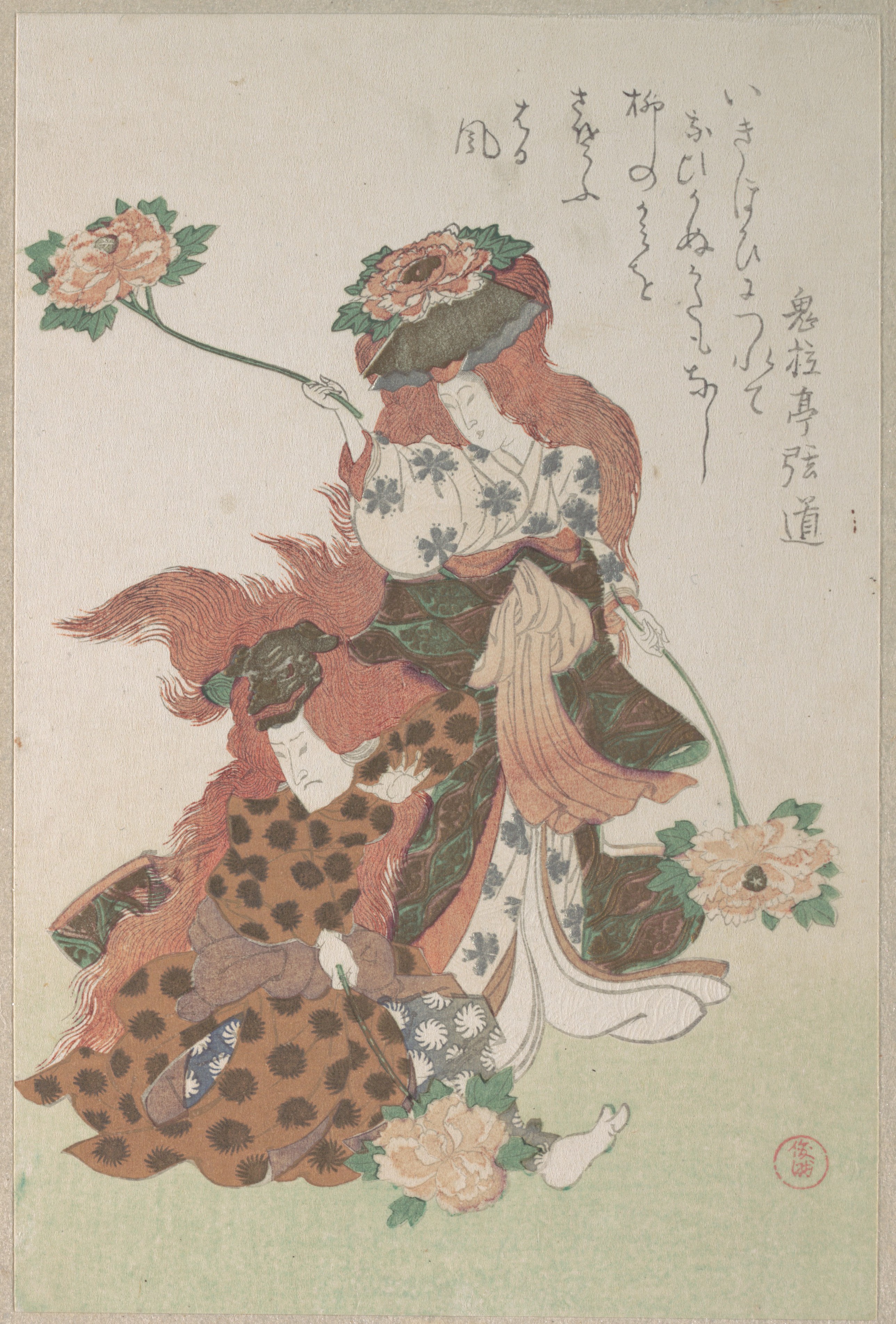
Two Dancers Performing a “Shakkyōmono” Kabuki Dance, from Spring Rain Surimono Album (Harusame surimono-jō), vol. 3
by Kubo Shunman
- Date:
- ca. 1805–10
- Medium:
- Privately published woodblock prints (surimono) mounted in an album; ink and color on paper
- Source:
- Metropolitan Museum of Art
Description
Two Dancers Performing a Shakkyomono Kabuki Dance comes from Kubo Shunman's Spring Rain Surimono Album (Harusame surimono-jo), volume 3, and pictures one of the dramatic dance set pieces in which an actor, costumed as a mythic lion, moved through highly choreographed sequences associated with the Noh-derived Shakkyo, or Stone Bridge, tradition. By the mid-1790s, when the print is dated, the surimono format had matured into a luxury private vehicle for kyoka-e, and Shunman had become one of its most accomplished designers. He approaches the subject not with the theatrical bravura that some Kabuki print designers favored but with the restrained line and balanced composition he made his own. The two dancers are arranged so that their movement reads clearly even at small scale, their costumes detailed enough to satisfy connoisseurs of the dance without overwhelming the empty space the surimono format prized. The Metropolitan Museum of Art's impression preserves the kind of refined printing characteristic of the genre, with subtle gradations and likely embossed or metallic effects. The album context matters as well, since the Harusame surimono-jo gathered prints by Shunman and his peers for kyoka patrons who valued the sequence as both literary anthology and collector's object. For modern viewers, the sheet illustrates how Kubo Shunman could engage with a quintessentially Edo ukiyo-e theatrical subject while keeping the picture squarely within the contemplative idiom of the kyoka world.
More Prints by Kubo Shunman

Righteousness (Gi), from the series "Five Designs for the Katsushika Poetry Circle (Katsushika goban)"
early 1810s
Color woodblock print; shikishiban, surimono

Soga no Goro, Oiso no Tora, and Kewaizaka no Shosho
1809
Color woodblock print; surimono
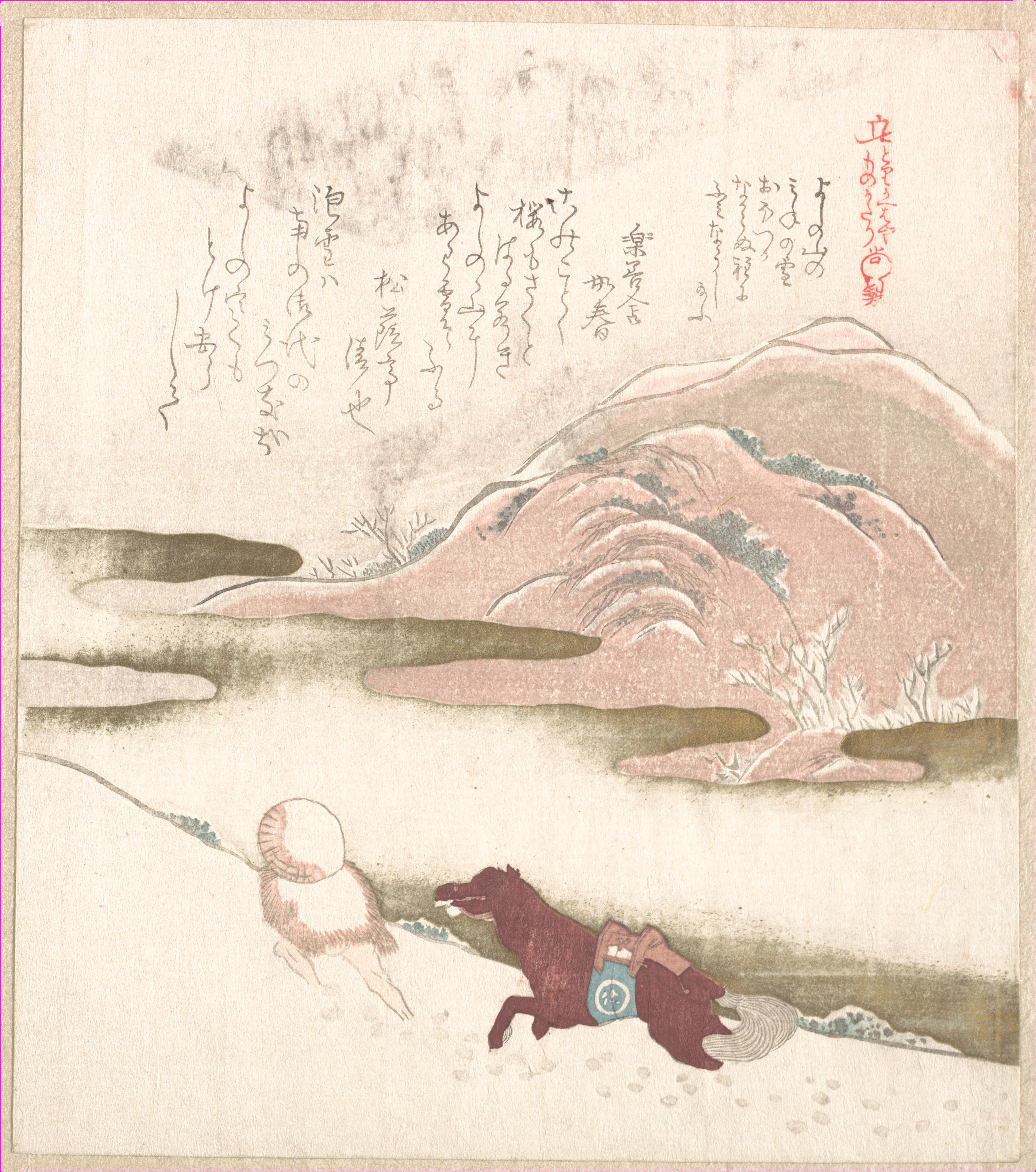
Snowy Landscape
19th century
Woodblock print (surimono); ink and color on paper
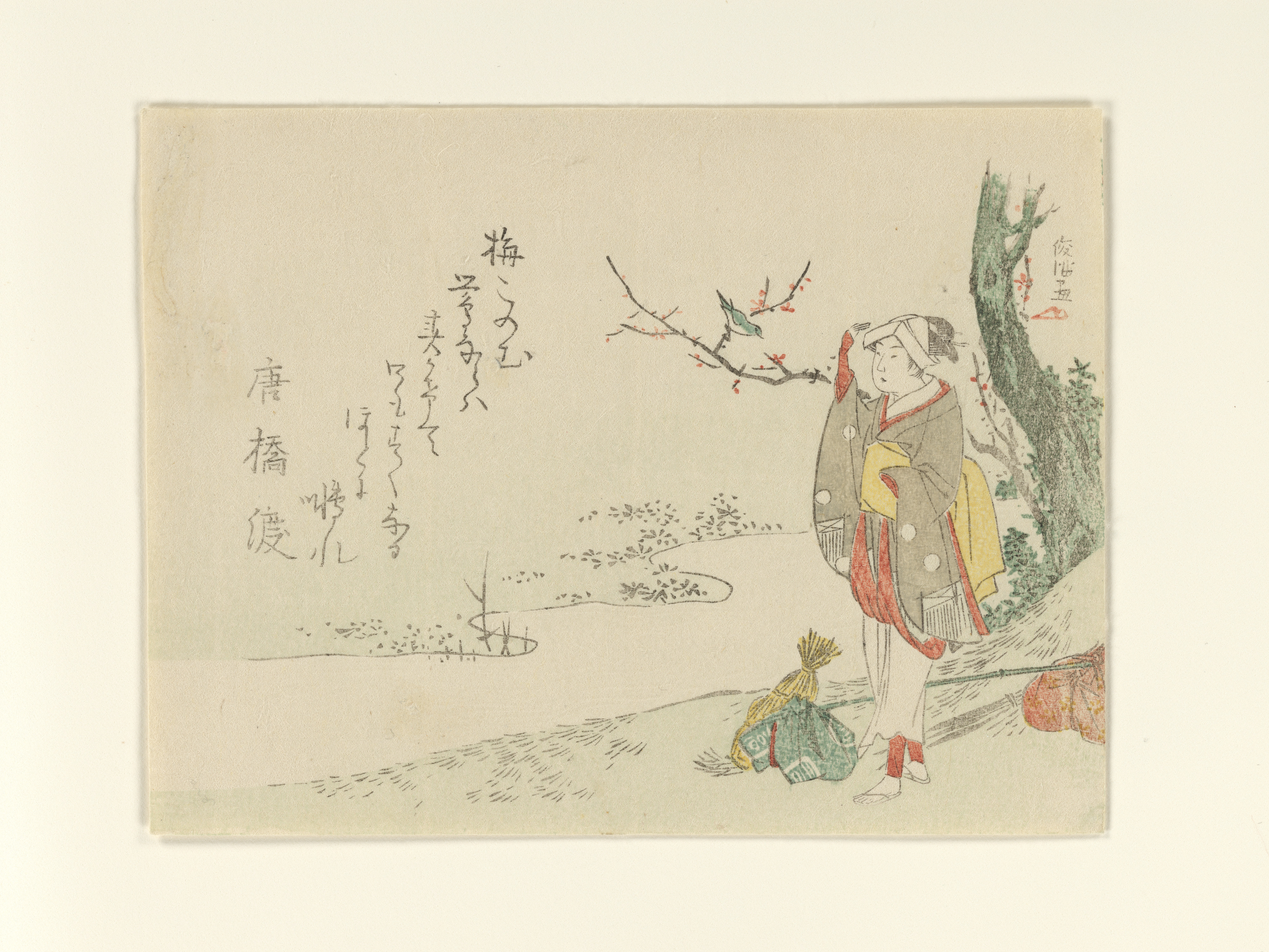
Traveling Woman Pauses to Listen to a Warbler
1797
Woodblock print (surimono); ink and color on paper
More Spring Prints

Frequently Asked Questions
Two Dancers Performing a “Shakkyōmono” Kabuki Dance, from Spring Rain Surimono Album (Harusame surimono-jō), vol. 3 was created by Kubo Shunman (窪俊満) in ca. 1805–10.
Two Dancers Performing a “Shakkyōmono” Kabuki Dance, from Spring Rain Surimono Album (Harusame surimono-jō), vol. 3 depicts spring and rain.