
Young Woman Walking on a River Bank in Rain
by Kubo Shunman
- Date:
- late 18th/early 19th century
- Medium:
- Color woodblock print; hashira-e
- Source:
- Art Institute of Chicago
Description
Young Woman Walking on a River Bank in Rain, in the Art Institute of Chicago, is a hashira-e or pillar print, the tall narrow format - roughly seventy by twelve centimeters - originally intended to be pasted on the wooden pillars (hashira) of Edo townhouses. The vertical proportions force the designer to compress the figure into a long ribbon, and Shunman responds with one of his most graceful inventions: a slender young woman moving along a riverbank under driving rain, her umbrella tilted against the weather and her sash trailing behind her. The composition descends from the Torii Kiyonaga and Suzuki Harunobu traditions of pillar-print bijin-ga that Shunman absorbed under his teacher Kitao Shigemasa, but Shunman handles the format with a colder, more atmospheric sensibility than his contemporaries: the palette is restrained, the rain rendered with linear restraint rather than dramatic flourish, and the figure subordinated to the implied weather of the scene. Hashira-e were popular for domestic display because they fit the architectural module of the pillar, and their long, awkward proportions became a kind of test for ukiyo-e designers - those who could compose successfully in this format were considered serious draftsmen. Shunman's exercise here, executed in the late eighteenth or very early nineteenth century, comes from the period when he was still working in the commercial bijin-ga marketplace, before his pivot to private surimono commissions. It is preserved in the Art Institute of Chicago's collection of late-Edo single-sheet prints.
More Prints by Kubo Shunman

Righteousness (Gi), from the series "Five Designs for the Katsushika Poetry Circle (Katsushika goban)"
early 1810s
Color woodblock print; shikishiban, surimono

Soga no Goro, Oiso no Tora, and Kewaizaka no Shosho
1809
Color woodblock print; surimono
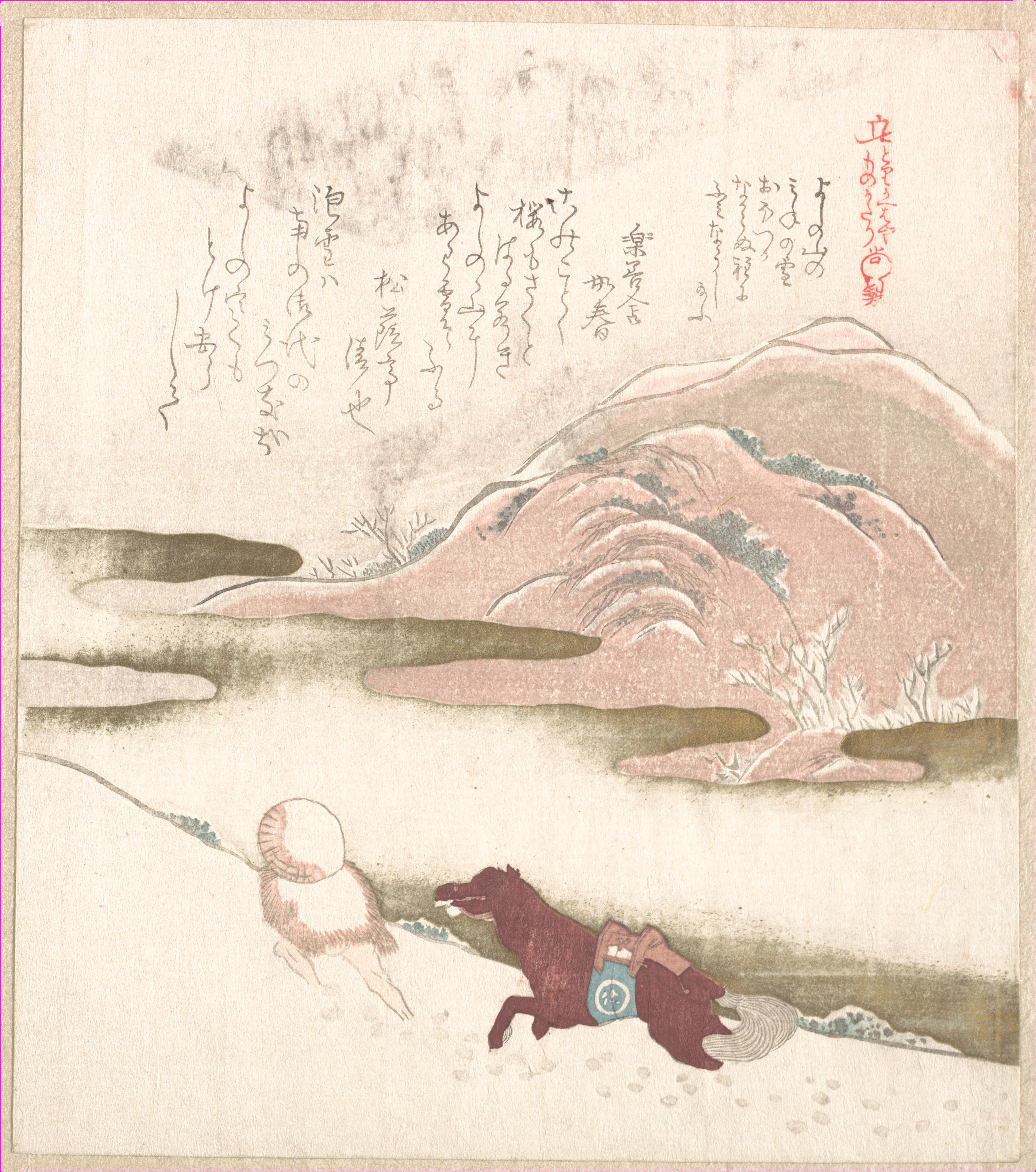
Snowy Landscape
19th century
Woodblock print (surimono); ink and color on paper
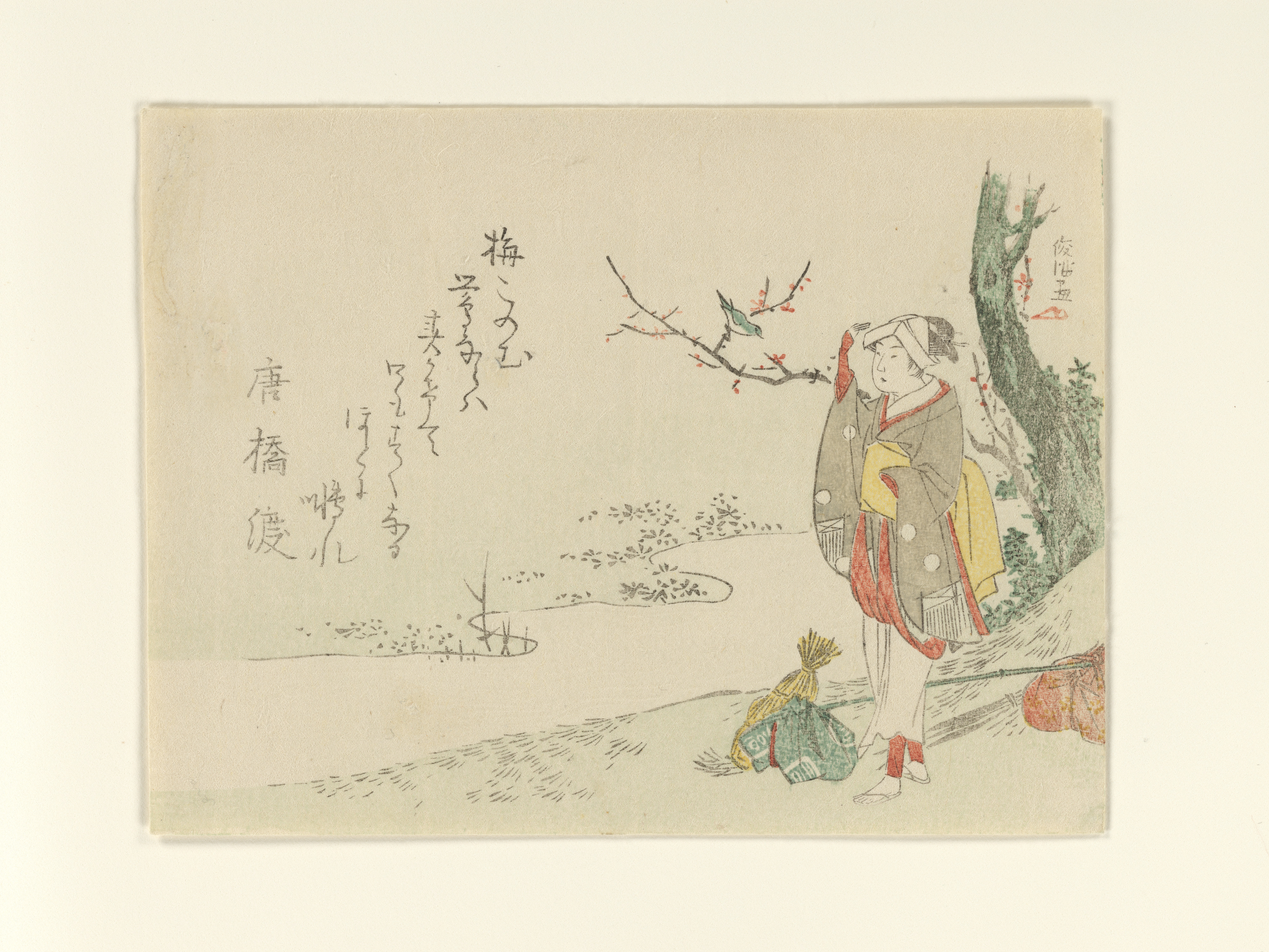
Traveling Woman Pauses to Listen to a Warbler
1797
Woodblock print (surimono); ink and color on paper
More Rain Prints

Rain Shower at Shо̄no, from the series Fifty-three Stations of the Tо̄kaidо̄ (Tо̄kaidо̄ gojusan tsugi)
1962
Woodblock print, ink and color on paper

Shōno: Driving Rain (Shōno hakuu), from the series Fifty-three Stations of the Tōkaidō (Tōkaidō gojūsan tsugi no uchi), also known as the First Tōkaidō or Great Tōkaidō
c. 1833-36
Woodblock print (nishiki-e); ink and color on paper

Omiya in Rain (Ame no Omiya)
Ame no Omiya
1930
Color woodblock print; oban

Evening Shower at Teradomari (Teradomari no yau), from the series "Souvenirs of Travel, Second Series (Tabi miyage dai nishu)"
Teradomari no yau
1921
Color woodblock print; oban
Frequently Asked Questions
Young Woman Walking on a River Bank in Rain was created by Kubo Shunman (窪俊満) in late 18th/early 19th century.
Young Woman Walking on a River Bank in Rain depicts rain.