
Narazaki Eisho (Narazaki Eishô)
- Date:
- Shôwa period, 1926-1989
- Medium:
- Woodblock print
- Source:
- Harvard Art Museums
Description
Cataloged under a variation of the artist's name, this woodblock print from the Showa period represents one of Narazaki Eisho's works whose specific subject has not been recorded with a descriptive title. The macron in "Eisho" indicates the long vowel in the Japanese pronunciation, and the dual listing of the name reflects the inconsistent romanization that affects many Japanese artists in Western databases. Given Narazaki's known output of landscapes, temple views, and kacho-e subjects, this print would depict one of these themes in the shin-hanga style that characterized his work. Active from the Taisho era through the Showa period, Narazaki produced prints that balanced topographical accuracy with the mood and atmospheric effects that distinguish shin-hanga from purely documentary imagery. The Showa dating covers a broad span from 1926 to 1989, leaving the specific creation date uncertain.
More Prints by Narazaki Eisho
More Urban Scenes Prints
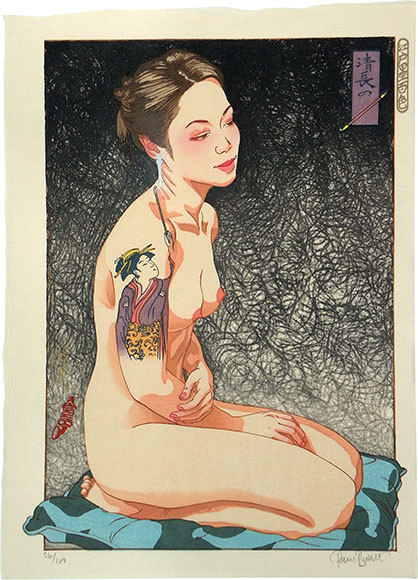
A Hundred Shades of Ink of Edo: Kiyonaga's Pipe (Edo zumi hyaku shoku: Kiyonaga no kiseru)
Woodblock print

View of Kabuki Theater from Matsuya (Ginza Matsuya yori Kabukiza), no. 3 from the series "Pictures of Ginza, First Series (Gashu Ginza dai isshu)"
1928
Color lithograph

Distant View of Mitsukoshi Movie Theater in Shinjuku from the Sixth Floor of Hoteiya (Hoteiya rokkai kara Shinjuku Mitsukoshi Musashi no kan enbo zu), no. 1 from the series "Scenery of Shinjuku (Gashu Shinjuku fukei)"
1930
Color lithograph
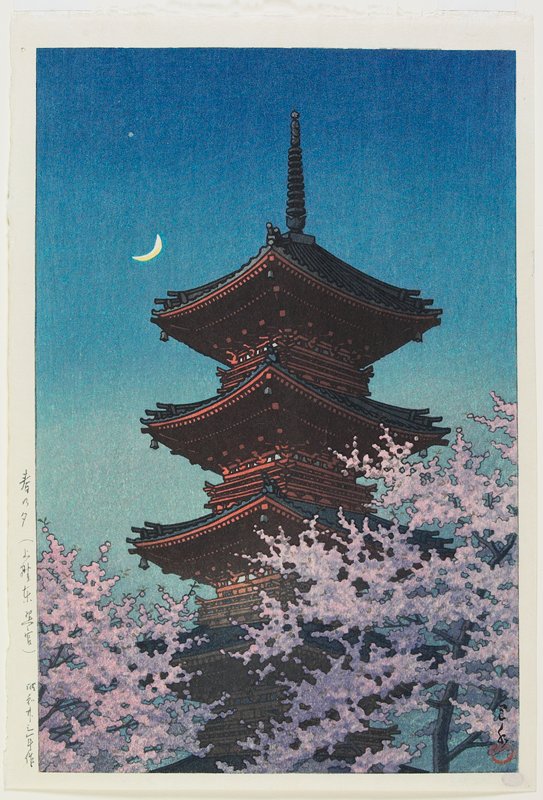
Spring Dusk at the Tōshō Shrine in Ueno
1948
Woodblock print, ink and color on paper
Featured in Collections
Curated cross-cuts that include this print.
Frequently Asked Questions
Narazaki Eisho (Narazaki Eishô) was created by Narazaki Eisho (楢崎栄昌) in Shôwa period, 1926-1989.
Narazaki Eisho (Narazaki Eishô) depicts urban scenes and landscapes.