
The Naval Battle and Capture of Haiyang Island (Kaiyoto senryo kaisen no zu)
by Ogata Gekko
- Date:
- 1894
- Medium:
- Color woodblock print; three sheets of oban tetraptych
- Format:
- Oban
- Source:
- Art Institute of Chicago
Description
The Naval Battle and Capture of Haiyang Island tetrastych—four sheets joined to create an unusually wide panoramic format—depicts one of the war's most significant naval engagements. The four-sheet format accommodated the full sweep of a major sea battle: multiple vessels of both navies, the exchange of artillery fire, the smoke and chaos of combat on open water, and the eventual outcome where Japanese forces captured the strategically positioned island. The extended format was rare in Meiji war prints.
More Prints by Ogata Gekko
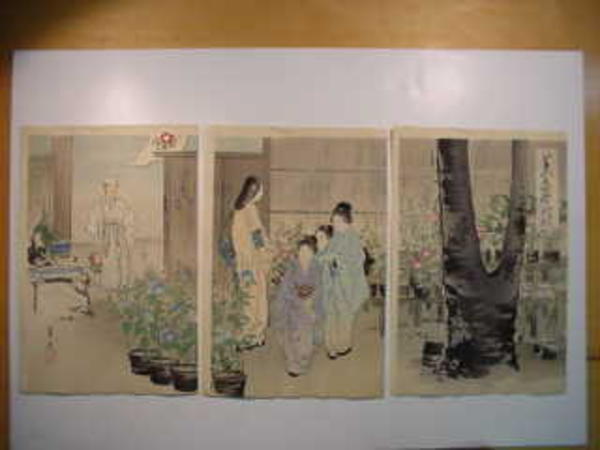
MORNING GLORIES AT IRIYA, TOKYO
Woodblock print

Nippon-damashii, Kyokaku 日本魂 侠客 / Gekko zuihitsu 月耕随筆
Woodblock print
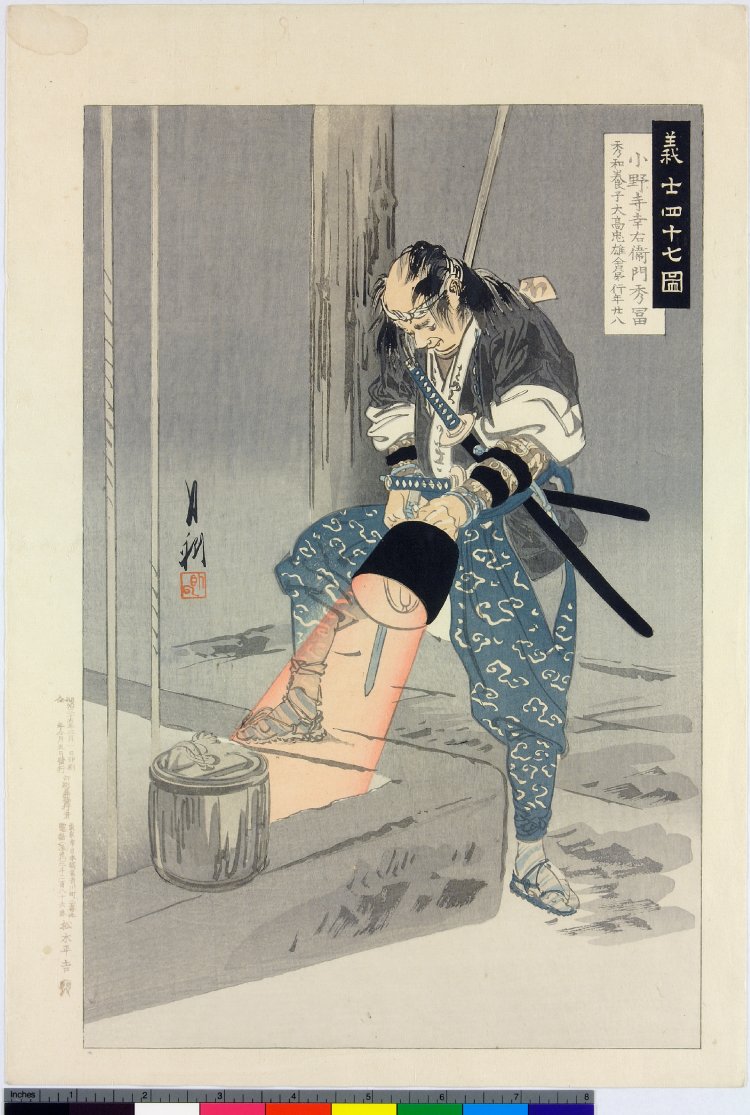
Onodera Koemon Hidetomi 小野寺幸右衛門秀富 / Gishi shijushichi zu 義士四十七図
Woodblock print
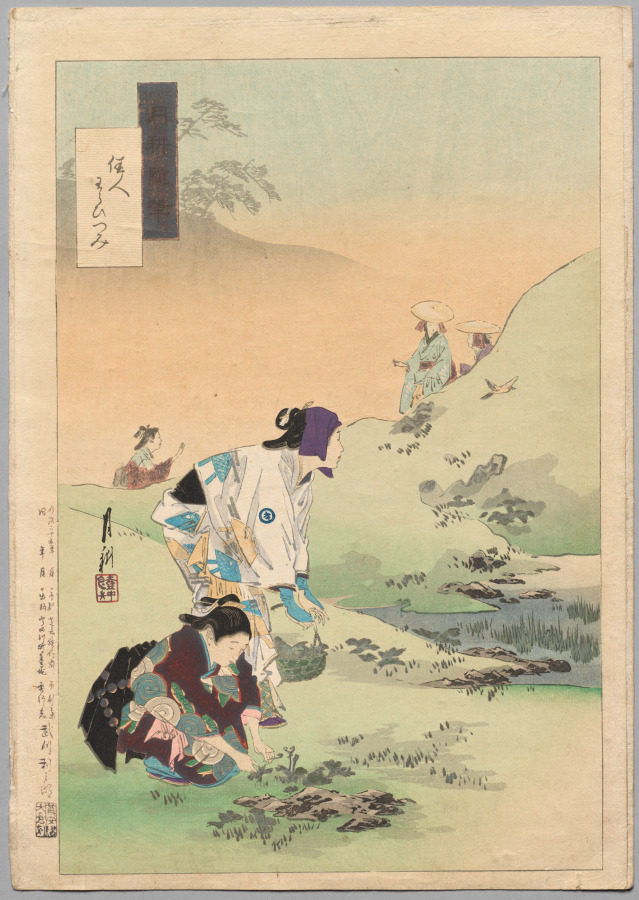
Beauties Harvesting Bracken, from the series Gekkō’s Miscellaney
c. 1886–1899
Woodblock print, ink and color on paper
More Landscapes Prints

Lake Kugushi in Wakasa Province (Wakasa Kugushiko), from the series Souvenirs of Travel I (Tabi miyage dai isshu)"
Wakasa Kugushiko
1920
Color woodblock print; oban
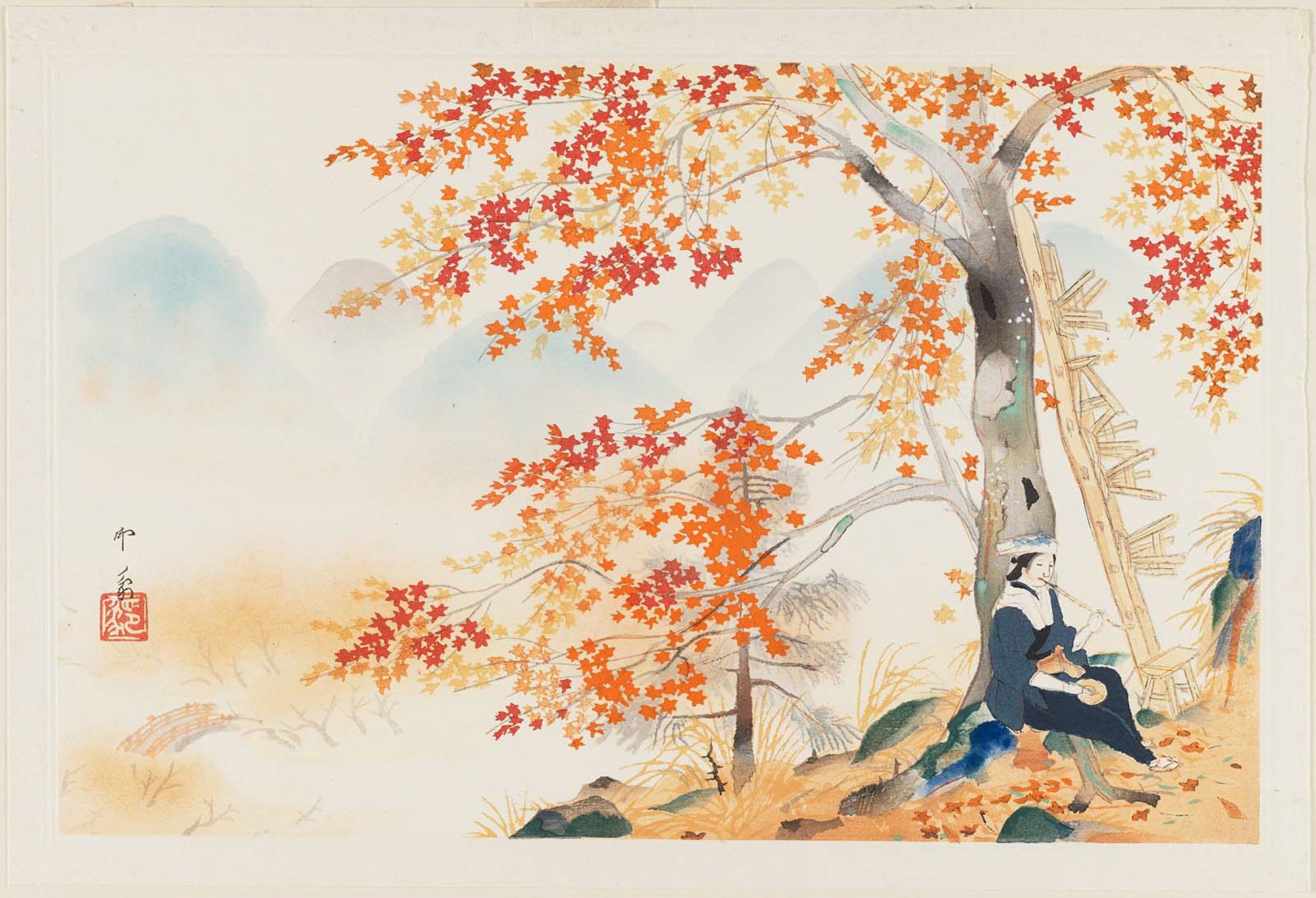
Autumn Maple Leaves at Takao, from the album Eight Views of Kyoto (Kyôto hakkei)
Woodblock print

The Beach at Kaiganji in Sanuki Province (Sanuki Kaiganji no hama), from the series "Collection of Views of Japan II, Kansai Edition (Nihon fukei shu II Kansai hen)"
1934
Color woodblock print; oban

Tea Kettle, section of a sheet from the series "Mirror of Stone Rubbings of Views of the Provinces" (Kohon meihitsu ishizuri kagami)
n.d.
Woodblock print; ishizuri-e, section of harimaze sheet
Featured in Collections
Curated cross-cuts that include this print.
Frequently Asked Questions
The Naval Battle and Capture of Haiyang Island (Kaiyoto senryo kaisen no zu) was created by Ogata Gekko (尾形月耕) in 1894.
The Naval Battle and Capture of Haiyang Island (Kaiyoto senryo kaisen no zu) depicts landscapes and warriors.