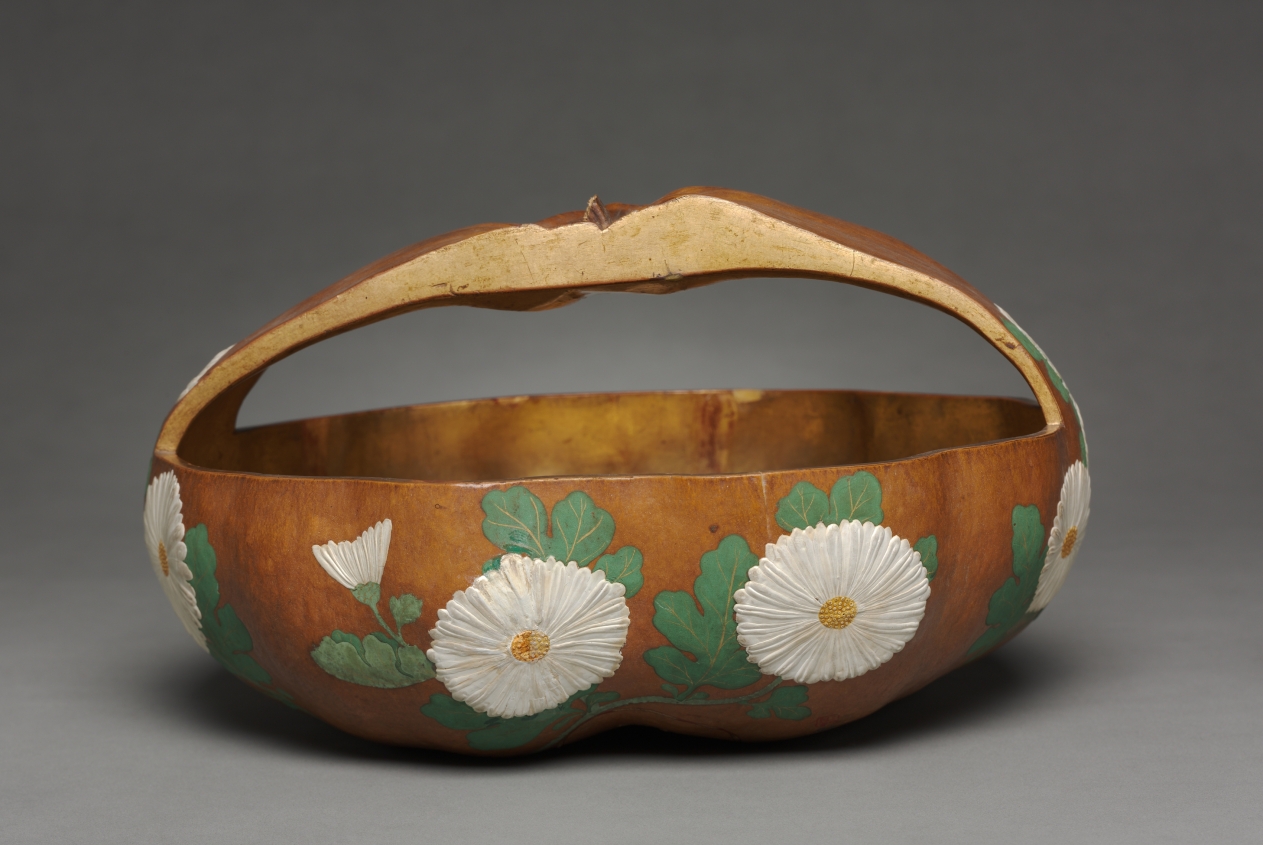
Gourd Basket with Chrysanthemum Design
菊文瓢形籠
by Ogata Kōrin
- Date:
- 1700s
- Medium:
- Decorated basket-form vessel
- Source:
- The Cleveland Museum of Art
Description
Gourd Basket with Chrysanthemum Design is a decorative object in the collection of the Cleveland Museum of Art (acc. 1963.101), dated by the museum to the eighteenth century and associated with the Ogata Kōrin and Ogata Kenzan workshop collaboration. The form takes the shape of a basket woven in the manner of the gourd-shaped flower vessels (hyōtan kago) that became fashionable in the late seventeenth and early eighteenth centuries for ikebana flower arrangement in the tea-ceremony interior, and the surface is decorated with chrysanthemum heads, leaves, and stems painted in the Rinpa idiom of bold curving silhouettes and flattened color masses against the basketwork ground. The chrysanthemum is the autumn flower par excellence in the East Asian decorative-arts vocabulary and carries the same set of associations — longevity, scholarly retreat, the Tao Yuanming poetry tradition, the Chōyō festival on the ninth day of the ninth lunar month — that it carries in the painted Rinpa compositions on which it appears. The object exemplifies the way the same decorative vocabulary that Kōrin deployed on his folding screens and hanging scrolls moved freely into the smaller-scale decorative objects of the Ogata workshop and into the wider Kyoto luxury-arts trade of the eighteenth century; it entered the Cleveland collection in 1963 as part of the museum's substantial holdings of Rinpa-period decorative arts.
More Prints by Ogata Kōrin

Rough Waves
波図屏風
ca. 1704–9
Two-panel folding screen; ink, color, and gold leaf on paper
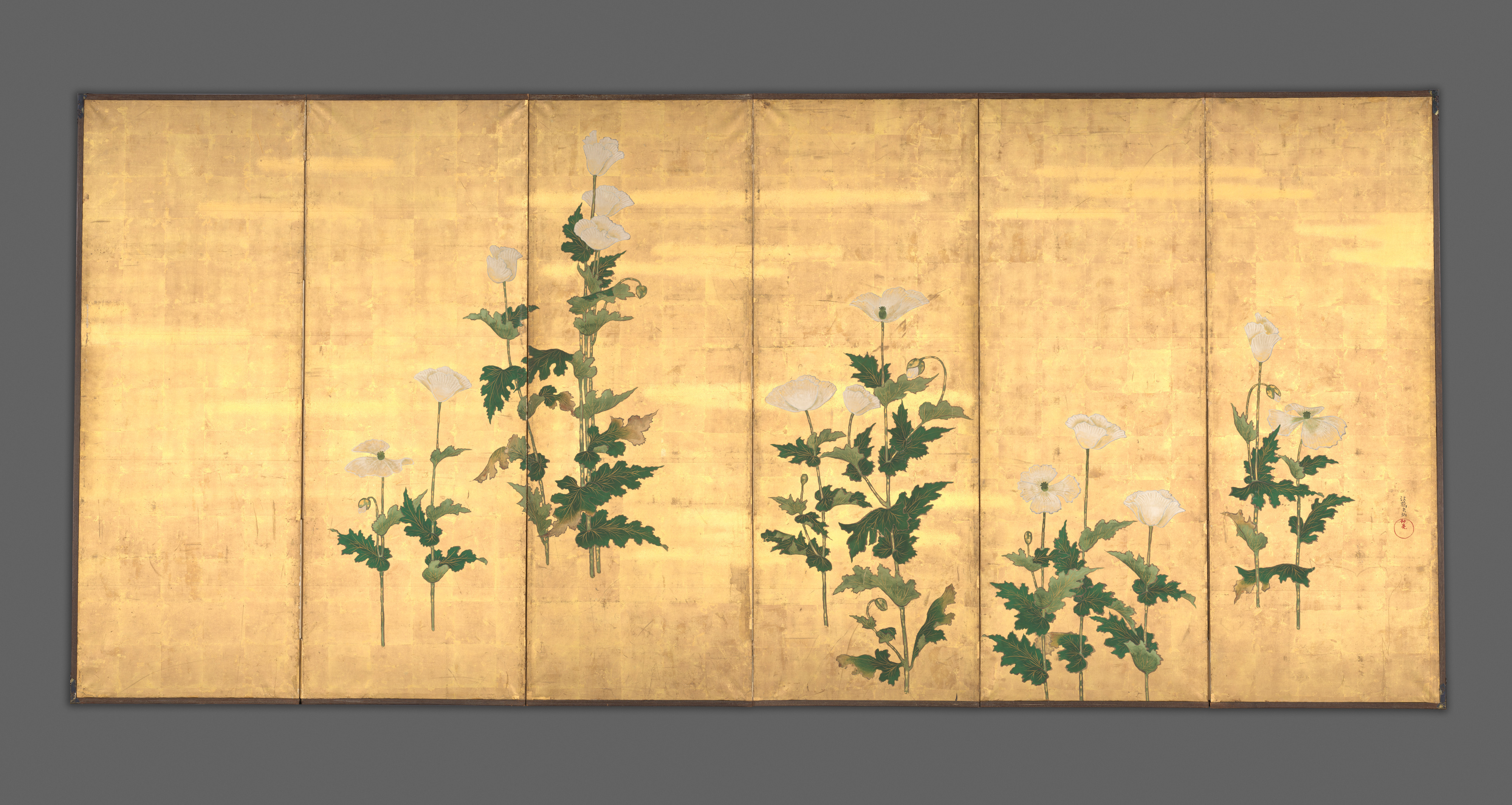
White Poppies on Gold Ground
白芥子図屏風
Edo period (1615–1868)
Six-panel folding screen; color on paper
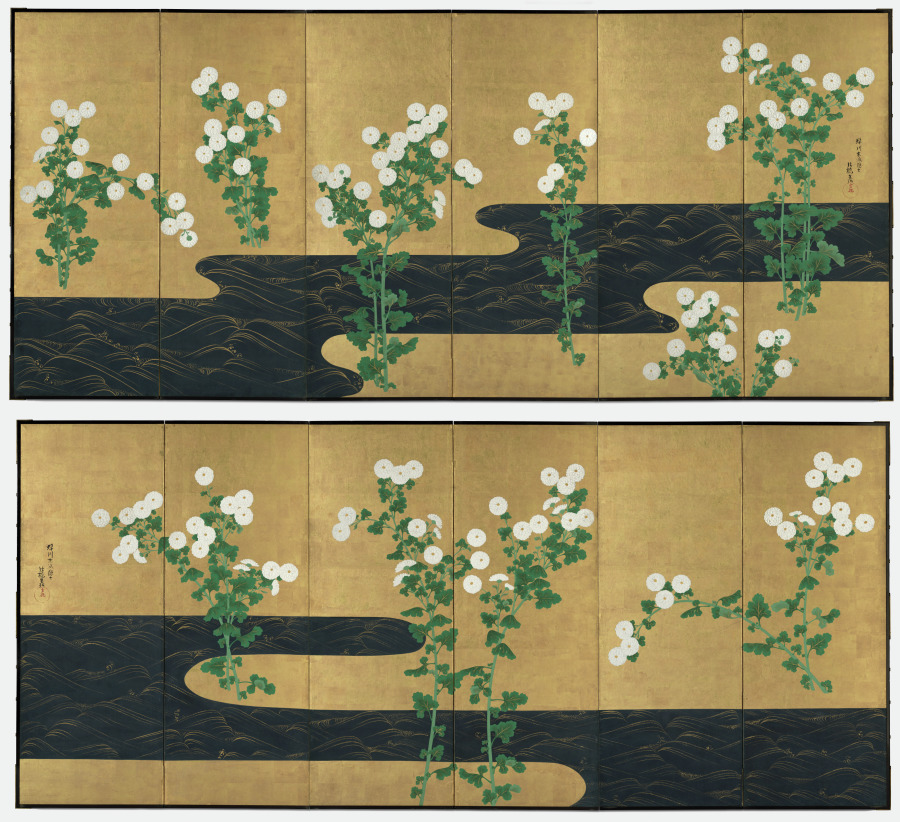
Chrysanthemums by a Stream
菊水図
c. 1715–30
Hanging scroll; ink, color, and gold on silk
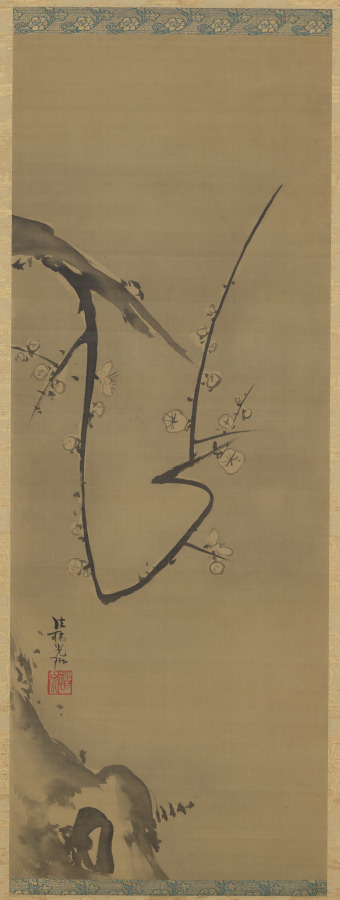
Plum Tree
梅図
c. 1700
Hanging scroll; ink on silk
Frequently Asked Questions
Gourd Basket with Chrysanthemum Design (菊文瓢形籠) was created by Ogata Kōrin (尾形光琳) in 1700s.