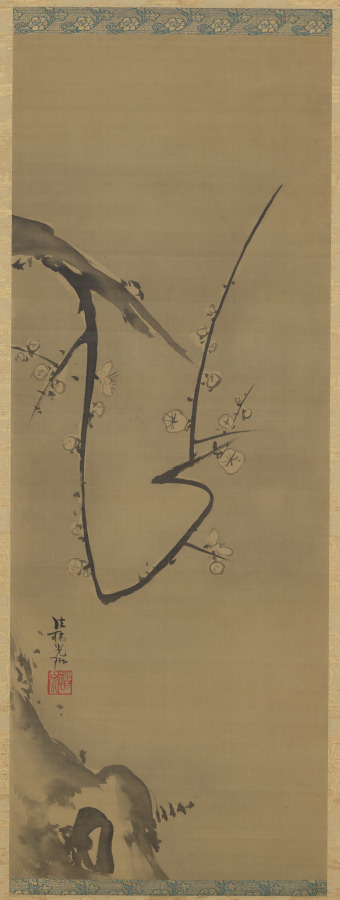
Plum Tree
梅図
by Ogata Kōrin
- Date:
- c. 1700
- Medium:
- Hanging scroll; ink on silk
Description
Plum Tree (Bai-zu) is a hanging scroll by Ogata Kōrin in ink on silk in the collection of the Cleveland Museum of Art (acc. 1983.10), dated by the museum to circa 1700 and executed in the monochrome ink-painting mode that runs alongside the more famous decorative gold-ground works of his mature career. The composition shows a single old plum tree in the moment of early-spring blossom, its weathered trunk and angled branches rising from the lower-right corner of the scroll across the surface in the sharp diagonal that Kōrin and his Rinpa successors would deploy repeatedly in their plum compositions, culminating in the great Red and White Plum Trees (Kōhakubai-zu byōbu) screens at the MOA Museum of Art, Atami. The plum (ume), traditionally the first flowering tree of the year and the harbinger of spring, is the most heavily symbolized subject in East Asian painting, associated through Chinese literati culture with resilience, scholarly virtue, and the recovery of life after winter; in Japanese painting and poetry it carries further associations through the New Year and through the famous Heian-period associations of the imperial residence at Kitano Tenjin and the cult of Sugawara no Michizane. Kōrin's monochrome handling places him within the broader tradition of ink-painting plum imagery that runs from Song-dynasty Chinese academy painting through the Muromachi Zen masters and the Kanō school, but his asymmetric placement of the trunk and the staccato rhythm of the blossom clusters anticipate the more famous gold-ground treatment in the MOA screens and demonstrate the continuity between his ink-painting practice and his decorative compositions. The scroll entered the Cleveland collection in 1983 through the John L. Severance Fund.
More Prints by Ogata Kōrin

Rough Waves
波図屏風
ca. 1704–9
Two-panel folding screen; ink, color, and gold leaf on paper
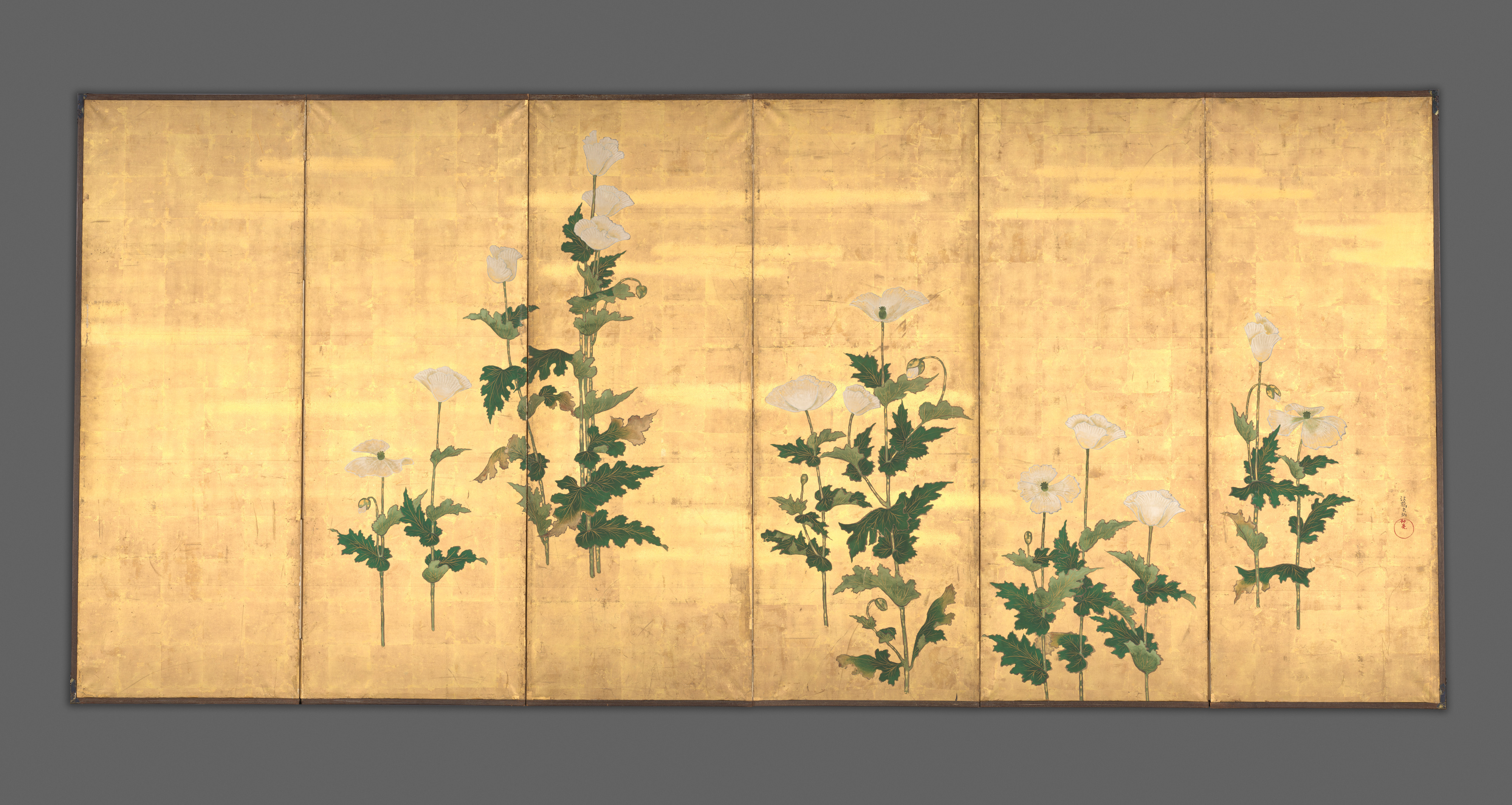
White Poppies on Gold Ground
白芥子図屏風
Edo period (1615–1868)
Six-panel folding screen; color on paper
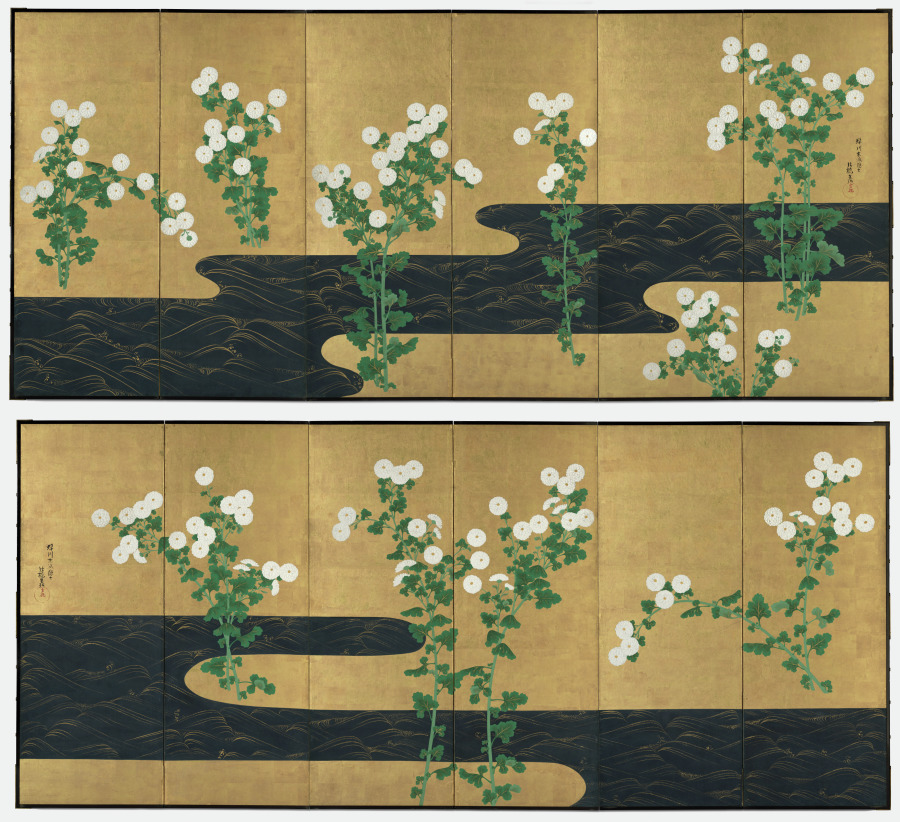
Chrysanthemums by a Stream
菊水図
c. 1715–30
Hanging scroll; ink, color, and gold on silk
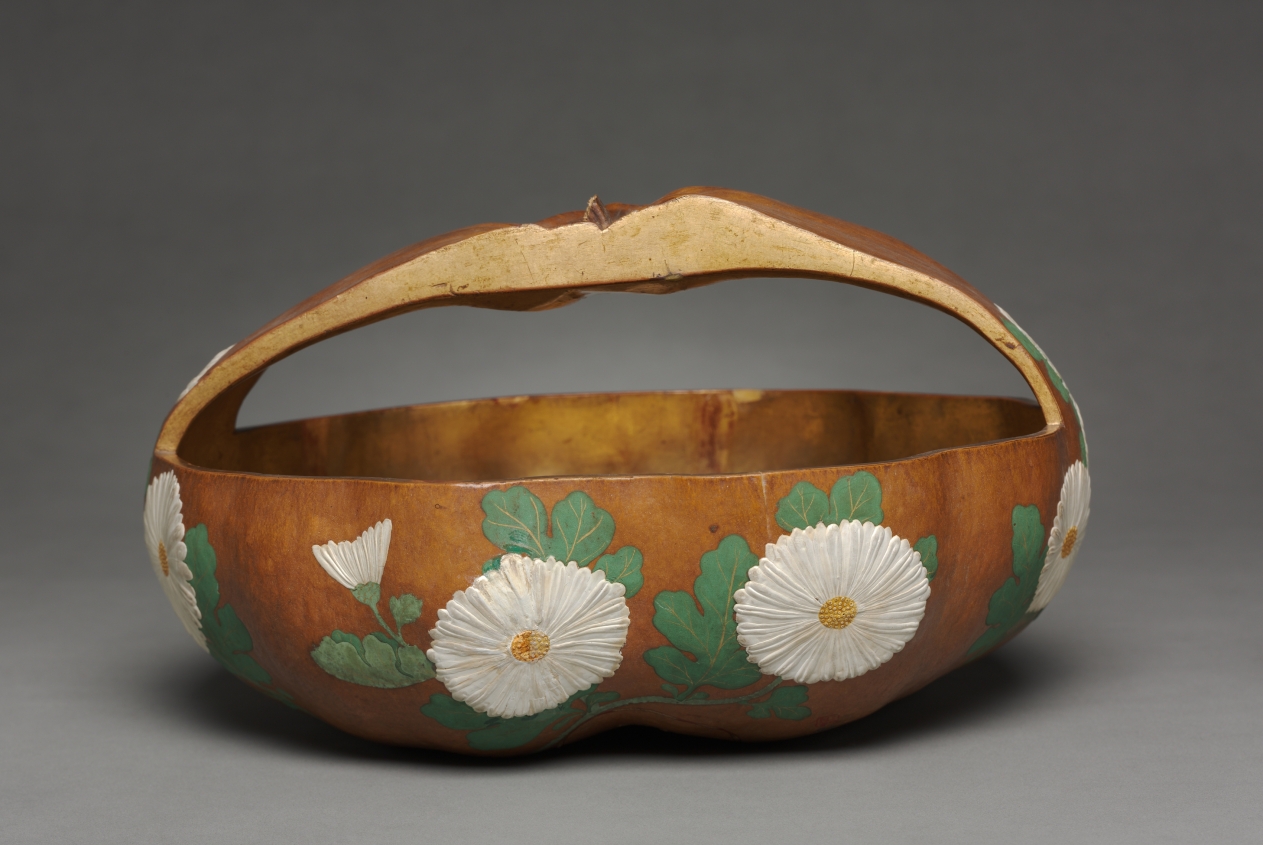
Gourd Basket with Chrysanthemum Design
菊文瓢形籠
1700s
Decorated basket-form vessel
Frequently Asked Questions
Plum Tree (梅図) was created by Ogata Kōrin (尾形光琳) in c. 1700.