Ogata Kōrin
尾形光琳
1658–1716
Japan
Biography
Ogata Kōrin (尾形光琳, 1658-1716) was a Japanese painter, lacquer designer, and decorative artist of the early Edo period, and the central figure of the Rinpa (Rimpa) school whose name effectively defines the second great wave of that tradition. With his younger brother, the potter and painter Ogata Kenzan (1663-1743), Kōrin transformed the visual idiom established two generations earlier by Tawaraya Sōtatsu and Hon'ami Kōetsu into a coherent decorative style of bold abstraction, flattened color masses, gold and silver leaf grounds, and tightly disciplined plant-and-animal motifs that became one of the most influential pictorial languages in Japanese art and that gives the school the term Kōrin-ha (the Kōrin school) by which it was first widely known.
Kōrin was born in Kyoto in 1658 into the Kariganeya, an exceptionally wealthy and culturally prominent kimono merchant family that had supplied the imperial court and the most powerful warrior households since the late sixteenth century. His great-grandfather, Ogata Dōhaku, had married into the family of Hon'ami Kōetsu, the calligrapher, lacquer designer, and connoisseur whose Saga-bon publications and Takagamine community of artisans formed one of the founding moments of what later came to be called Rinpa. Kōrin therefore grew up surrounded by Kōetsu's textiles, calligraphy, and lacquer designs, by Sōtatsu's painted screens and fans, and by the wider material culture of late seventeenth-century Kyoto in which decorative classicism — the deliberate re-creation of Heian and early-medieval courtly imagery in the contemporary luxury arts — was the dominant fashion. His father, Ogata Sōken (1621-1687), was himself an accomplished calligrapher in the style of Kōetsu and an amateur painter; from him Kōrin inherited not only a considerable fortune but also a deep grounding in the Kōetsu calligraphic and decorative traditions that ran through the family.
Kōrin's early adult life was famously dissipated. After the death of his father in 1687 and a substantial inheritance that he and his brother Kenzan divided, he spent more than a decade as a fashionable man-about-town in Kyoto and Osaka, patronizing Kabuki theaters, courtesans, and the major tea-ceremony and incense circles of the Genroku period, and depleting his share of the family fortune in the process. By the mid-1690s, well into his thirties, he had largely exhausted his cash inheritance and turned, by necessity as much as by vocation, to the systematic professional production of paintings, lacquer designs, and textile designs in order to support himself. This relatively late professionalization helps to explain both the extraordinary maturity of his decorative vocabulary — he had been steeped in it from childhood — and the comparatively short and concentrated working life that produced his major paintings, almost all of them in the two decades between roughly 1697 and his death in 1716.
In 1701 Kōrin was awarded the honorary Buddhist rank of hokkyō (Bridge of the Law), one of the formal court titles by which the imperial bureaucracy recognized leading craftsmen and painters; in 1704 he travelled to Edo, where he spent five years working under the patronage of wealthy Edo merchant houses and senior daimyo. The Edo years gave Kōrin direct exposure to the Tokugawa pictorial mainstream — Kanō painting, the emerging ukiyo-e of the Genroku period, and the more austere monochrome traditions then in fashion in the shogunal capital — but his own work remained anchored in the Kyoto decorative tradition of Sōtatsu and Kōetsu, to which he returned definitively after coming back to Kyoto around 1709.
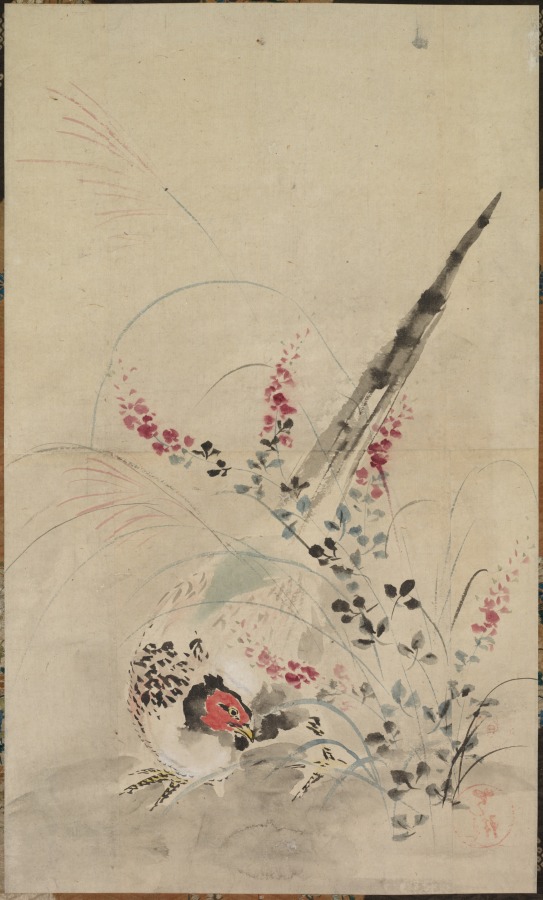
Kōrin's mature painting takes a small set of subjects — irises, plum trees, chrysanthemums by a stream, autumn grasses, cranes, pheasants, waves — and reorganizes them according to a few governing principles: the flattening of three-dimensional space onto a continuous decorative plane; the systematic deployment of gold-leaf or silver-leaf grounds that turn the support itself into one of the colors of the composition; the use of the tarashikomi technique of pooled wet pigment that Sōtatsu had pioneered for soft modeling of leaves, petals, and rocks; and the deliberate stylization of natural form into rhythmic, almost graphic patterns of curve and silhouette. His two greatest surviving sets of folding screens — the Irises (Kakitsubata-zu byōbu) in the Nezu Museum, Tokyo, designated a National Treasure and based on the famous 'Yatsuhashi' (Eight Bridges) episode of the Ise Monogatari, and the Red and White Plum Trees (Kōhakubai-zu byōbu) in the MOA Museum of Art, Atami, also designated a National Treasure — are the canonical statements of this language and have shaped Japanese decorative painting for three centuries. Other major surviving works include the Rough Waves (Nami-zu byōbu) at the Metropolitan Museum of Art, New York; the Chrysanthemums by a Stream and the Plum Tree at the Cleveland Museum of Art; and a substantial body of fans, hanging scrolls, and lacquer designs in the Idemitsu, Tokyo National, Hatakeyama, and Fujita collections, among others.
Beyond painting, Kōrin worked extensively as a designer for the family textile business and for the leading lacquer workshops of Kyoto. The most famous surviving lacquer object associated with him is the Yatsuhashi maki-e suzuribako (writing box with bridge and irises) in the Tokyo National Museum, in which he transposes the Yatsuhashi composition from the Nezu screens into mother-of-pearl inlay and gold lacquer with such confidence that the writing box has come to stand for the deep continuity between painting and decorative arts in his oeuvre. Kenzan, working as a potter and ceramic decorator at Narutaki and later at Iriya, used Kōrin's brushwork on numerous pieces of ceramics — square dishes painted with plovers over waves, gourd-shaped vessels and dishes painted with chrysanthemums and grasses — that survive in Japanese and Western museum collections and that exemplify the brothers' collaboration. The result is a coherent decorative practice in which the same vocabulary moves freely between hanging scrolls, folding screens, lacquer, ceramics, and textiles, and which became the model for the Rinpa school as a continuing tradition.
Kōrin died in Kyoto on June 2, 1716, at the age of fifty-eight, leaving his pictorial vocabulary to a generation of pupils and successors who fanned out across Kyoto, Edo, and the provincial trade centers. His most direct heir was his brother Kenzan, whose ceramic and painting work continued for another quarter-century; in the next generations the Rinpa tradition was carried forward by Watanabe Shikō, Tatebayashi Kagei, and others in Kyoto, and was then decisively revived in Edo a century later by Sakai Hōitsu (1761-1828), a member of the Sakai daimyo house of Himeji, and his pupil Suzuki Kiitsu, who together produced the third great wave of Rinpa painting and self-consciously canonized Kōrin as the central figure of the tradition. Hōitsu's hundred-year commemorative compilation Kōrin hyakuzu (One Hundred Paintings by Kōrin), published in 1815, set the modern image of Kōrin as a master and made his decorative idiom available to the wider Edo print and design world. Through Hōitsu's revival and through the late-nineteenth-century Meiji rediscovery of Edo decorative arts, Kōrin's decorative idiom became part of the Japonisme that shaped Art Nouveau and the wider turn-of-the-century decorative movements in Europe, and the modern museum world has continued to treat him as one of the indispensable figures of Japanese painting. Today his works are held in the major Japanese collections — Nezu, MOA, Idemitsu, Tokyo National, Kyoto National, the Hatakeyama Memorial — and in the principal Western collections including the Metropolitan, the Cleveland Museum of Art, the Museum of Fine Arts in Boston, the British Museum, and the Freer Gallery of Art, where his Irises and Plum Trees screens, his Rough Waves, and his Chrysanthemums by a Stream continue to define what most viewers mean by Rinpa.
Key Facts
- Active Period
- 1658–1716
- Nationality
- 🇯🇵Japan
- Works Indexed
- 8
Frequently Asked Questions
Ogata Kōrin (尾形光琳, 1658-1716) was a Japanese painter, lacquer designer, and decorative artist of the early Edo period, and the central figure of the Rinpa (Rimpa) school whose name effectively defines the second great wave of that tradition. With his younger brother, the potter and painter Ogata Kenzan (1663-1743), Kōrin transformed the visual idiom established two generations earlier by Tawaraya Sōtatsu and Hon'ami Kōetsu into a coherent decorative style of bold abstraction, flattened color masses, gold and silver leaf grounds, and tightly disciplined plant-and-animal motifs that became one of the most influential pictorial languages in Japanese art and that gives the school the term Kōrin-ha (the Kōrin school) by which it was first widely known.
Ogata Kōrin was active from 1658 to 1716.
Original prints by Ogata Kōrin can be found in collections including The Metropolitan Museum of Art (Fletcher Fund, 1926), The Metropolitan Museum of Art, The Cleveland Museum of Art (Mary L. Severance Estate), The Cleveland Museum of Art.
Woodblock Prints by Ogata Kōrin (8)
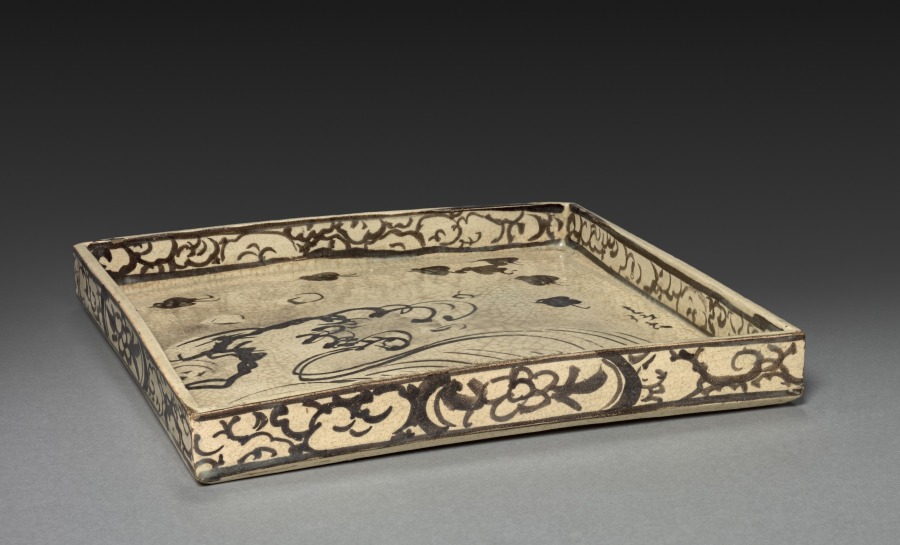
Square Dish with Design of Plovers over Waves
波千鳥図角皿
c. 1700
Stoneware with iron-pigment underglaze on white slip (with Ogata Kenzan)
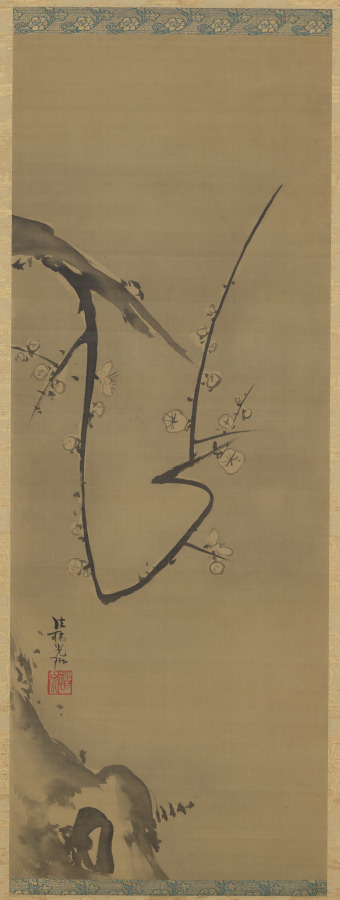
Plum Tree
梅図
c. 1700
Hanging scroll; ink on silk
Pheasant and Grasses
雉子草花図
late 1600s–early 1700s
Hanging scroll; ink and color on silk

Rough Waves
波図屏風
ca. 1704–9
Two-panel folding screen; ink, color, and gold leaf on paper
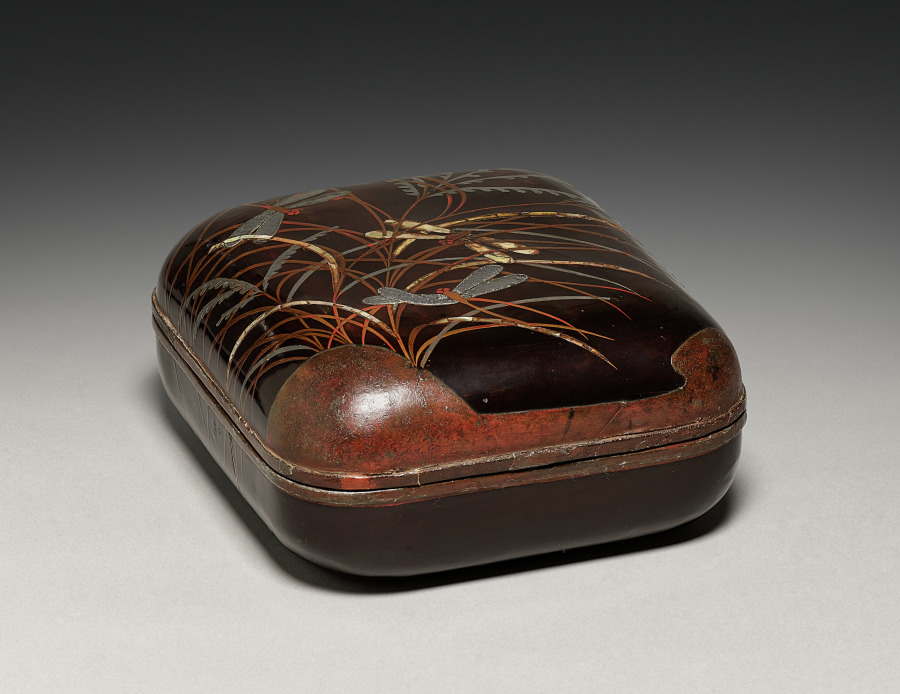
Letter Box
文箱
1700s
Lacquer with gold and silver maki-e
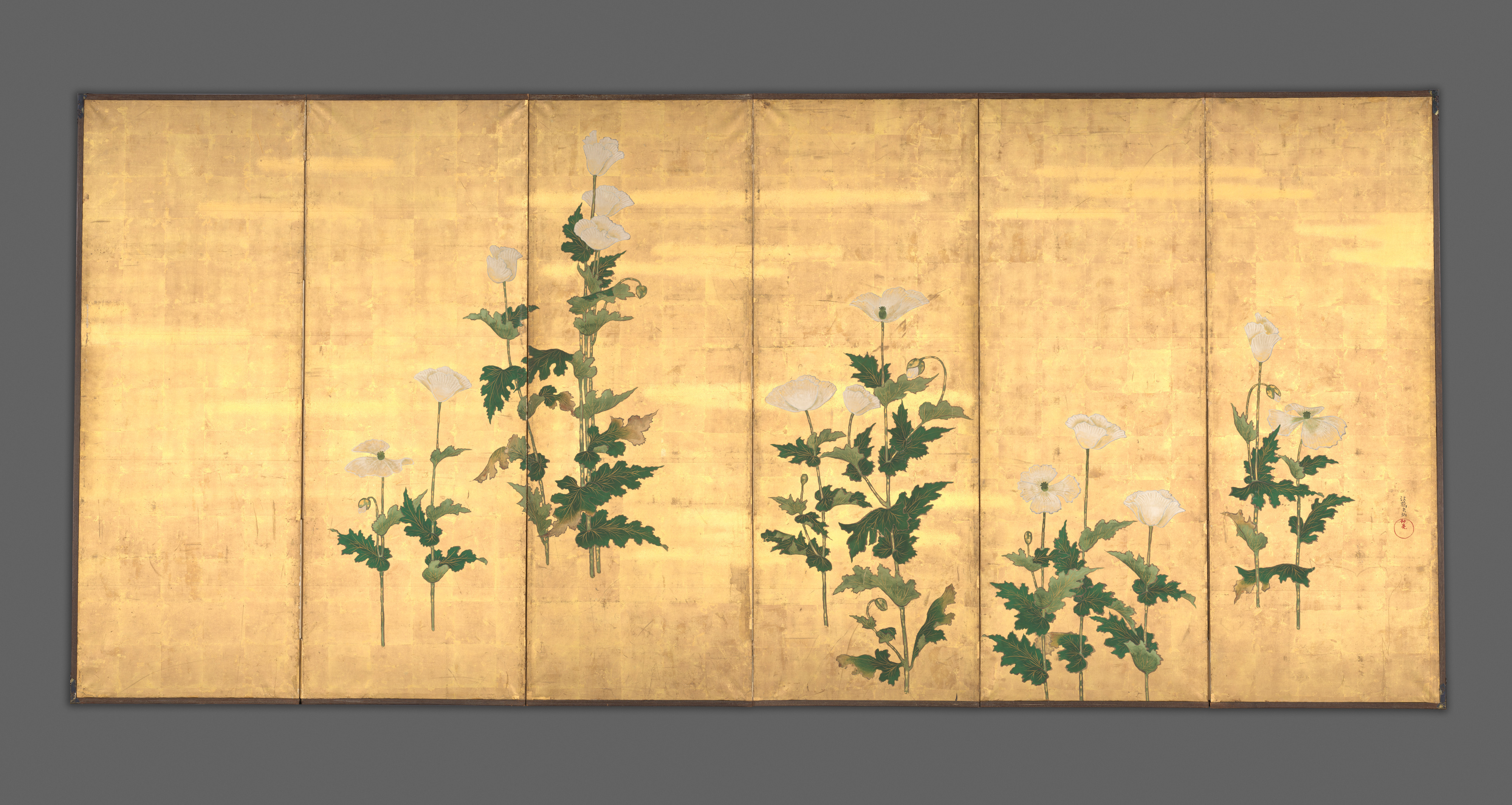
White Poppies on Gold Ground
白芥子図屏風
Edo period (1615–1868)
Six-panel folding screen; color on paper
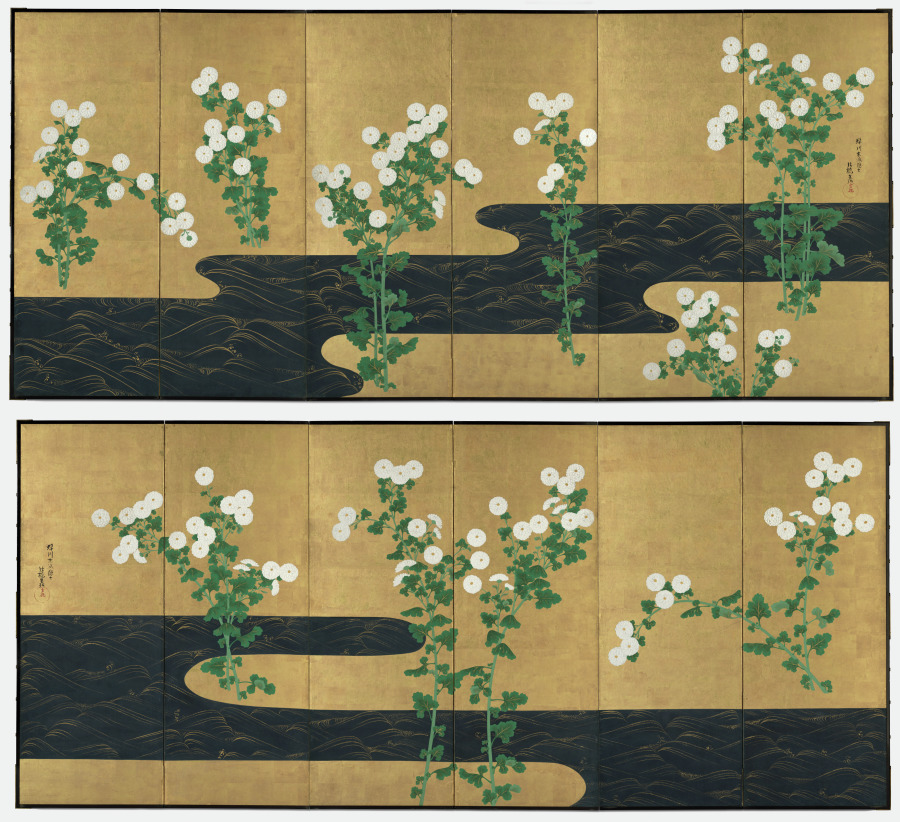
Chrysanthemums by a Stream
菊水図
c. 1715–30
Hanging scroll; ink, color, and gold on silk
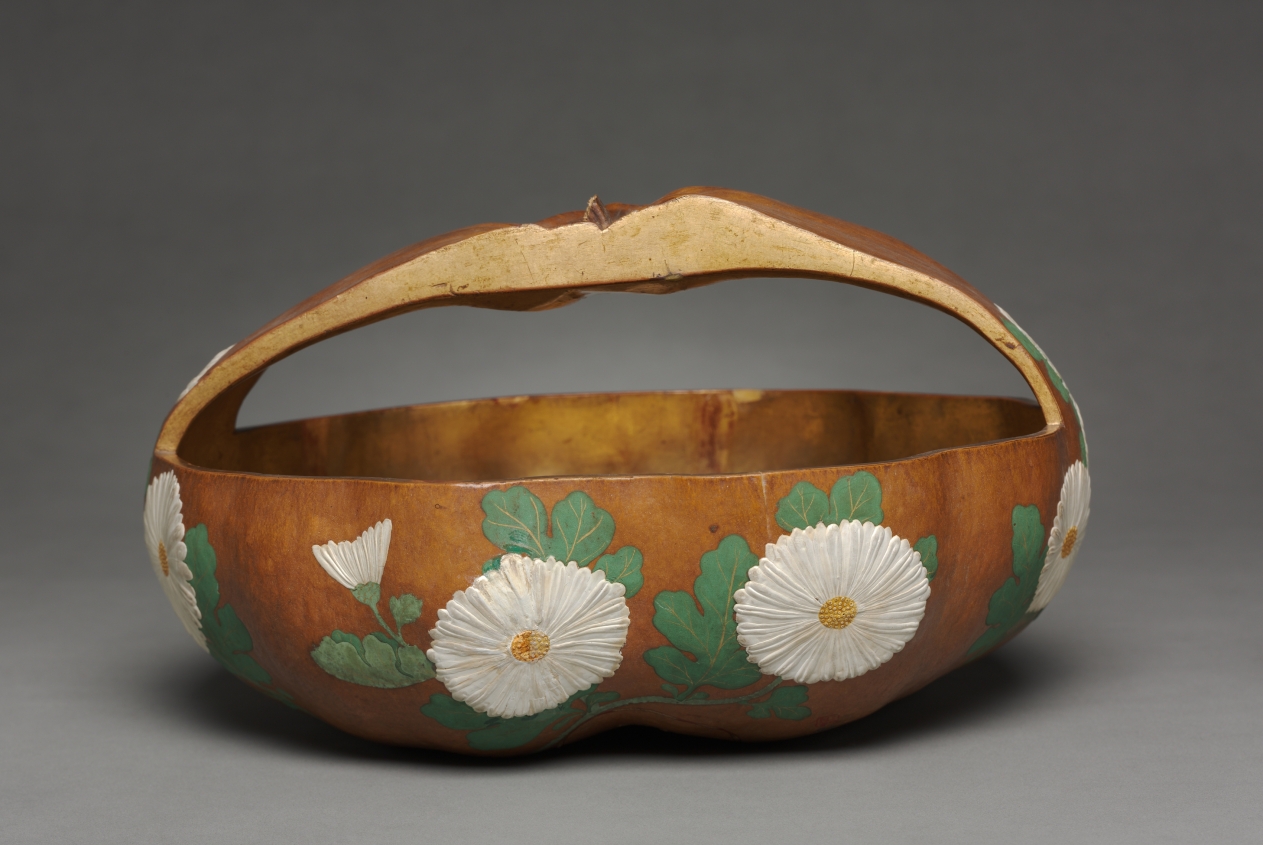
Gourd Basket with Chrysanthemum Design
菊文瓢形籠
1700s
Decorated basket-form vessel