
Rough Waves
波図屏風
by Ogata Kōrin
- Date:
- ca. 1704–9
- Medium:
- Two-panel folding screen; ink, color, and gold leaf on paper
Description
Rough Waves (Nami-zu byōbu) is one of Ogata Kōrin's most celebrated and most reproduced works, painted around 1704-1709 during the years he spent in Edo working under the patronage of the Sakai and other senior warrior households, and now held in the collection of the Metropolitan Museum of Art, New York. The two-panel folding screen executes a single subject — the crests of breaking waves — in ink, color, and gold leaf on paper, organizing the surface around the rhythmic curl of three principal wave-crests that rise diagonally from the lower edge of the right panel up across the join into the upper part of the left, with the gold-leaf ground standing for the sky and the foam of the wavetops set down in white and the deep troughs articulated in heavy black ink and tarashikomi-pooled blue-grey wash. The composition belongs to a long tradition of wave painting in East Asian art that runs from Song-dynasty Chinese academy painting through the Muromachi ink-painting masters Sesshū and Sōami and the Kanō school treatments of the late Momoyama period; Kōrin's version, however, abandons the atmospheric depth of those earlier handlings in favor of a flattened, almost emblematic distillation of the wave into a graphic curl that anticipates by more than a century Hokusai's Great Wave off Kanagawa and that became one of the most influential single images in the decorative-arts vocabulary of late Edo and Meiji Japan. The Rough Waves screen entered the Metropolitan in 1926 through the bequest of Mrs. V. Everit Macy and has been a touchstone of the Rinpa tradition in the Western collections ever since.
More Prints by Ogata Kōrin
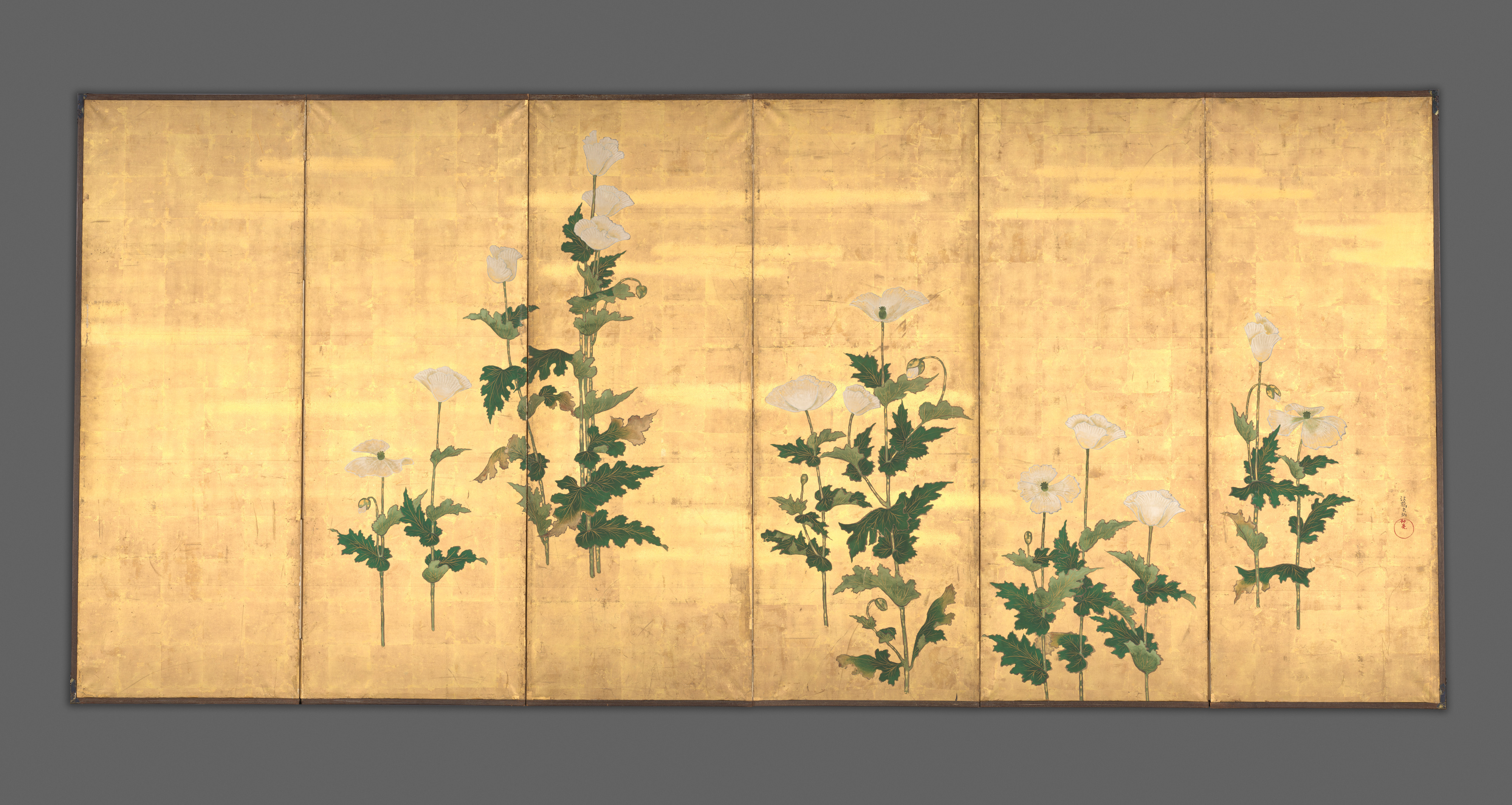
White Poppies on Gold Ground
白芥子図屏風
Edo period (1615–1868)
Six-panel folding screen; color on paper
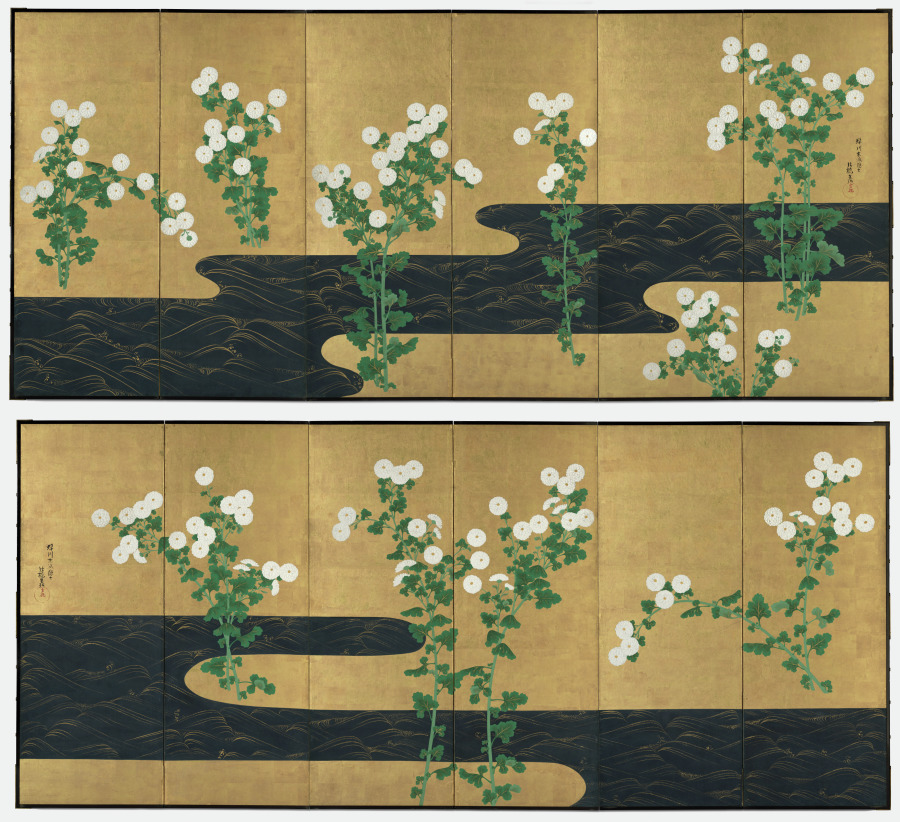
Chrysanthemums by a Stream
菊水図
c. 1715–30
Hanging scroll; ink, color, and gold on silk
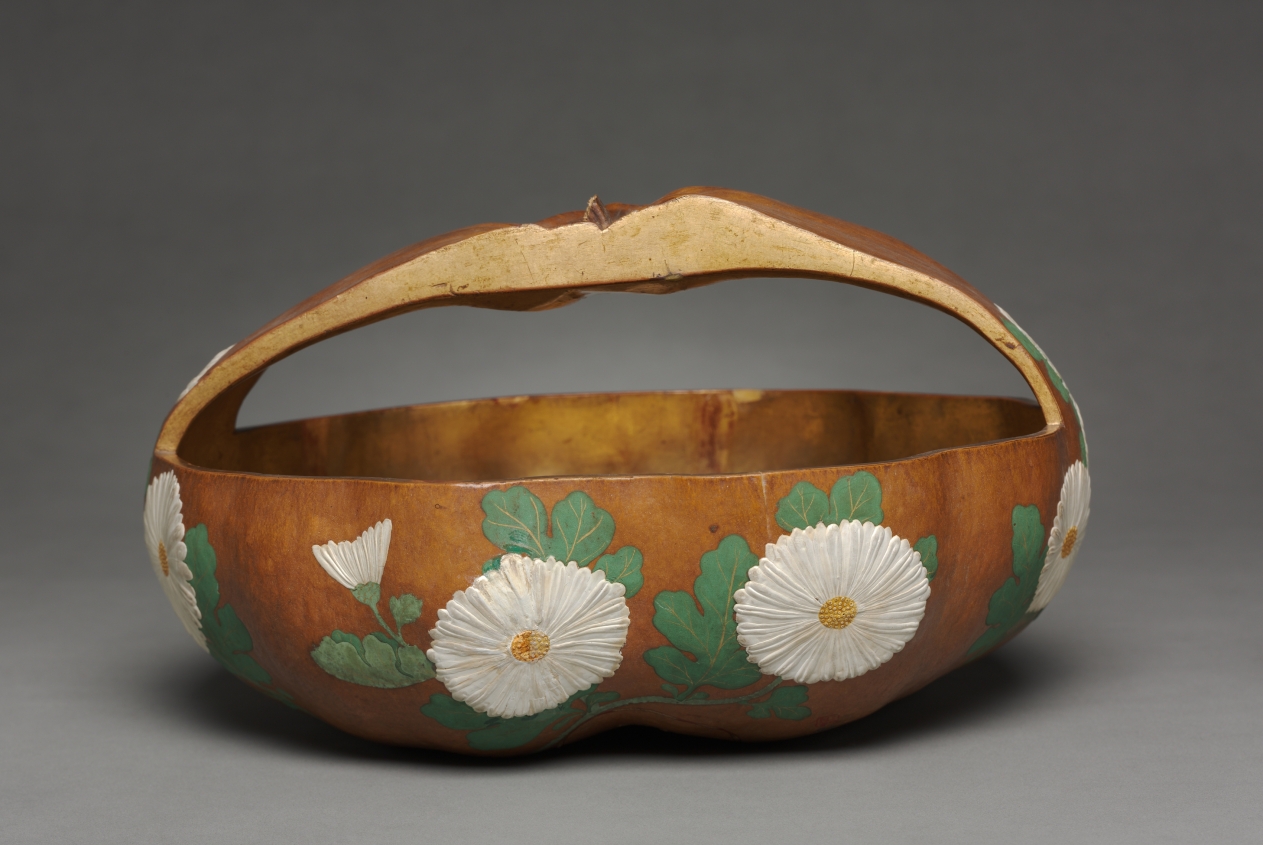
Gourd Basket with Chrysanthemum Design
菊文瓢形籠
1700s
Decorated basket-form vessel
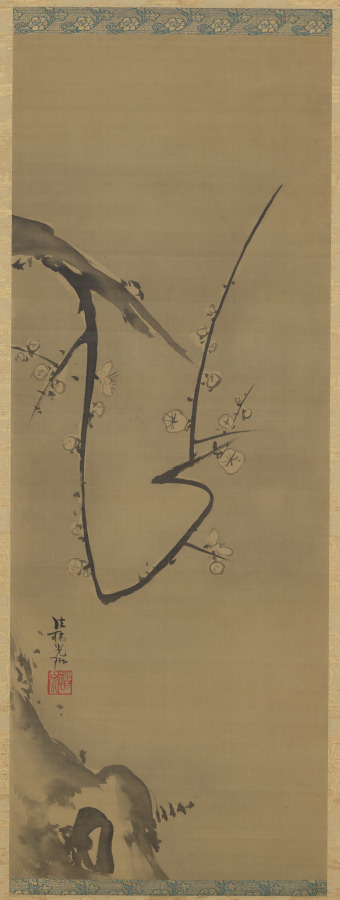
Plum Tree
梅図
c. 1700
Hanging scroll; ink on silk
Frequently Asked Questions
Rough Waves (波図屏風) was created by Ogata Kōrin (尾形光琳) in ca. 1704–9.