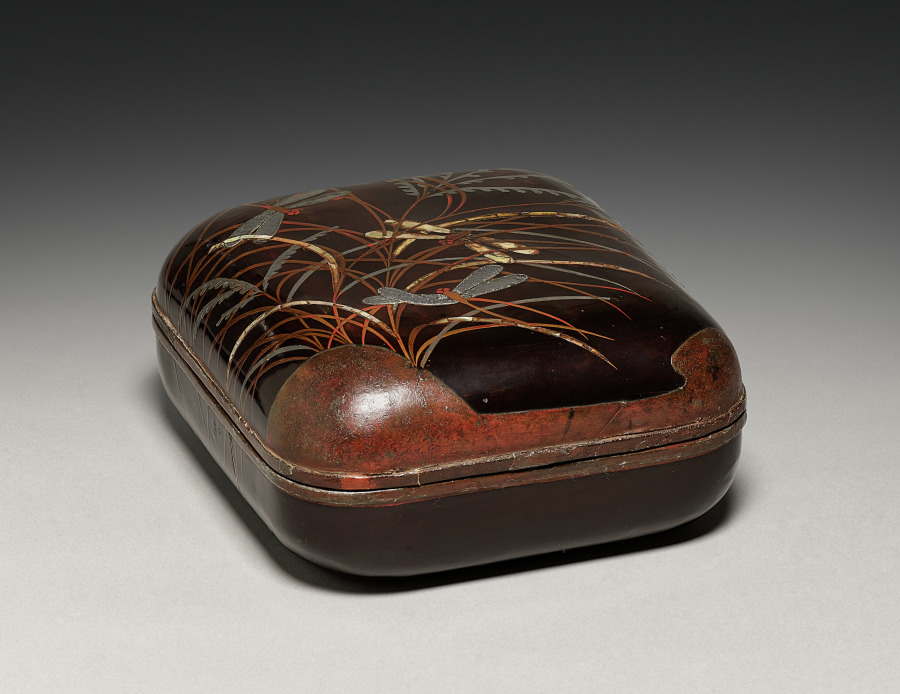
Letter Box
文箱
by Ogata Kōrin
- Date:
- 1700s
- Medium:
- Lacquer with gold and silver maki-e
- Source:
- The Cleveland Museum of Art
Description
This lacquer letter box (fubako) in the collection of the Cleveland Museum of Art (acc. 1972.165) is dated by the museum to the eighteenth century and associated with the design tradition of Ogata Kōrin, executed in the gold and silver maki-e (sprinkled metal powder) and lacquer technique that was one of the principal modes of Edo-period luxury production. The rectangular form of the box, with a fitted overlapping lid and rounded corners, follows the standard fubako shape used for storing letters, poems, and personal correspondence in the elite households of the late seventeenth and eighteenth centuries; the surface is decorated in the Kōrin design vocabulary — a stylized floral or plant motif rendered in gold and silver lacquer against a deep black or rich nashiji (pear-skin) ground, the metal powders set down in graduated densities to model the leaves and petals, and accented with mother-of-pearl inlay (raden) in the manner that Kōrin had taken over from his great-grandfather Hon'ami Kōetsu. The box exemplifies the way Kōrin's painted designs migrated systematically into the lacquer trade of the early eighteenth century, where the leading workshops of Kyoto and Edo translated his folding-screen compositions and his hanging-scroll motifs into mother-of-pearl-inlaid maki-e for the elite domestic market, producing some of the most highly prized luxury objects of the period. The box entered the Cleveland collection in 1972 and is representative of the broader Kōrin-school lacquer tradition that survives in major Japanese and Western collections.
More Prints by Ogata Kōrin

Rough Waves
波図屏風
ca. 1704–9
Two-panel folding screen; ink, color, and gold leaf on paper
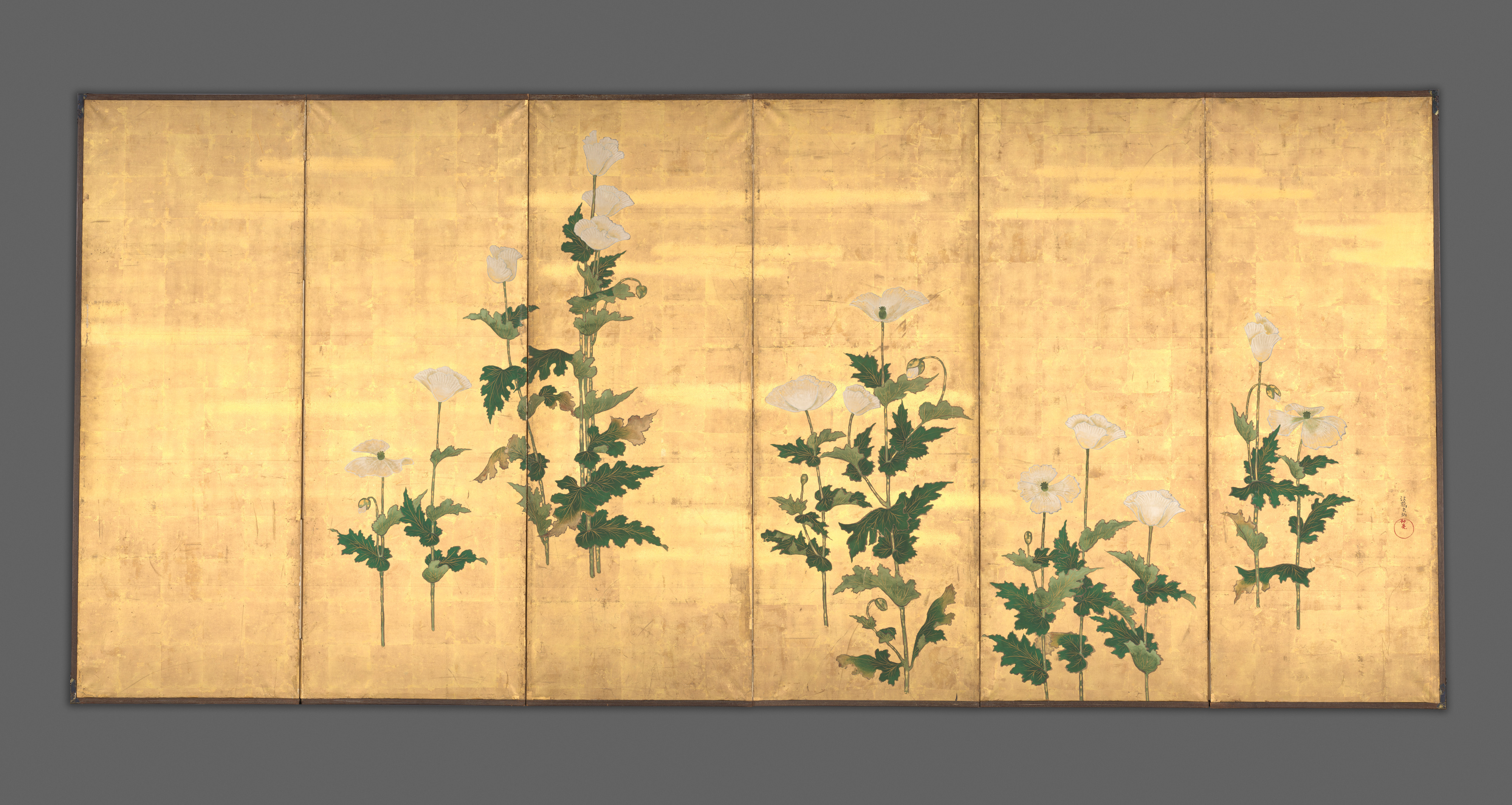
White Poppies on Gold Ground
白芥子図屏風
Edo period (1615–1868)
Six-panel folding screen; color on paper
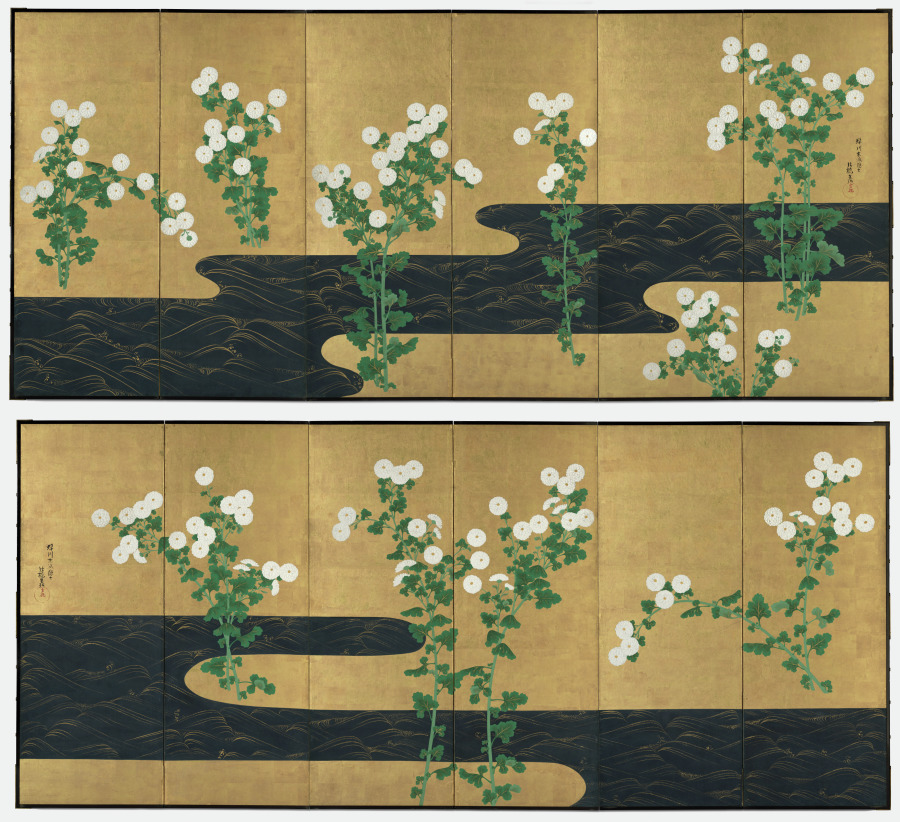
Chrysanthemums by a Stream
菊水図
c. 1715–30
Hanging scroll; ink, color, and gold on silk
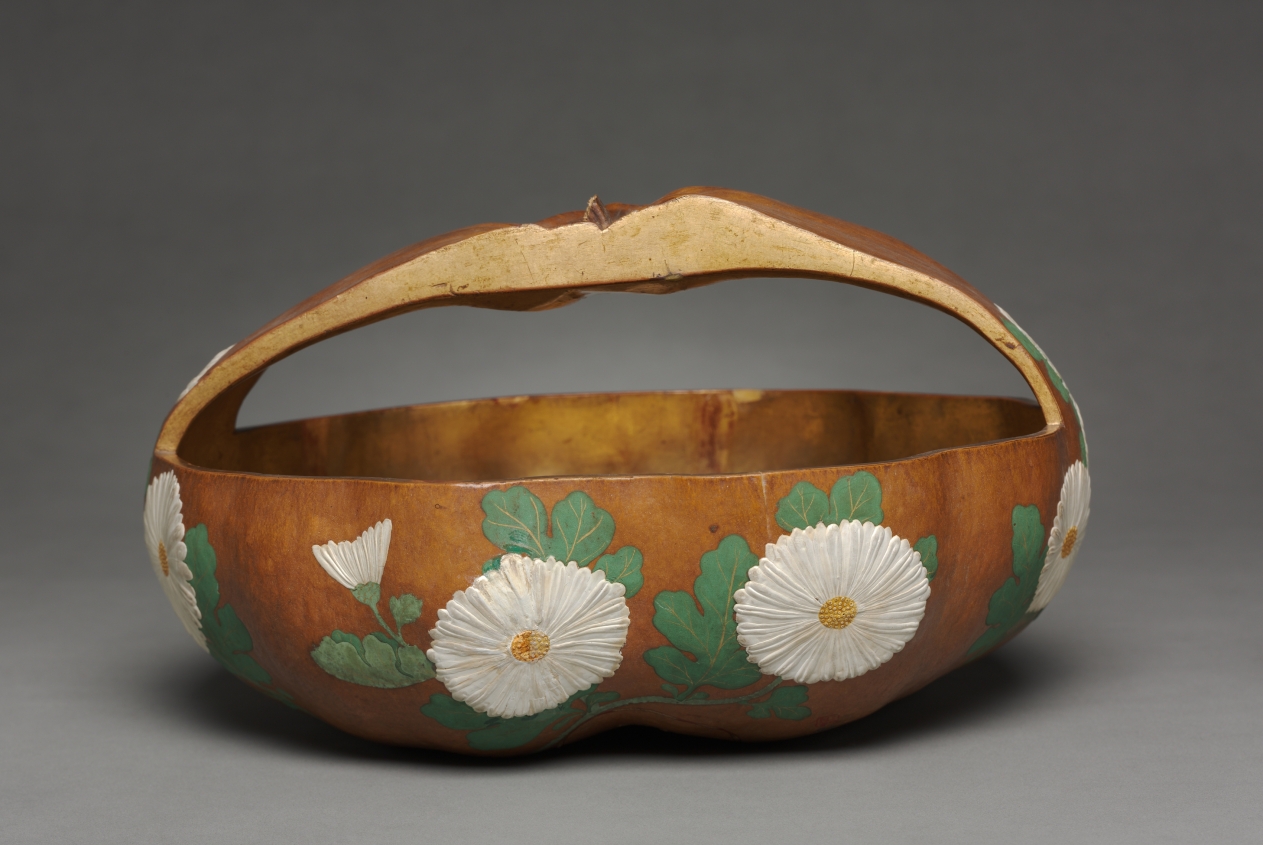
Gourd Basket with Chrysanthemum Design
菊文瓢形籠
1700s
Decorated basket-form vessel
Frequently Asked Questions
Letter Box (文箱) was created by Ogata Kōrin (尾形光琳) in 1700s.