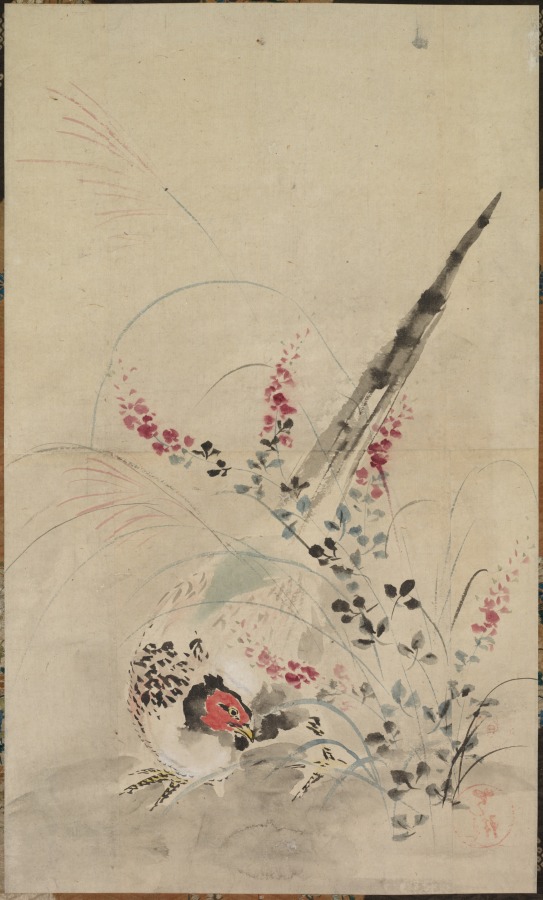
Pheasant and Grasses
雉子草花図
by Ogata Kōrin
- Date:
- late 1600s–early 1700s
- Medium:
- Hanging scroll; ink and color on silk
Description
Pheasant and Grasses is a hanging scroll by Ogata Kōrin in ink and color on silk in the collection of the Cleveland Museum of Art, dated by the museum to the late seventeenth or early eighteenth century and executed in the close-observation kachō-e (bird-and-flower) idiom that the Rinpa school developed in parallel with its more famous floral compositions. The composition shows a single pheasant — most likely the Japanese green pheasant (kiji), the national bird of Japan — standing among autumn grasses, its head turned in three-quarter profile, the long tail feathers gathered along the lower edge of the composition in the deep horizontal sweep that anchors the otherwise atmospheric handling of background. The pheasant carries strong East Asian symbolic associations: in Chinese painting and poetry it is one of the auspicious birds associated with imperial grace and with the moral excellence of the gentleman, while in Japanese tradition it is the bird most associated with the imperial chrysanthemum throne and with the seven autumn grasses (akinanakusa) of the Heian poetic tradition. Kōrin's handling brings the careful observation of plumage and posture that he had absorbed from the Kanō and Tosa traditions together with the asymmetric placement of the figure against generous negative space and the tarashikomi treatment of grass clusters that became one of the signatures of his mature style. The scroll entered the Cleveland collection in 1985 through the John L. Severance Fund and is one of the principal surviving examples of Kōrin's bird-and-flower painting in a Western collection.
More Prints by Ogata Kōrin

Rough Waves
波図屏風
ca. 1704–9
Two-panel folding screen; ink, color, and gold leaf on paper
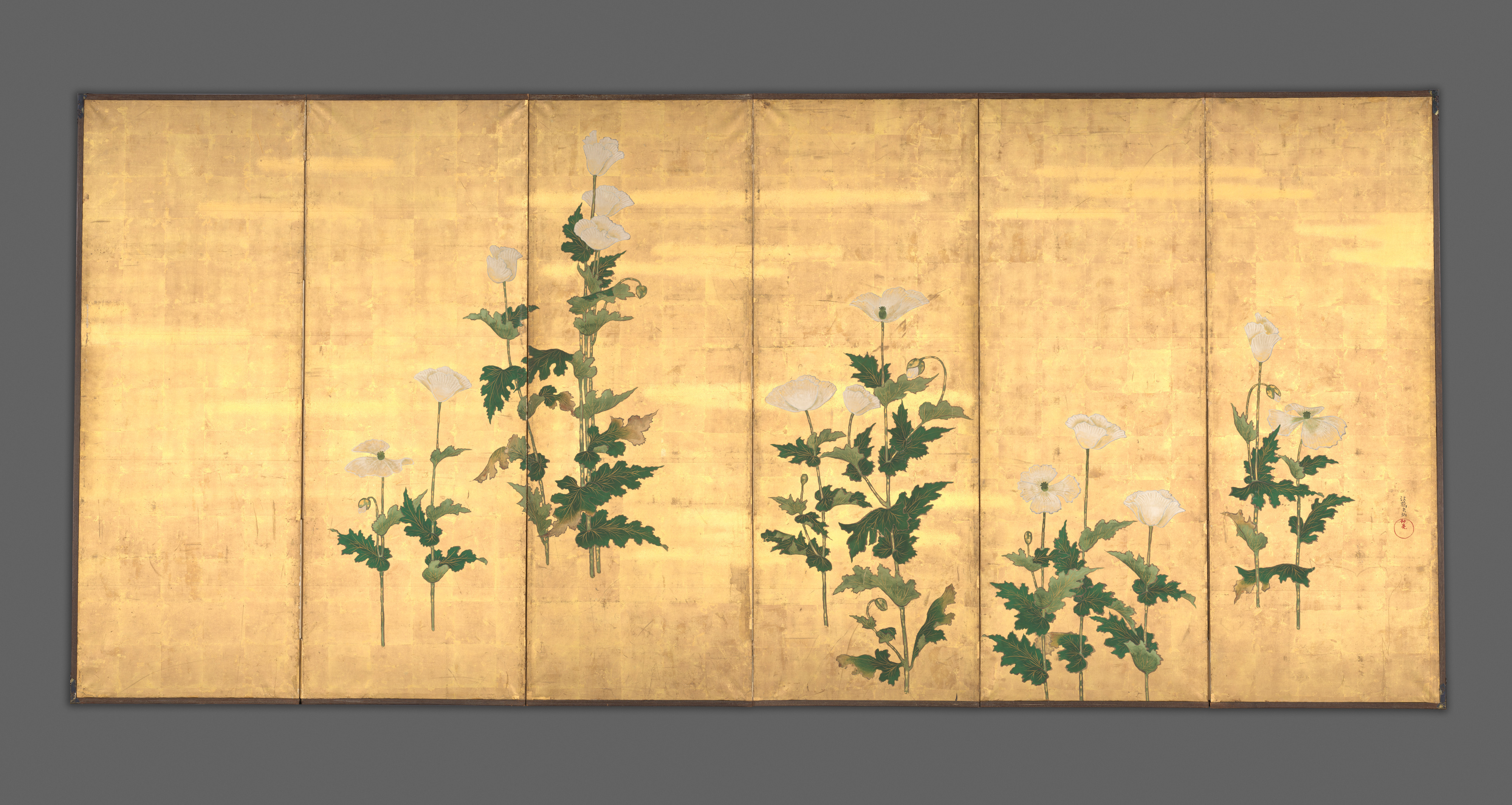
White Poppies on Gold Ground
白芥子図屏風
Edo period (1615–1868)
Six-panel folding screen; color on paper
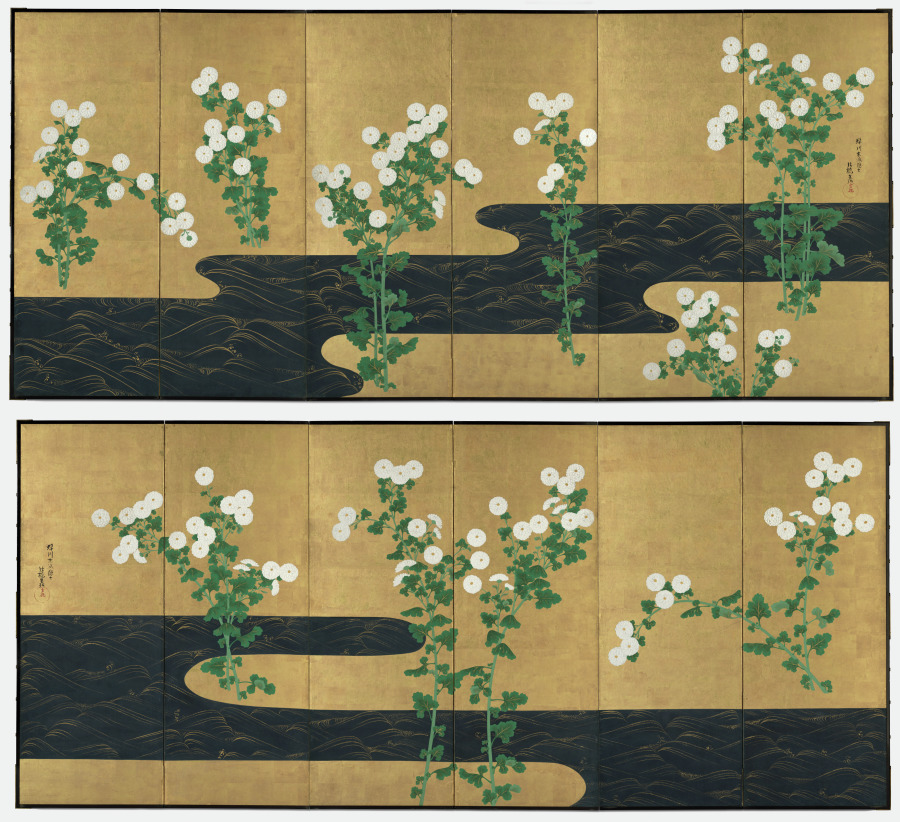
Chrysanthemums by a Stream
菊水図
c. 1715–30
Hanging scroll; ink, color, and gold on silk
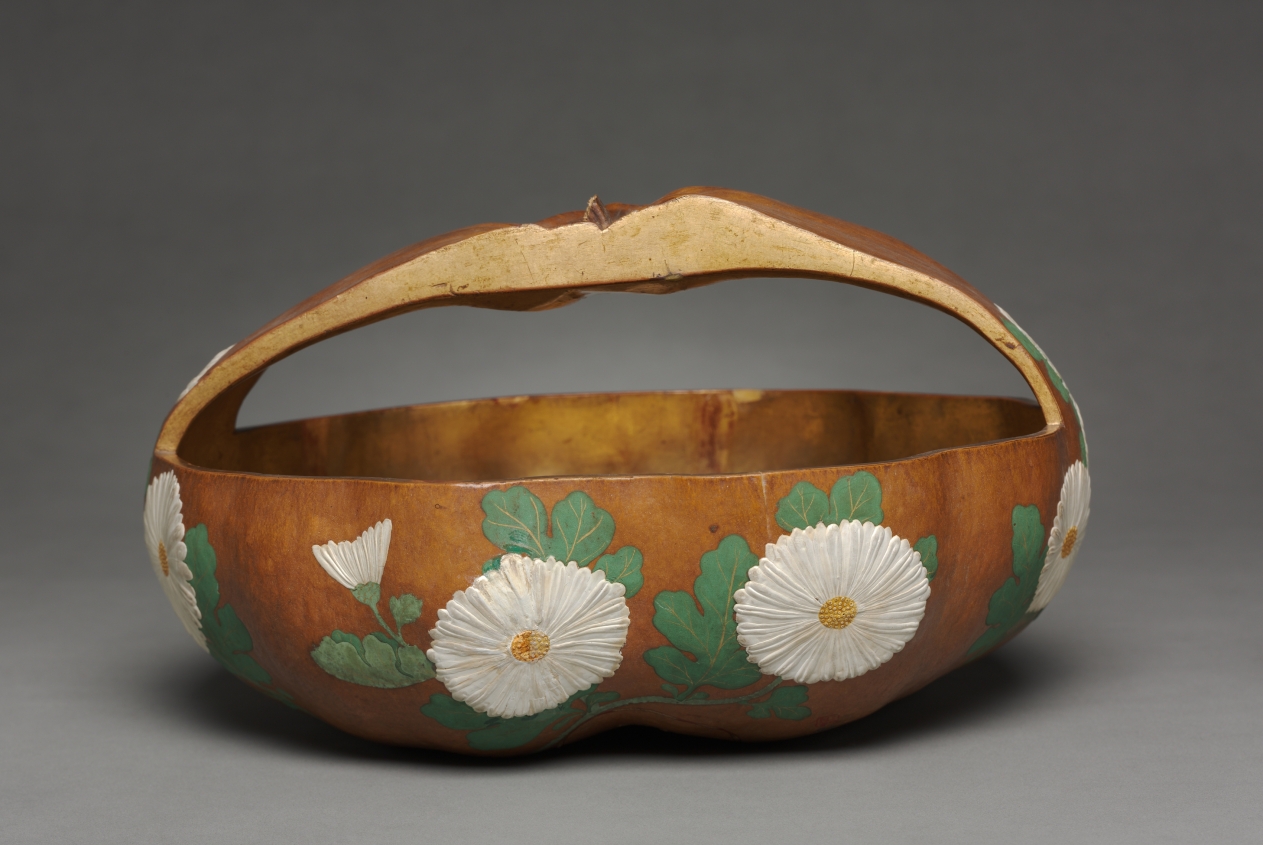
Gourd Basket with Chrysanthemum Design
菊文瓢形籠
1700s
Decorated basket-form vessel
Frequently Asked Questions
Pheasant and Grasses (雉子草花図) was created by Ogata Kōrin (尾形光琳) in late 1600s–early 1700s.