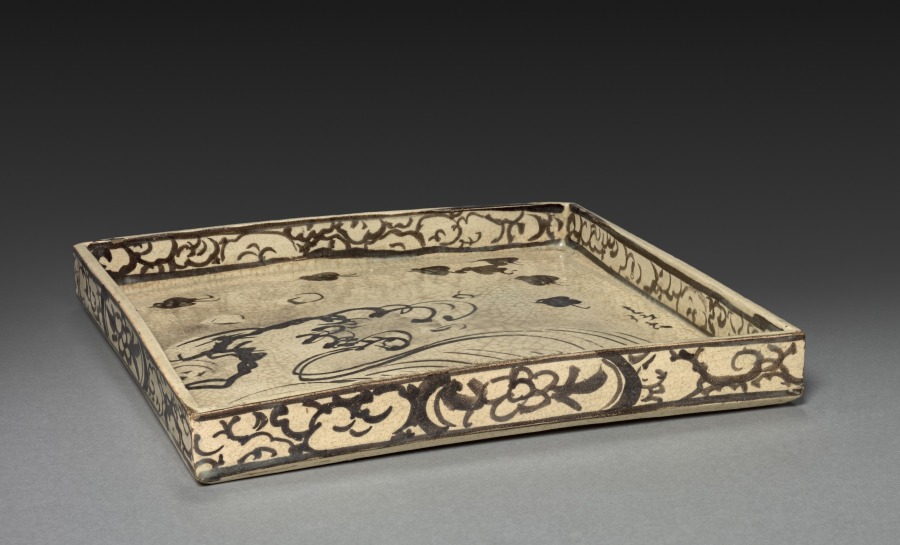
Square Dish with Design of Plovers over Waves
波千鳥図角皿
by Ogata Kōrin
- Date:
- c. 1700
- Medium:
- Stoneware with iron-pigment underglaze on white slip (with Ogata Kenzan)
Description
Square Dish with Design of Plovers over Waves is a ceramic dish in the collection of the Cleveland Museum of Art (acc. 1966.365), dated by the museum to circa 1700 and produced through the celebrated collaboration of Ogata Kōrin as designer and his younger brother Ogata Kenzan as potter and decorator. The square form, with a slightly raised lip and a flat interior surface, is decorated in underglaze iron-brown and white slip with a flock of small plovers (chidori) flying over stylized wave-crests that fill the interior of the dish in the same flattened, almost graphic distillation of natural form that Kōrin used in his Rough Waves screen at the Metropolitan Museum of Art. The chidori-over-waves motif carries a deep set of poetic associations in the Japanese tradition: the small plovers of the autumn and winter shores are one of the most frequent subjects of the Kokin Wakashū and the Hyakunin Isshu poetry collections, and the pairing of plovers with waves runs through the Heian decorative arts as a sign of cold weather, dawn flights, and the loneliness of the winter shore. The dish exemplifies the collaboration between the two Ogata brothers that became one of the foundational practices of Rinpa decorative arts — Kōrin supplied the painted design (shitae), Kenzan executed it in iron-pigment underglaze on the white-slip ground of the dish — and demonstrates the way the same vocabulary moved freely between painting, lacquer, and ceramics in the Ogata workshop. The dish entered the Cleveland collection in 1966 as a gift of Mr. and Mrs. Severance A. Millikin.
More Prints by Ogata Kōrin

Rough Waves
波図屏風
ca. 1704–9
Two-panel folding screen; ink, color, and gold leaf on paper
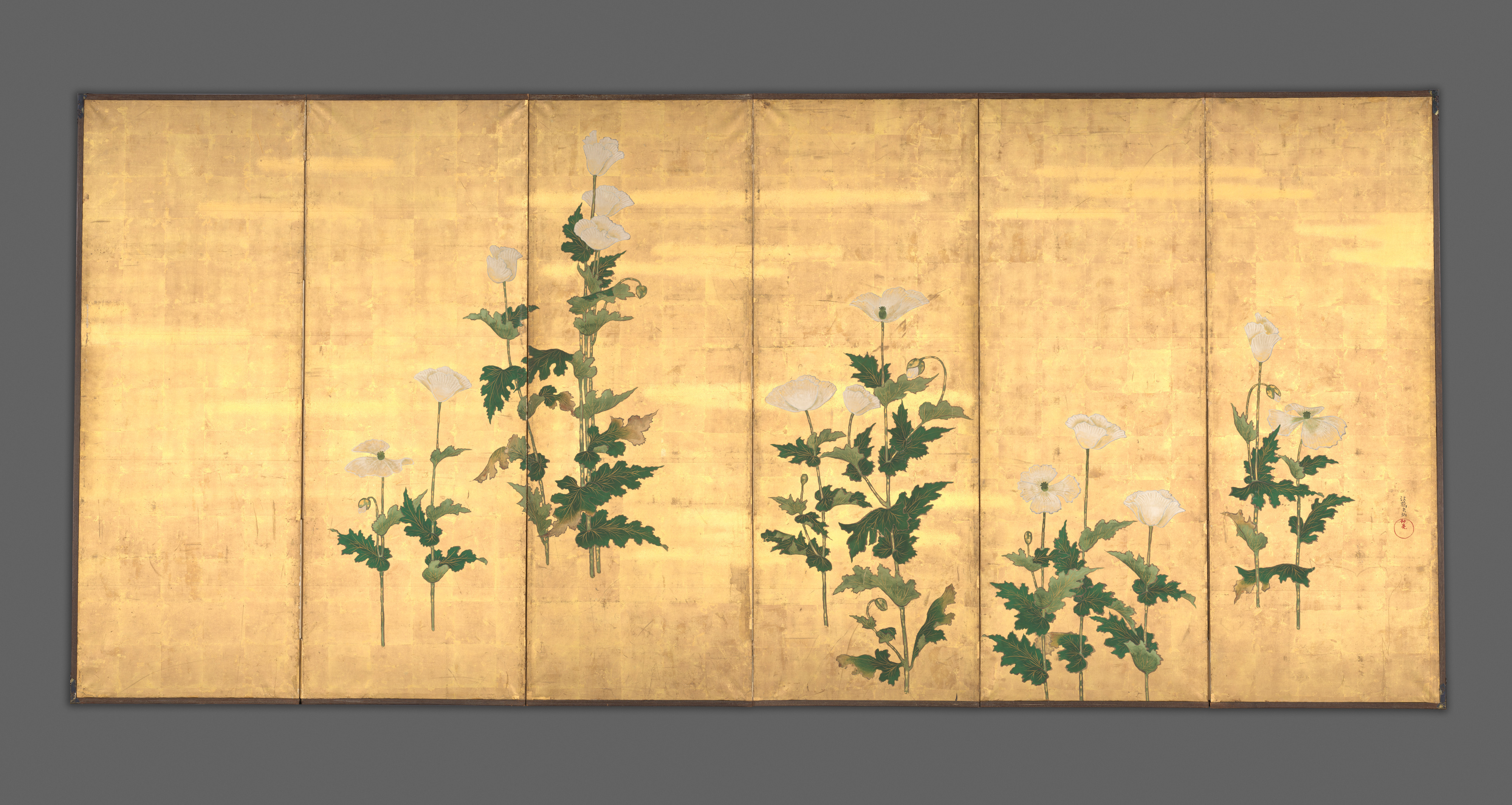
White Poppies on Gold Ground
白芥子図屏風
Edo period (1615–1868)
Six-panel folding screen; color on paper
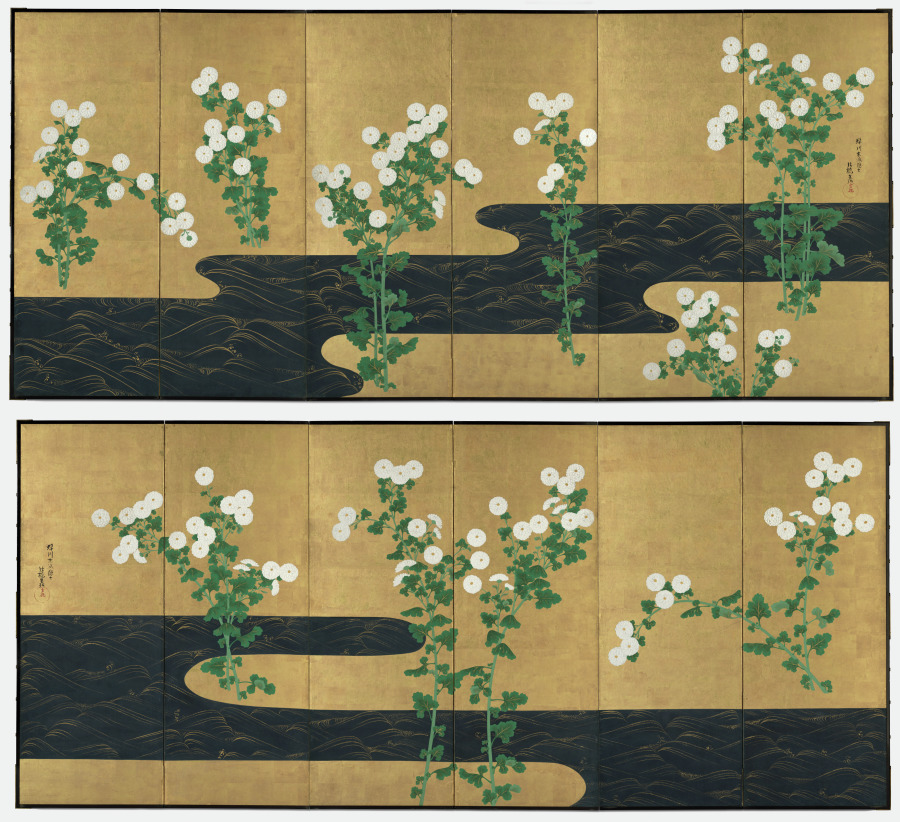
Chrysanthemums by a Stream
菊水図
c. 1715–30
Hanging scroll; ink, color, and gold on silk
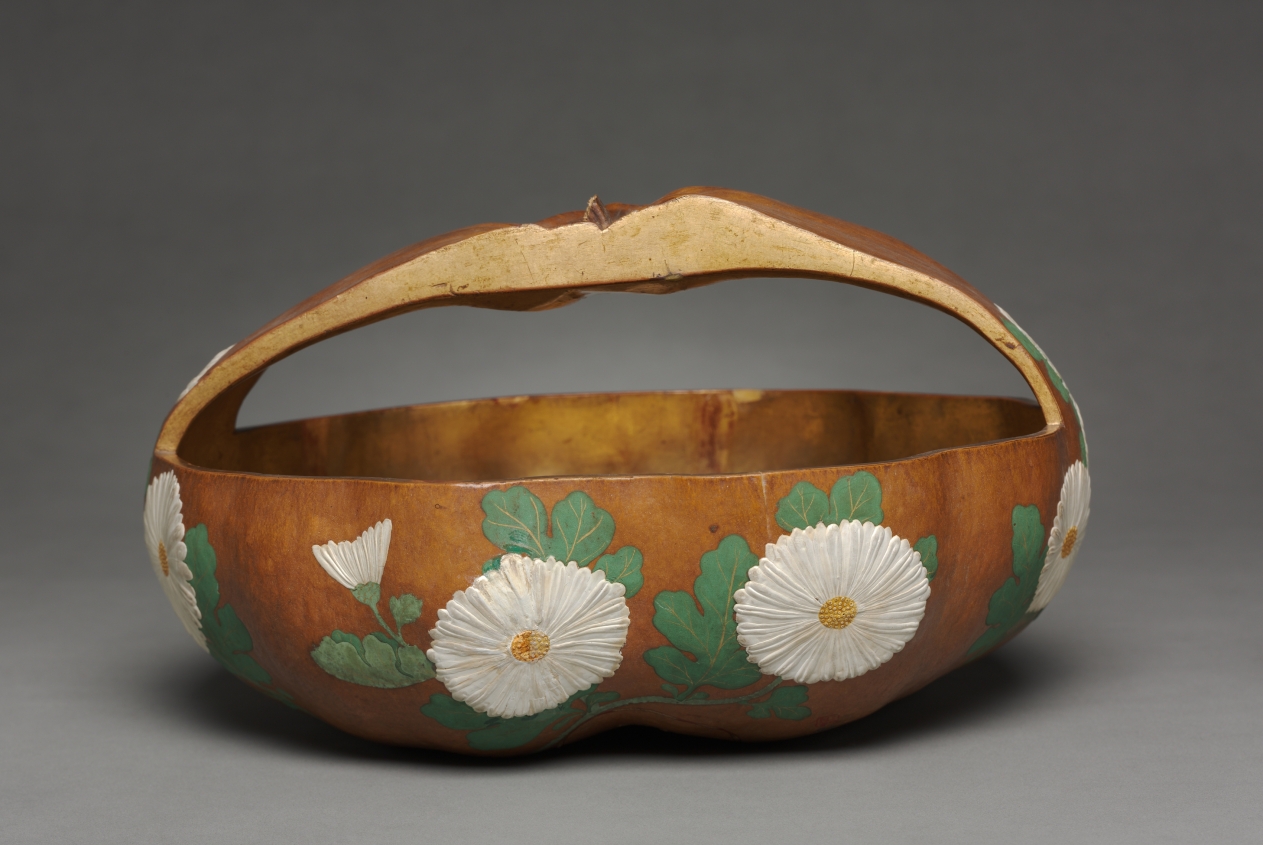
Gourd Basket with Chrysanthemum Design
菊文瓢形籠
1700s
Decorated basket-form vessel
Frequently Asked Questions
Square Dish with Design of Plovers over Waves (波千鳥図角皿) was created by Ogata Kōrin (尾形光琳) in c. 1700.