
Mt Fuji
- Medium:
- Mokuhanga (Japanese woodblock)
- Image courtesy of
- Saru Gallery
Description
Hashimoto returned to Mount Fuji repeatedly across his career, treating it less as a romantic icon than as a structural form to be resolved compositionally. The print presents Fuji's symmetrical profile, likely supported by a foreground band of land, water, or clouds that anchors the image and establishes scale. Hashimoto's Western oil-painting training at the Kawabata Art School and the Taiheiyoga Kai informs his handling of mass and recession, which in mokuhanga translates into firm registration of contour lines and bokashi washes graduating sky and snow tones. As a sosaku-hanga artist he designed, carved, and printed each block himself rather than working through a publisher's atelier, so the print's surface character — baren marks, ink density, paper grain — carries his hand throughout rather than being mediated by specialist craftsmen.
More Prints by Okiie Hashimoto
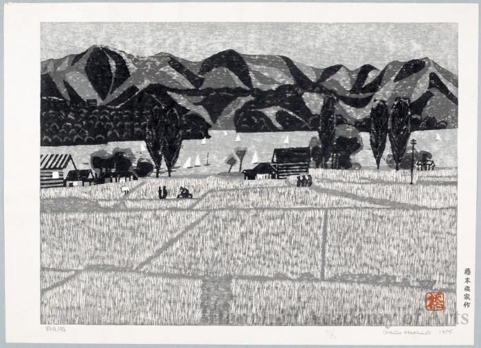
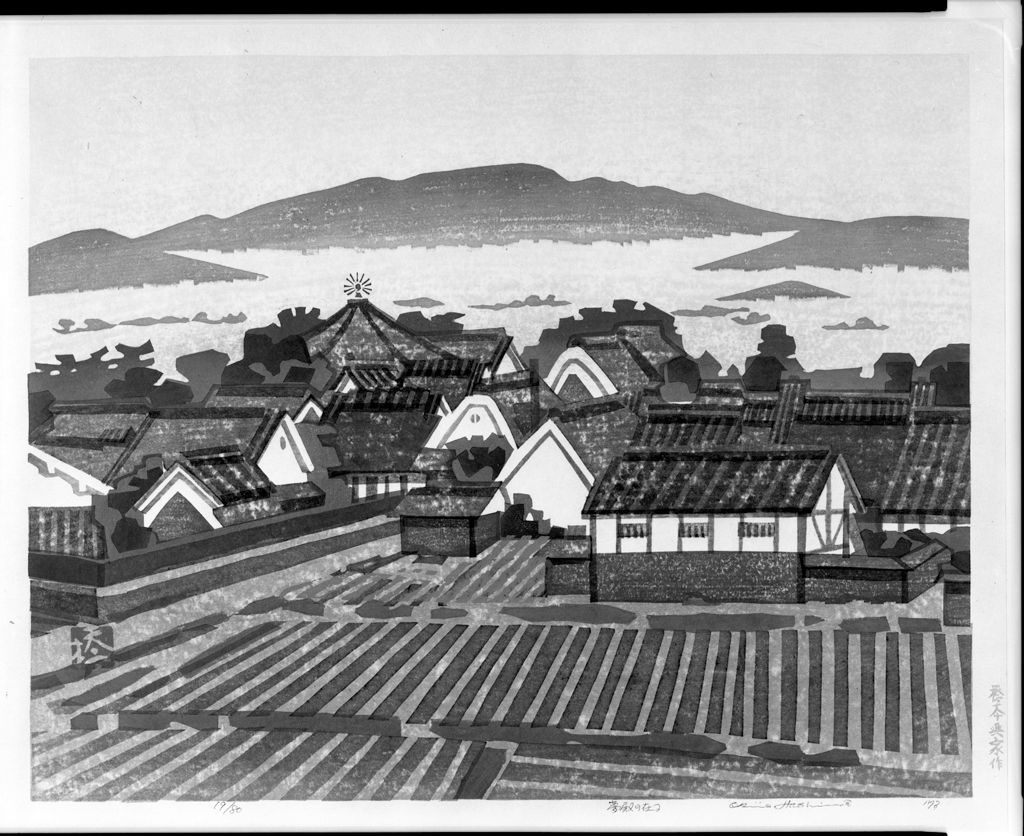
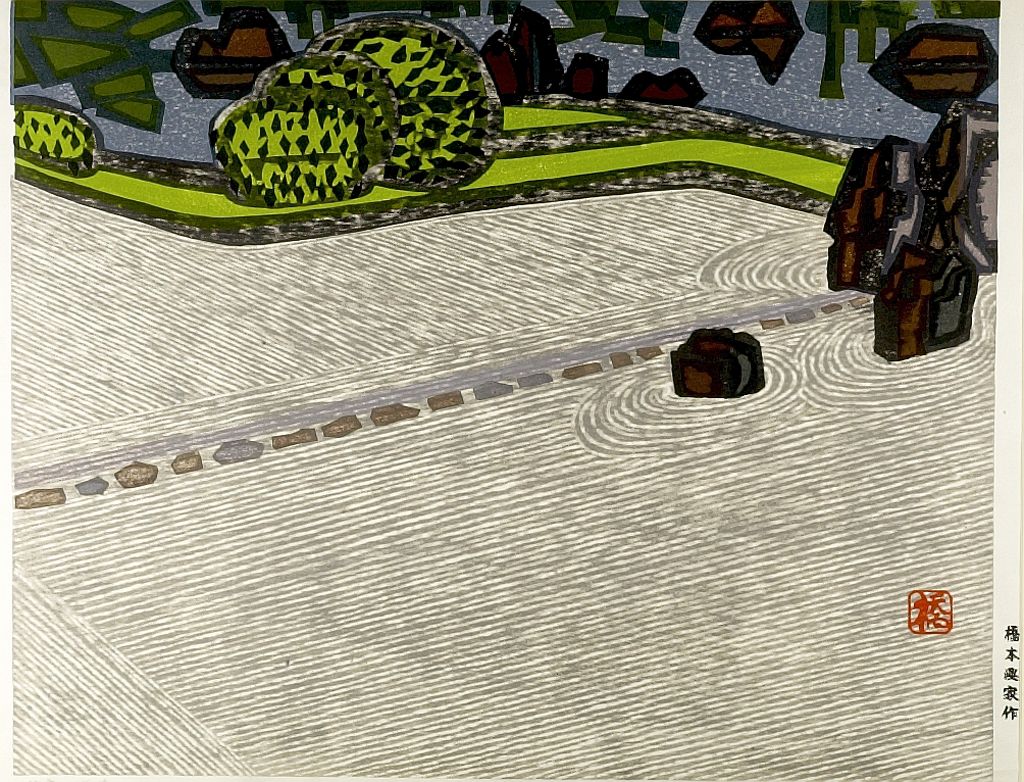

More Mount Fuji Prints
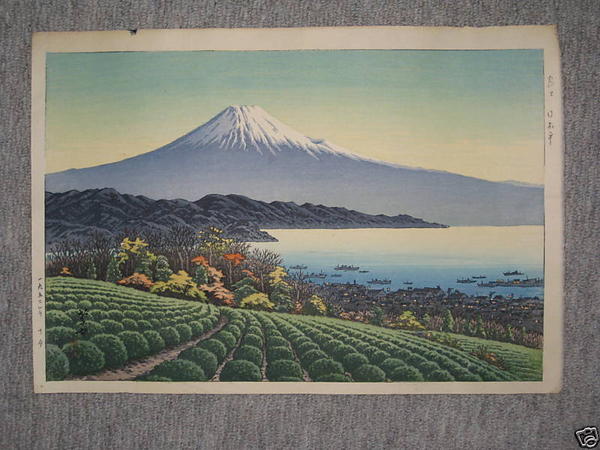
Fuji from tea farm
Woodblock print

Akasaka, Fujikawa, Okazaki, Chiryu, and Narumi, from the series "Famous Places on the Fifty-three Stations of the Tokaido, Five Stations (Tokaido gojusan eki goshuku meisho)"
c. 1830/35
Color woodblock print; oban
![Mount Fuji on a Moonlit Night, Kawai Bridge (Tsukiyo no Fuji [Kawaibashi]), from the series "Selection of Views of the Tokaido (Tokaido fukei senshu)" by Kawase Hasui](https://www.artic.edu/iiif/2/d0960668-1e73-339a-b182-fb995a54bff0/full/843,/0/default.jpg)
Mount Fuji on a Moonlit Night, Kawai Bridge (Tsukiyo no Fuji [Kawaibashi]), from the series "Selection of Views of the Tokaido (Tokaido fukei senshu)"
1947
Color woodblock print; oban

Mt. Fuji in Rain (Ame no Fuji)
n.d.
Color woodblock print
Featured in Collections
Curated cross-cuts that include this print.
Frequently Asked Questions
Mt Fuji was created by Okiie Hashimoto (橋本興家).
Mt Fuji depicts mount fuji.