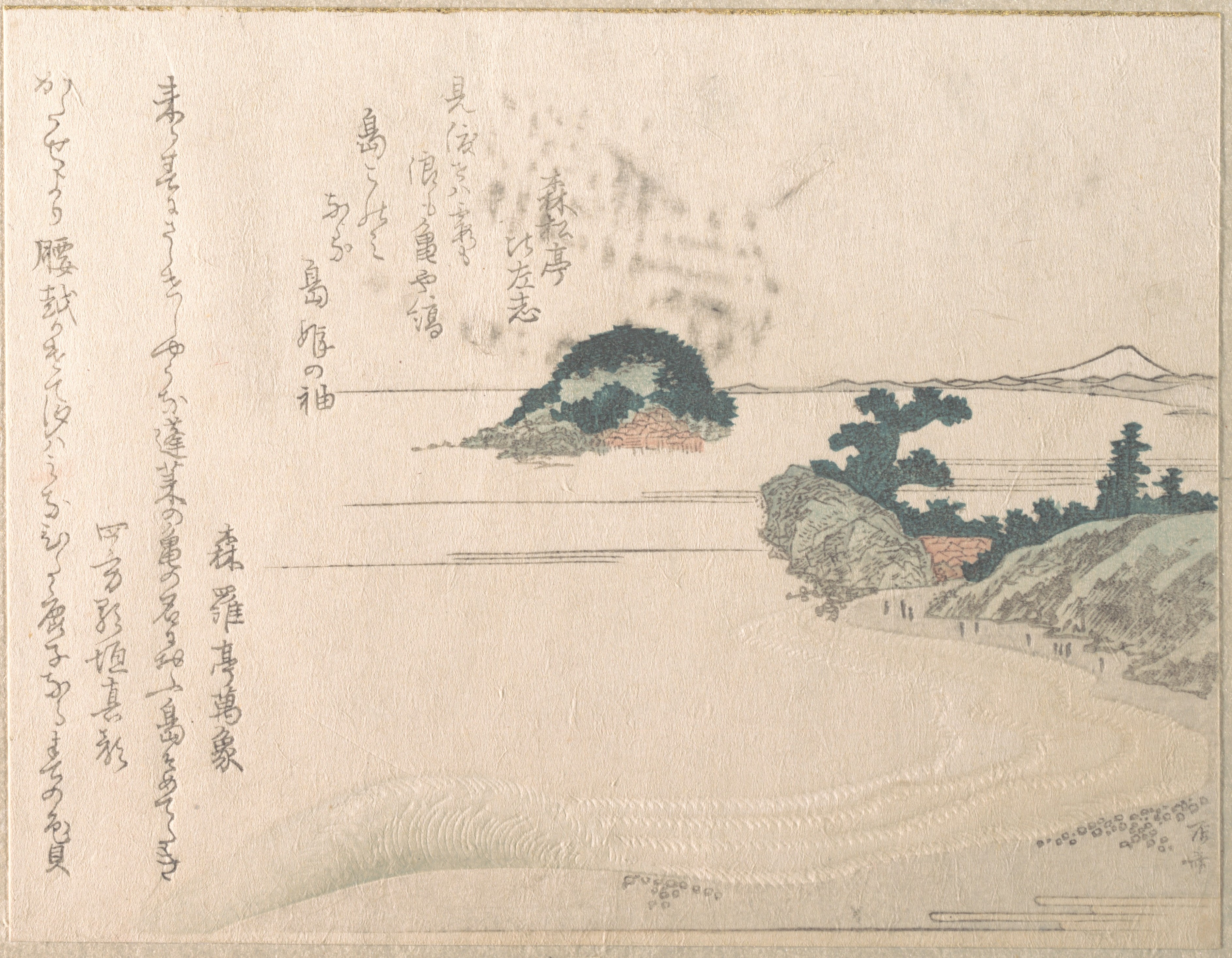
Turtle Island and Fujiyama
- Date:
- 19th century
- Medium:
- Woodblock print (surimono); ink and color on paper
- Source:
- Metropolitan Museum of Art
Description
Turtle Island and Fujiyama is a surimono by Ryuryukyo Shinsai in the Metropolitan Museum of Art. As a senior pupil of Katsushika Hokusai and a contributor to the Hokusai school, Shinsai created many surimono in which auspicious landscape motifs were brought together in a single emblematic composition. Here Mount Fuji, the iconic mountain whose perfect silhouette had long stood for longevity, purity, and Japan itself, is paired with the image of a tortoise-shaped island. The tortoise was a powerful symbol of long life in East Asian thought, often imagined as bearing the island of the immortals upon its back. Together, Fuji and the turtle island form a layered allusion to longevity, prosperity, and the cosmic stability cherished at the New Year. Shinsai composes the scene with the calm geometry characteristic of his master Hokusai, who himself made Fuji a central preoccupation, but he adapts it to the intimate surimono format. The sheet exploits the technical refinements typical of privately commissioned surimono, including soft color gradations across sea and sky, embossed blindprinting (karazuri) suggesting wave crests and the textured shell of the tortoise, and discreet metallic pigments. Distributed at gatherings of kyoka poets, the print would have invited verses on longevity, the mountain, and the changing of the year. Source: Metropolitan Museum of Art, https://www.metmuseum.org/art/collection/search/54518.
More Prints by Ryūryūkyo Shinsai
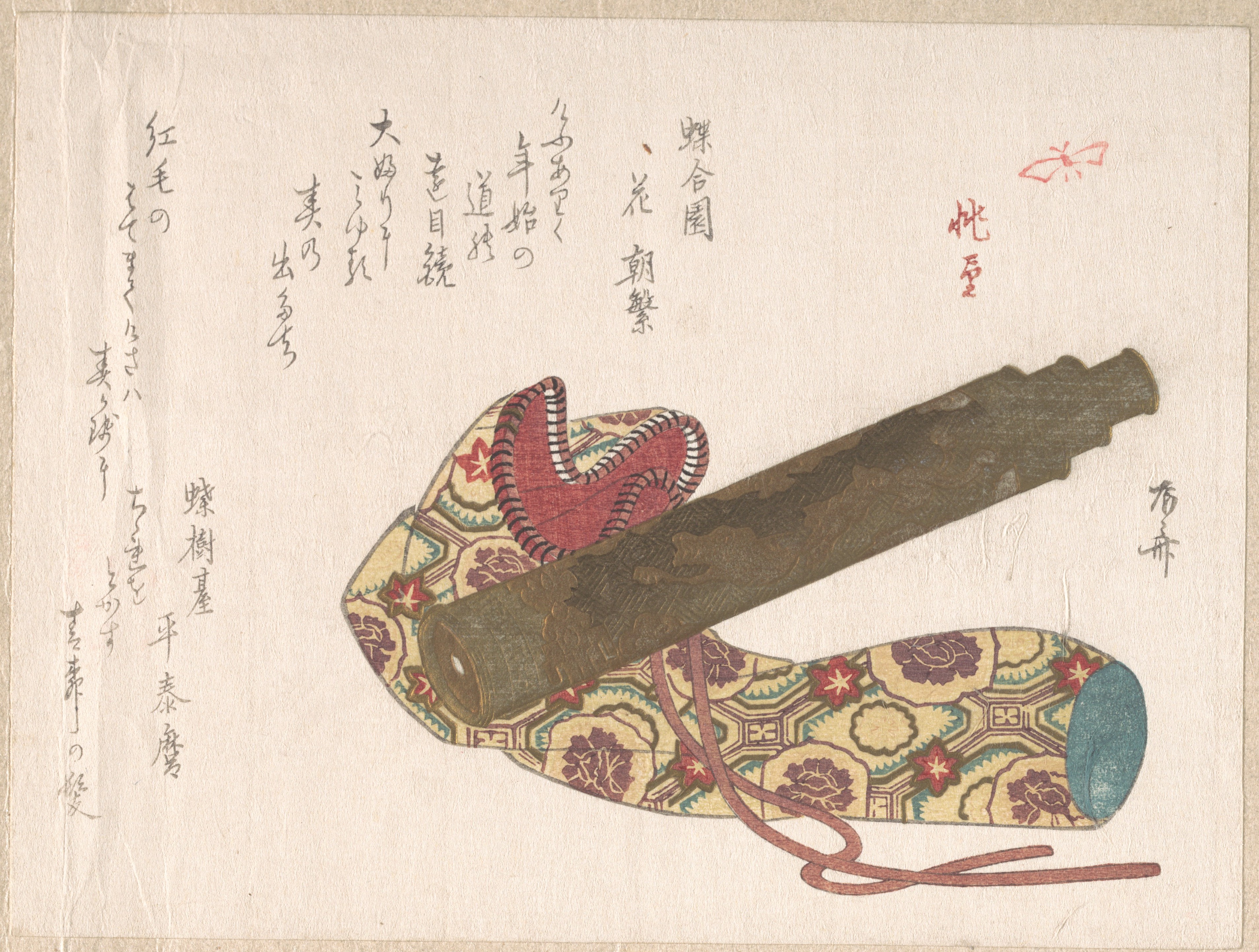
Telescope with Its Bag
19th century
Woodblock print (surimono); ink and color on paper
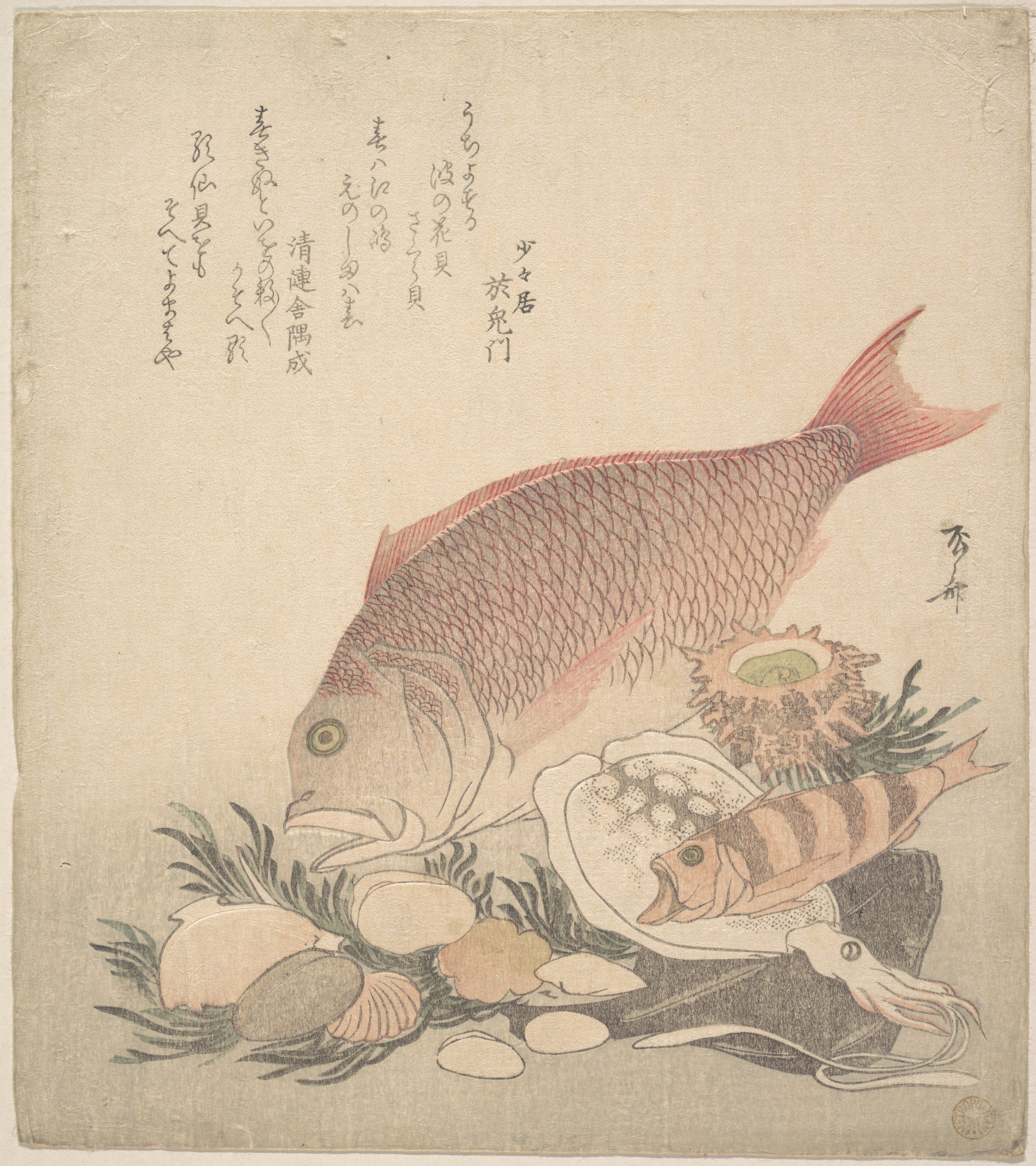
Large and Small Fish Swimming Among Shells and Moss at the Bottom of the Sea
ca. 1830
Woodblock print (surimono); ink and color on paper
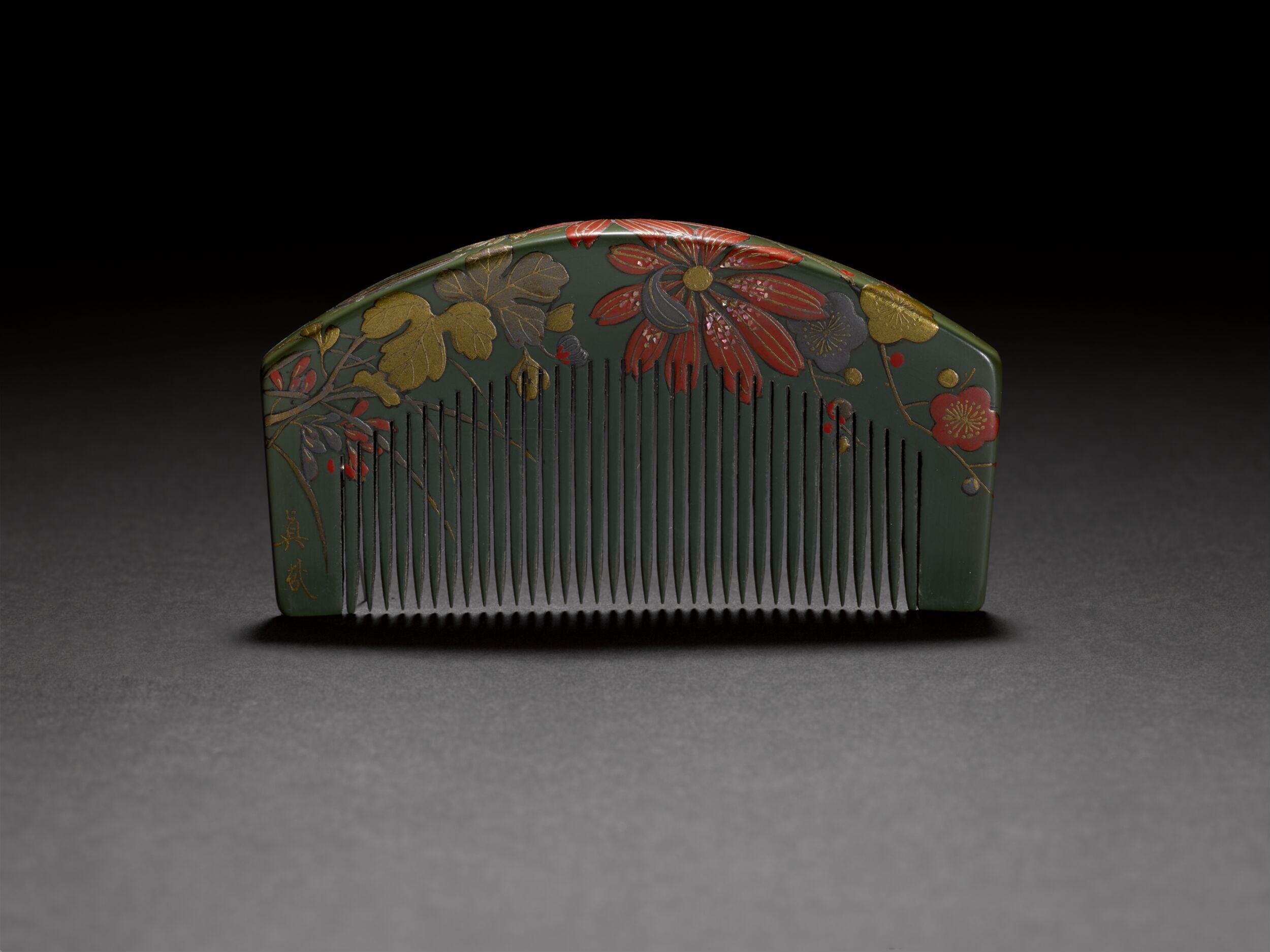
Untitled
1880 - 1895
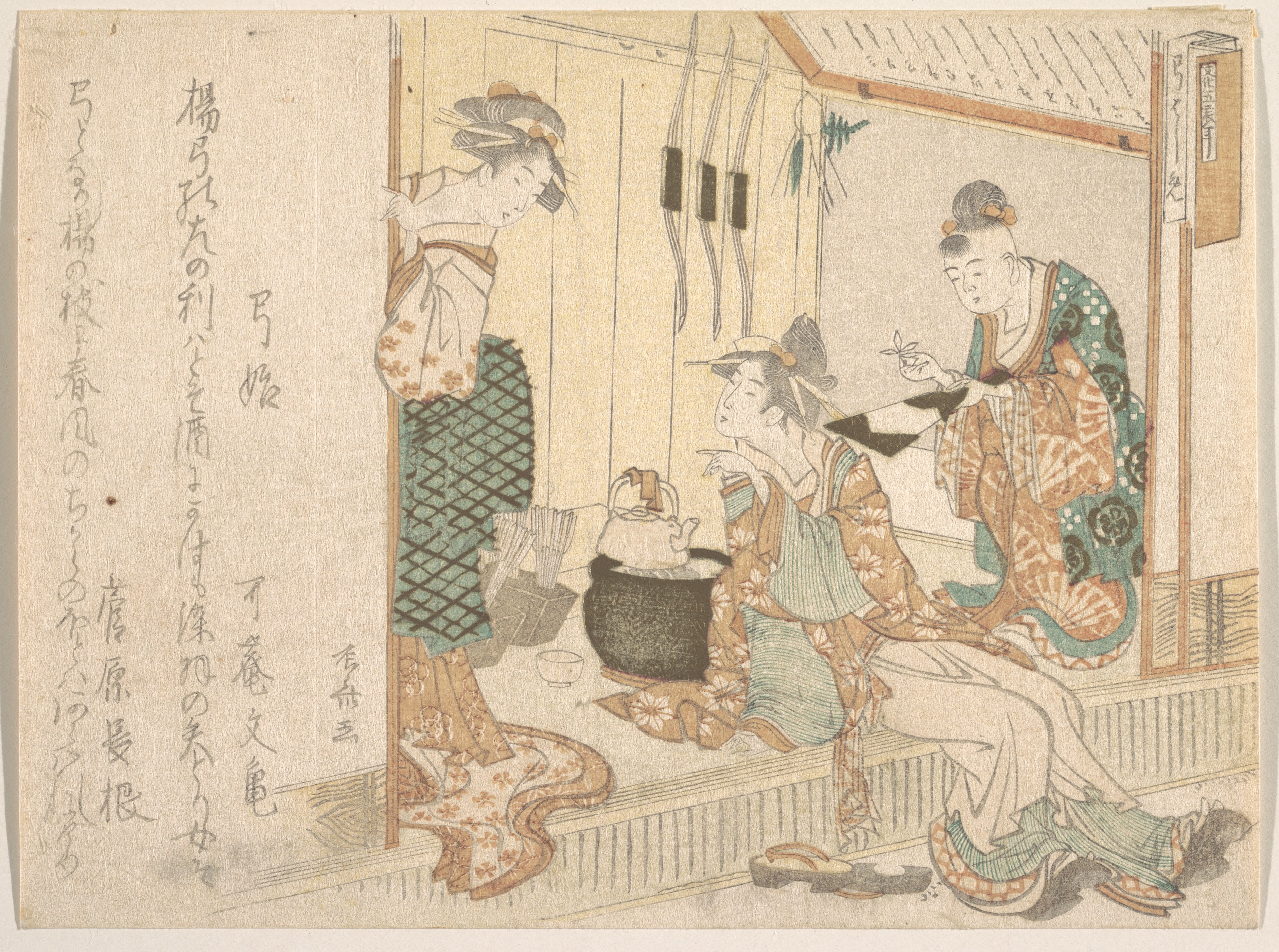
Two Young Ladies Having Tea Attended by Elderly Servant
Woodblock print (surimono); ink and color on paper
More Mount Fuji Prints
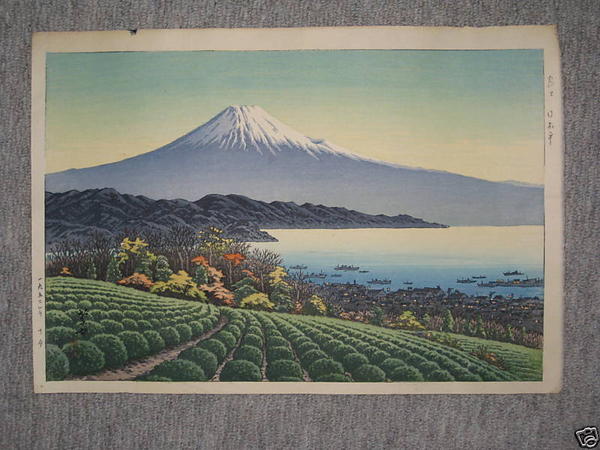
Fuji from tea farm
Woodblock print

Akasaka, Fujikawa, Okazaki, Chiryu, and Narumi, from the series "Famous Places on the Fifty-three Stations of the Tokaido, Five Stations (Tokaido gojusan eki goshuku meisho)"
c. 1830/35
Color woodblock print; oban
![Mount Fuji on a Moonlit Night, Kawai Bridge (Tsukiyo no Fuji [Kawaibashi]), from the series "Selection of Views of the Tokaido (Tokaido fukei senshu)" by Kawase Hasui](https://www.artic.edu/iiif/2/d0960668-1e73-339a-b182-fb995a54bff0/full/843,/0/default.jpg)
Mount Fuji on a Moonlit Night, Kawai Bridge (Tsukiyo no Fuji [Kawaibashi]), from the series "Selection of Views of the Tokaido (Tokaido fukei senshu)"
1947
Color woodblock print; oban

Mt. Fuji in Rain (Ame no Fuji)
n.d.
Color woodblock print
Featured in Collections
Curated cross-cuts that include this print.
Frequently Asked Questions
Turtle Island and Fujiyama was created by Ryūryūkyo Shinsai (柳々居辰斎) in 19th century.
Turtle Island and Fujiyama depicts mount fuji.