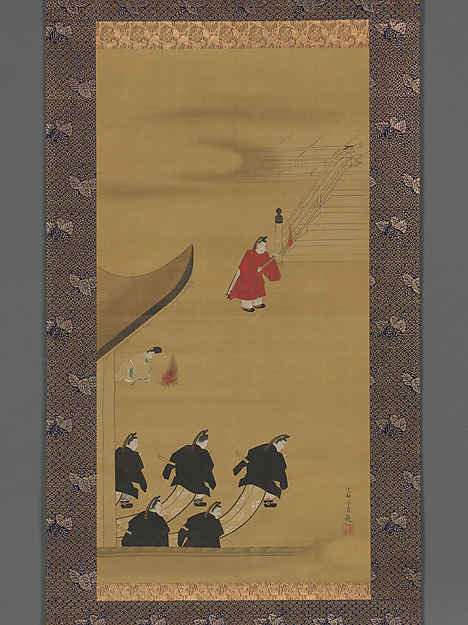
Activities of the Twelve Months
by Sakai Hōitsu
- Date:
- Late 1790s
- Medium:
- Eleven hanging scrolls from a set of twelve; ink and color on silk
- Source:
- Metropolitan Museum of Art
Description
Activities of the Twelve Months, painted in the late 1790s as a complete set of twelve hanging scrolls in ink and color on silk (the Metropolitan Museum, accession 2017.283.1-.11, holds eleven of the original twelve), is one of Sakai Hōitsu's most ambitious early projects and dates to the years immediately surrounding his 1797 Buddhist ordination. Each scroll depicts the characteristic activities, flowers, and atmospheres of one month of the lunar year — New Year's celebrations, cherry blossom viewing, the iris and Boys' Festival of the fifth month, summer cooling pavilions, autumn moon viewing, snow scenes — a quintessentially Heian-derived poetic-calendar subject (tsukinami-e) that linked Hōitsu's project to the courtly Yamato-e tradition the Rinpa school had long claimed as its lineage. The set predates Hōitsu's full embrace of Kōrin's bold ground compositions and shows his early synthesis of Yamato-e narrative, Kano figural conventions, and the proto-Rinpa sensibility he would soon develop into his mature Edo school idiom. The Metropolitan's catalogue dates the set to 1796-1799 and notes the rarity of an early Hōitsu commission on this scale, making the surviving eleven scrolls an indispensable document of the painter's formation.
More Prints by Sakai Hōitsu
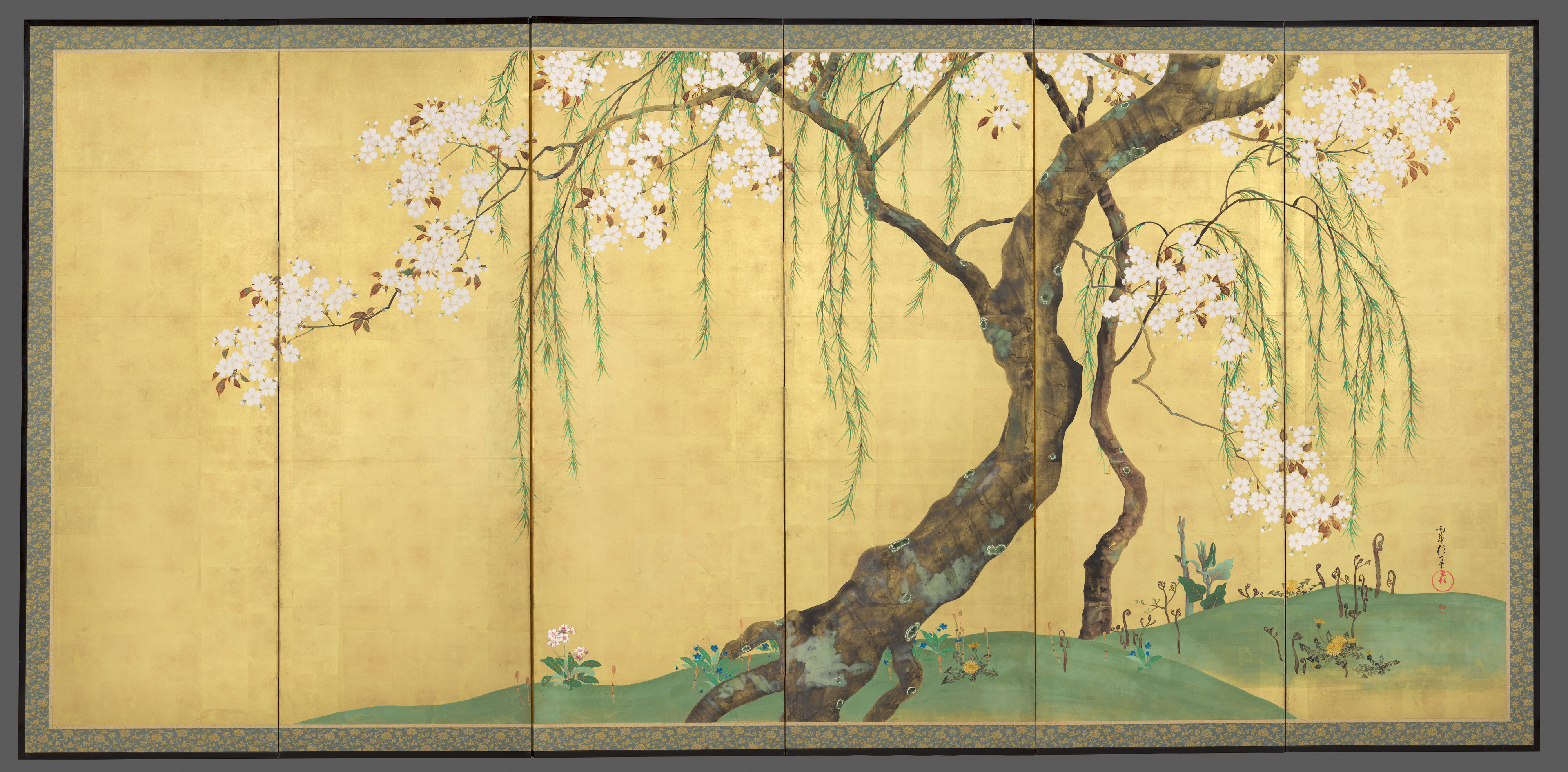
Cherry and Maple Trees
Early 1820s
Pair of six-panel folding screens; ink, color, and gold leaf on paper
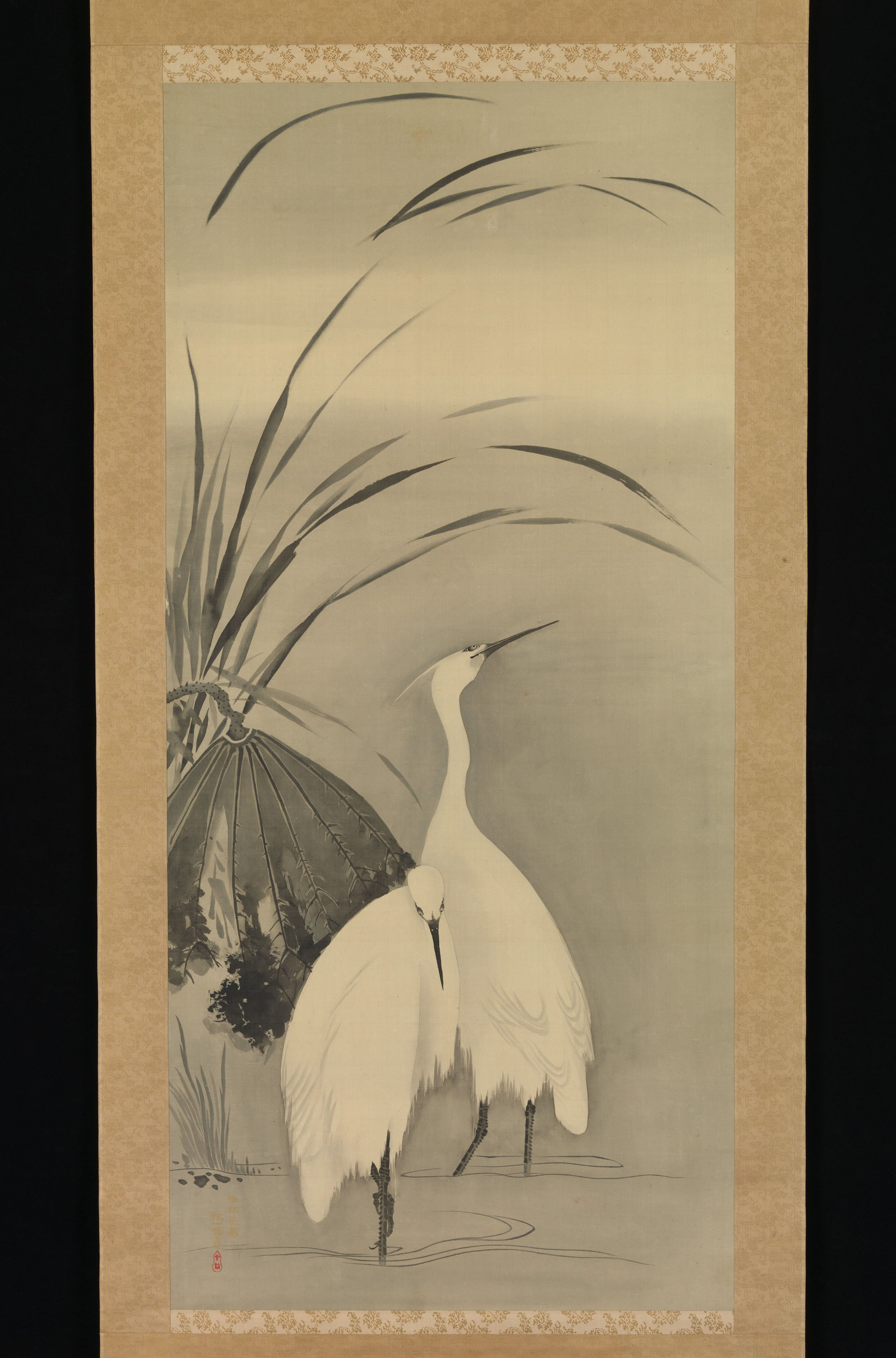
Two Egrets and Lotus
Early 19th century
Hanging scroll; ink on silk
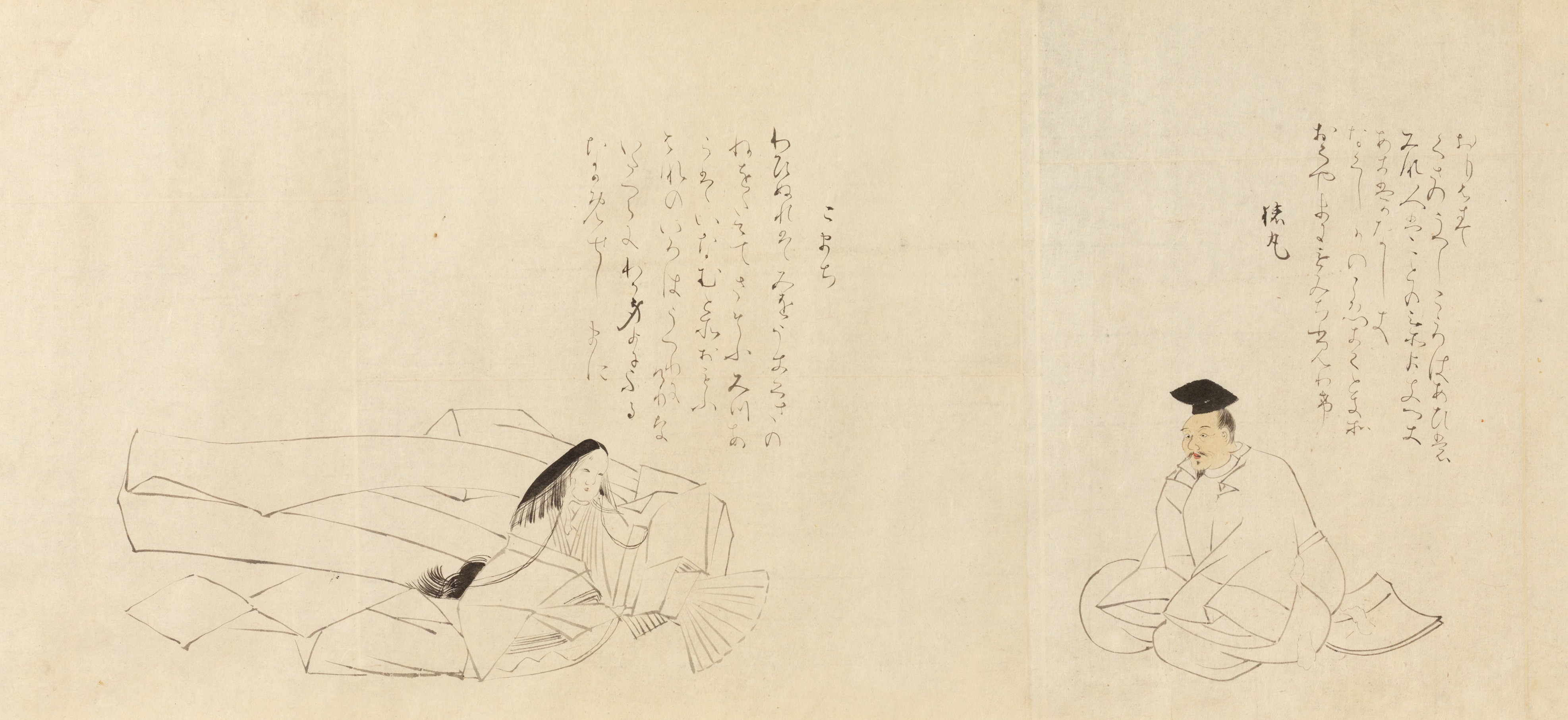
The Thirty-Six Poetic Immortals
1824
Handscroll; ink and color on paper
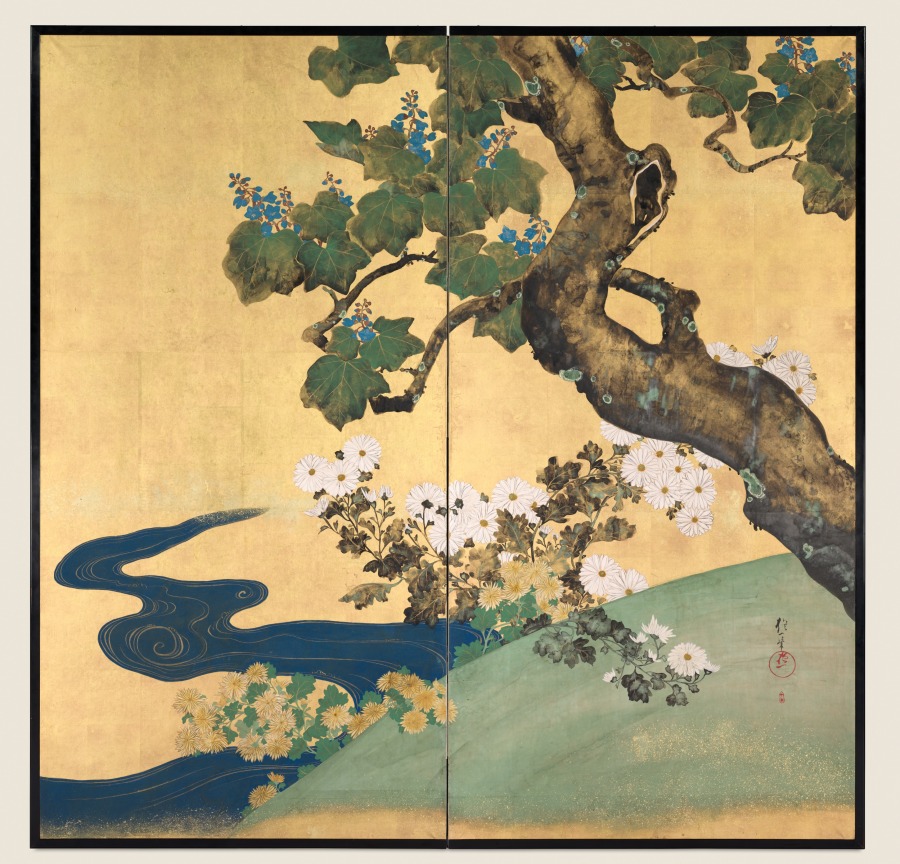
Paulownias and Chrysanthemums
early 1800s
Two-panel folding screen; ink and color on gilded paper
Frequently Asked Questions
Activities of the Twelve Months was created by Sakai Hōitsu (酒井抱一) in Late 1790s.