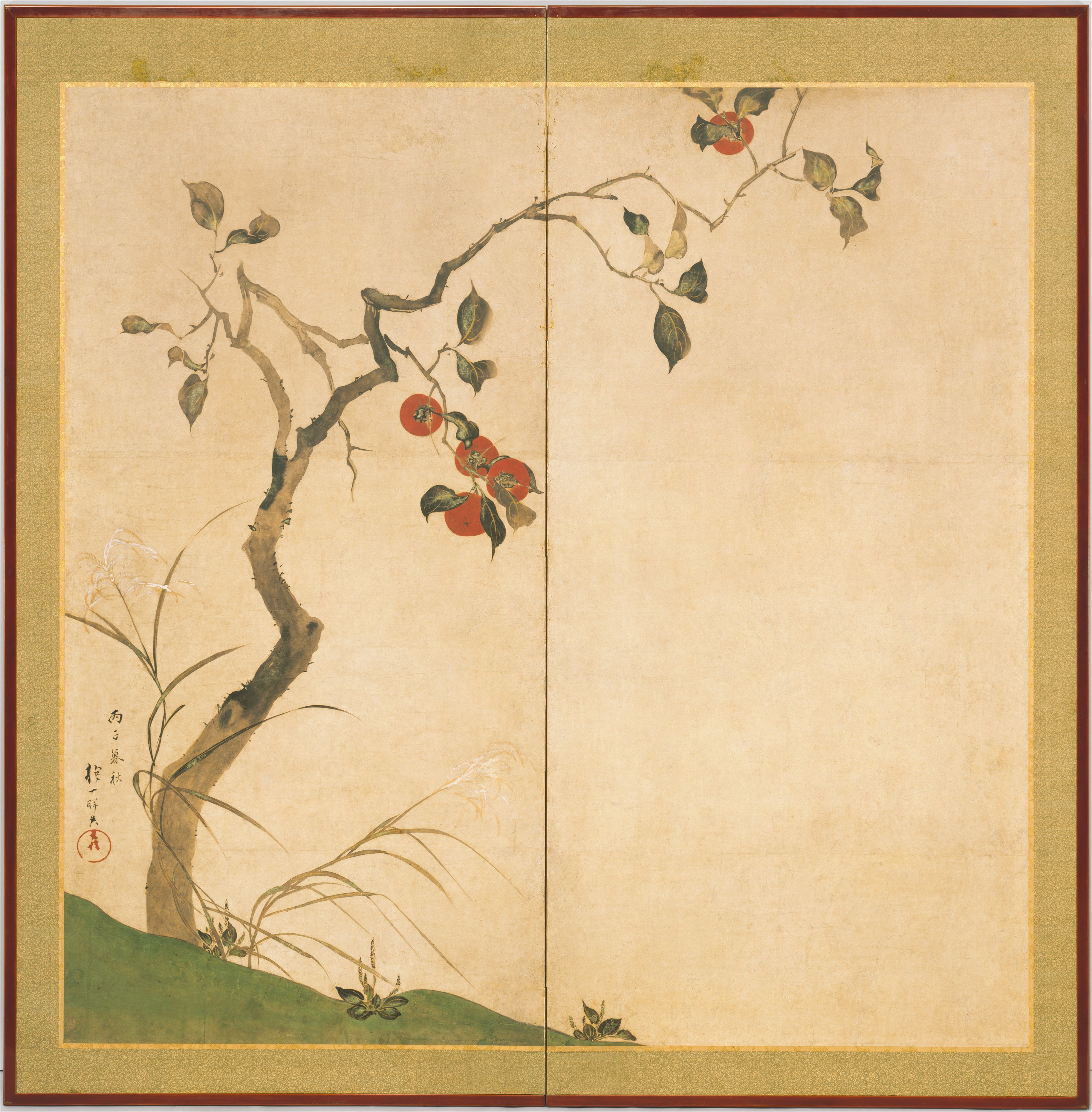
Persimmon Tree
by Sakai Hōitsu
- Date:
- 1816
- Medium:
- Two-panel folding screen; ink and color on paper
- Source:
- Metropolitan Museum of Art
Description
Persimmon Tree, a two-panel folding screen in ink and color on paper dated to 1816, is held by the Metropolitan Museum of Art (accession 57.156.3). The screen belongs to a small but important group of Sakai Hōitsu's mid-career compositions in which a single seasonal tree — persimmon, plum, or pine — is set against a plain ground and treated as the entire subject of a substantial decorative work. The persimmon, with its glossy orange fruit ripening into late autumn, is a quintessentially Japanese seasonal motif long honored in both painting and poetry; Hōitsu renders the tree's gnarled trunk with the tarashikomi ink-pooling technique that defines the Rinpa school's brushwork, and picks out the fruit in saturated mineral pigment against the warmer paper ground. Painted in 1816 — the year after Hōitsu organized the centenary memorial exhibition for Ogata Kōrin and published the first Kōrin hyakuzu album — the screen shows the painter at the height of his powers and explicitly in dialogue with Kōrin's century-earlier idiom, distilling a complete seasonal subject into the minimal expressive vocabulary of trunk, branch, and fruit that became one of the most influential conventions of late Edo decorative painting.
More Prints by Sakai Hōitsu
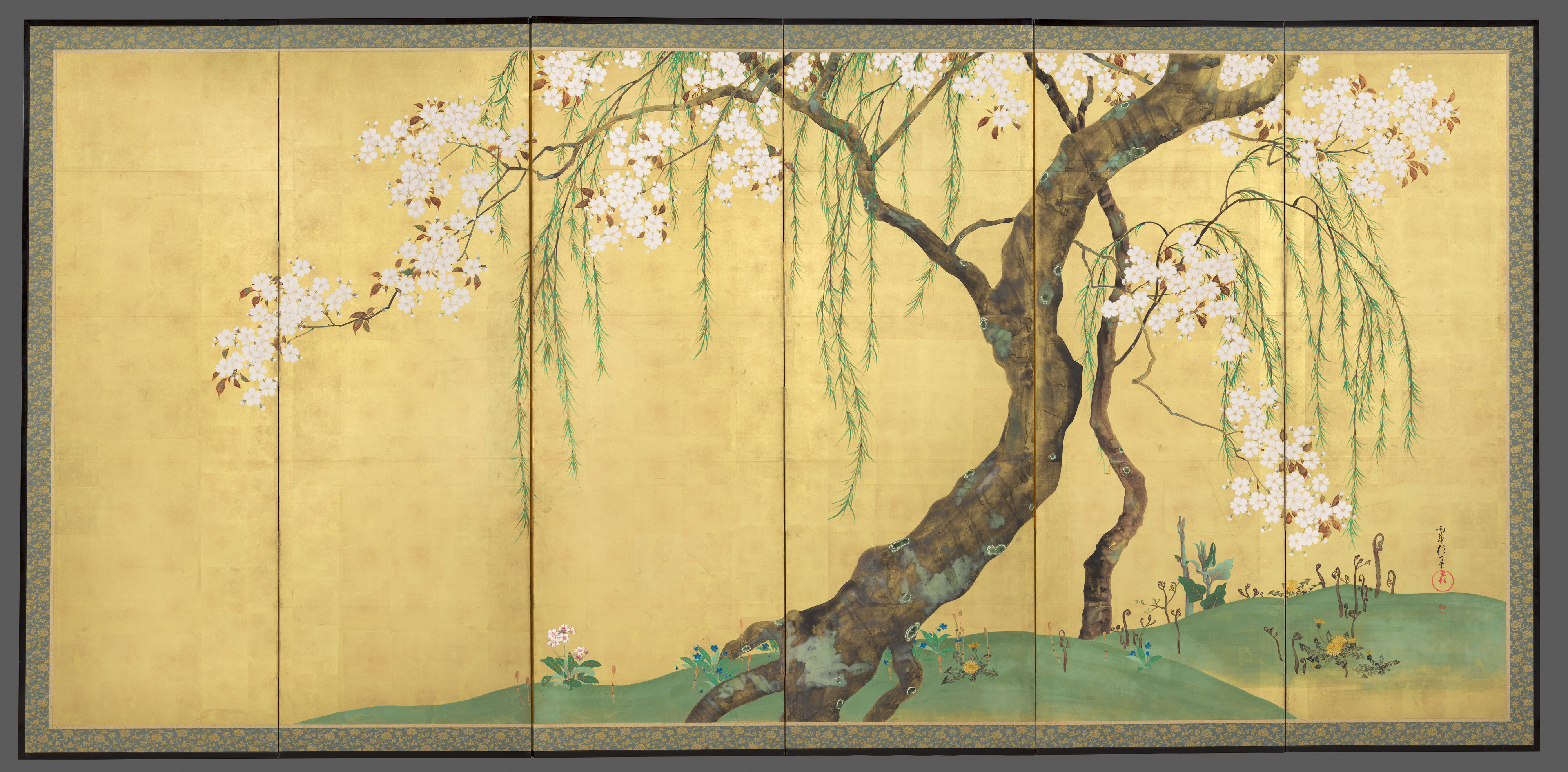
Cherry and Maple Trees
Early 1820s
Pair of six-panel folding screens; ink, color, and gold leaf on paper
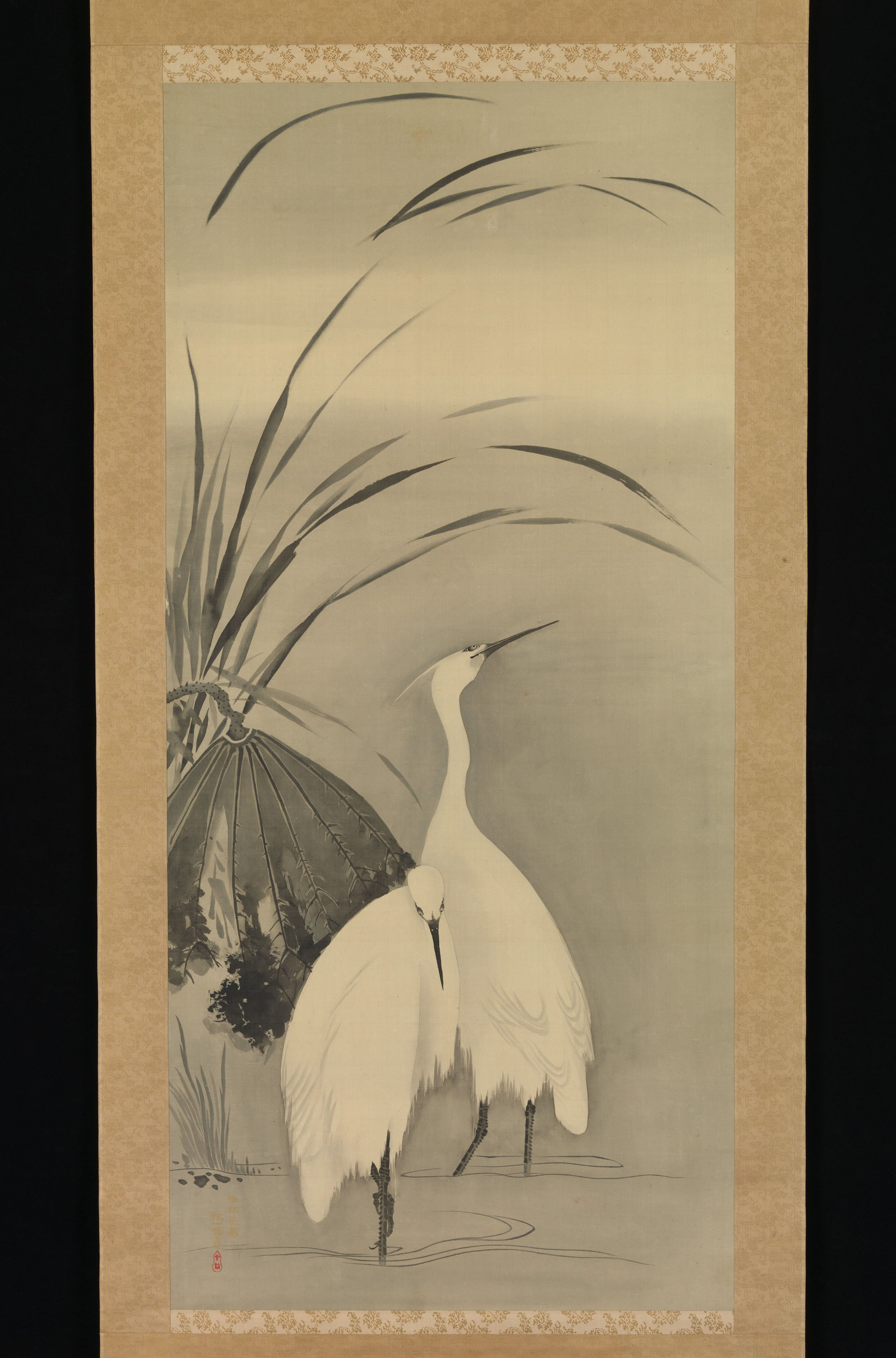
Two Egrets and Lotus
Early 19th century
Hanging scroll; ink on silk
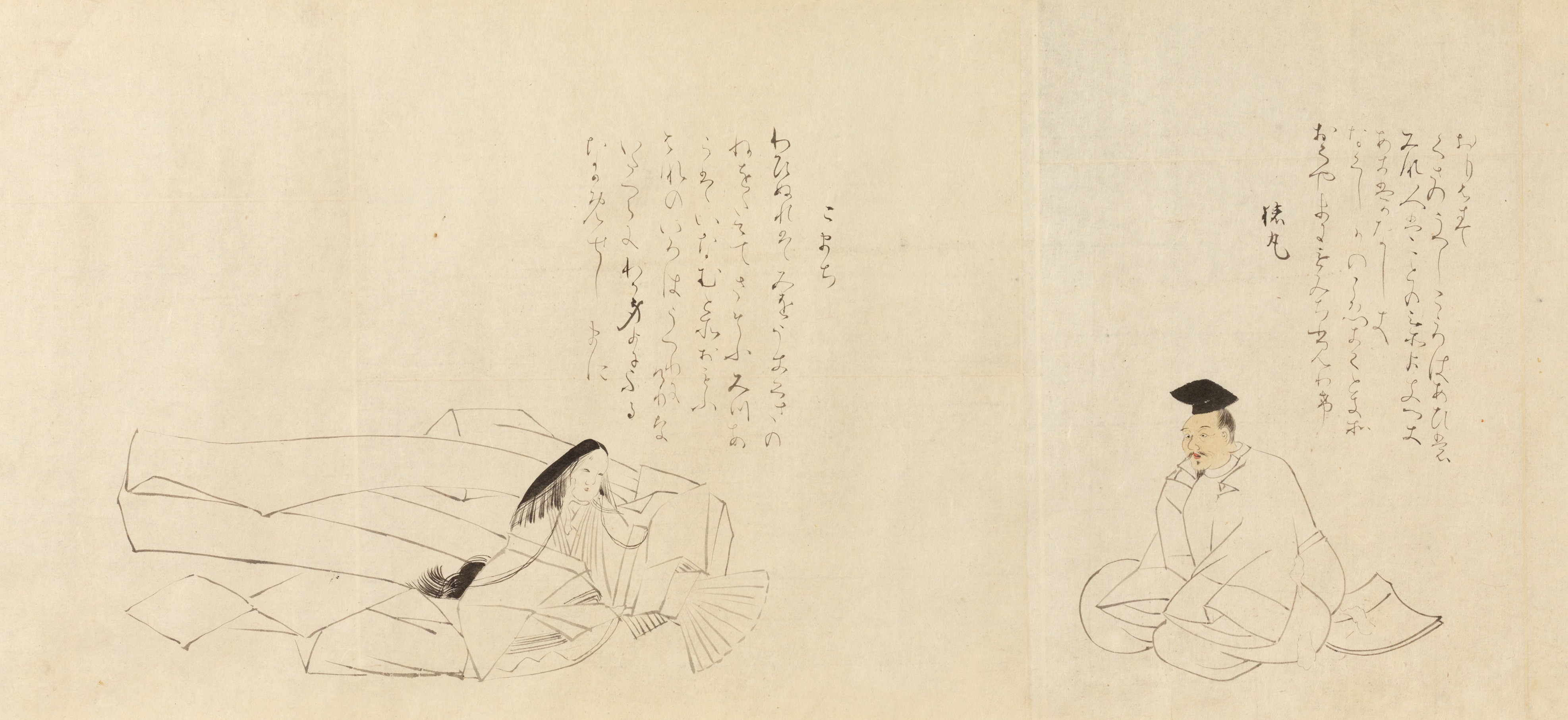
The Thirty-Six Poetic Immortals
1824
Handscroll; ink and color on paper
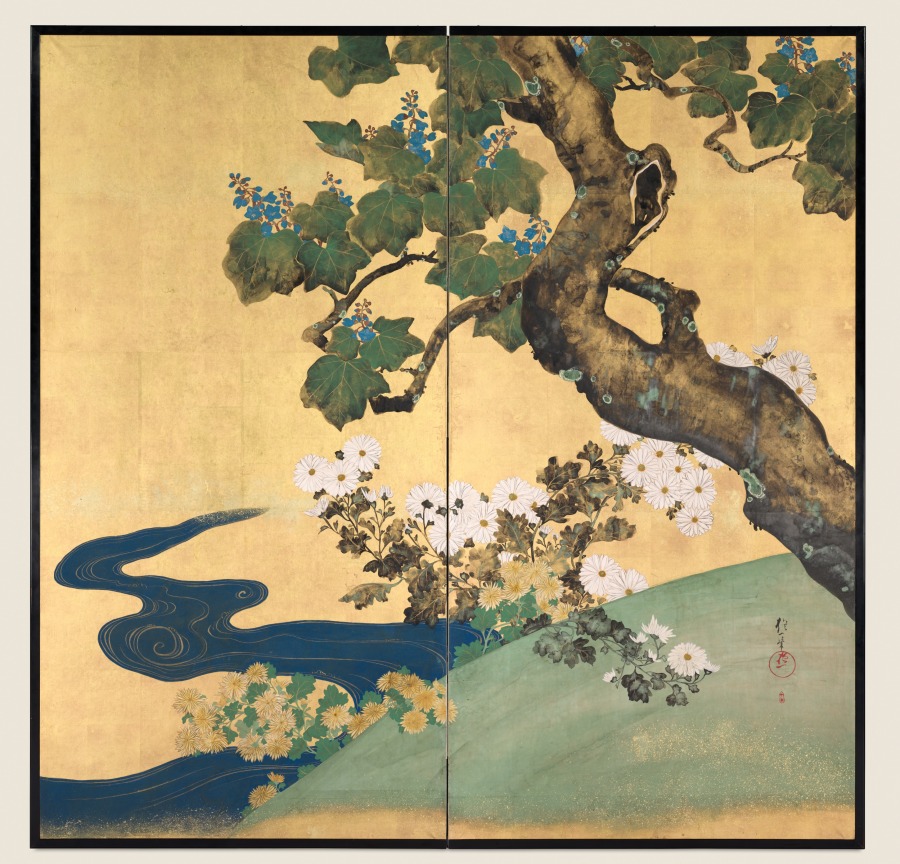
Paulownias and Chrysanthemums
early 1800s
Two-panel folding screen; ink and color on gilded paper
Frequently Asked Questions
Persimmon Tree was created by Sakai Hōitsu (酒井抱一) in 1816.