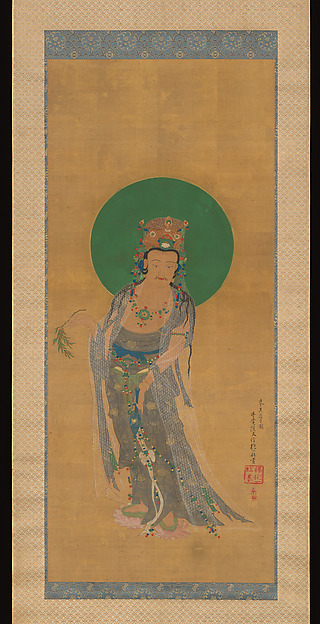
Willow Kannon
by Sakai Hōitsu
- Date:
- 1810s
- Medium:
- Hanging scroll; ink, color, and gold leaf on silk
- Source:
- Metropolitan Museum of Art
Description
Willow Kannon, a hanging scroll in ink, color, and gold leaf on silk dated to the 1810s and held by the Metropolitan Museum (accession 2019.419.2), shows Sakai Hōitsu turning his Edo Rinpa idiom to overtly Buddhist subject matter — a natural extension for a painter who had taken Jōdo Shinshū vows in 1797 and continued for the rest of his life as an ordained monk. The Willow Kannon (Yōryū Kannon) is one of the thirty-three traditional manifestations of the bodhisattva of compassion, identified by the slender willow branch held in the right hand, associated with the easing of illness and the granting of prayers. Hōitsu paints the bodhisattva in a serene frontal pose against a softly gilded ground, the white robes and willow handled with the same delicate tarashikomi pooling and refined pigment he applied to his bird-and-flower work. The composition draws on a long tradition of Buddhist Kannon imagery — both Chinese Song-Yuan prototypes and earlier Japanese Yamato-e devotional painting — but filters them through the cool, lyrical sensibility of the Edo Rinpa school. The Metropolitan dates the scroll to the 1810s, the period of Hōitsu's most consequential work in organizing the Kōrin centenary memorial and consolidating his school.
More Prints by Sakai Hōitsu
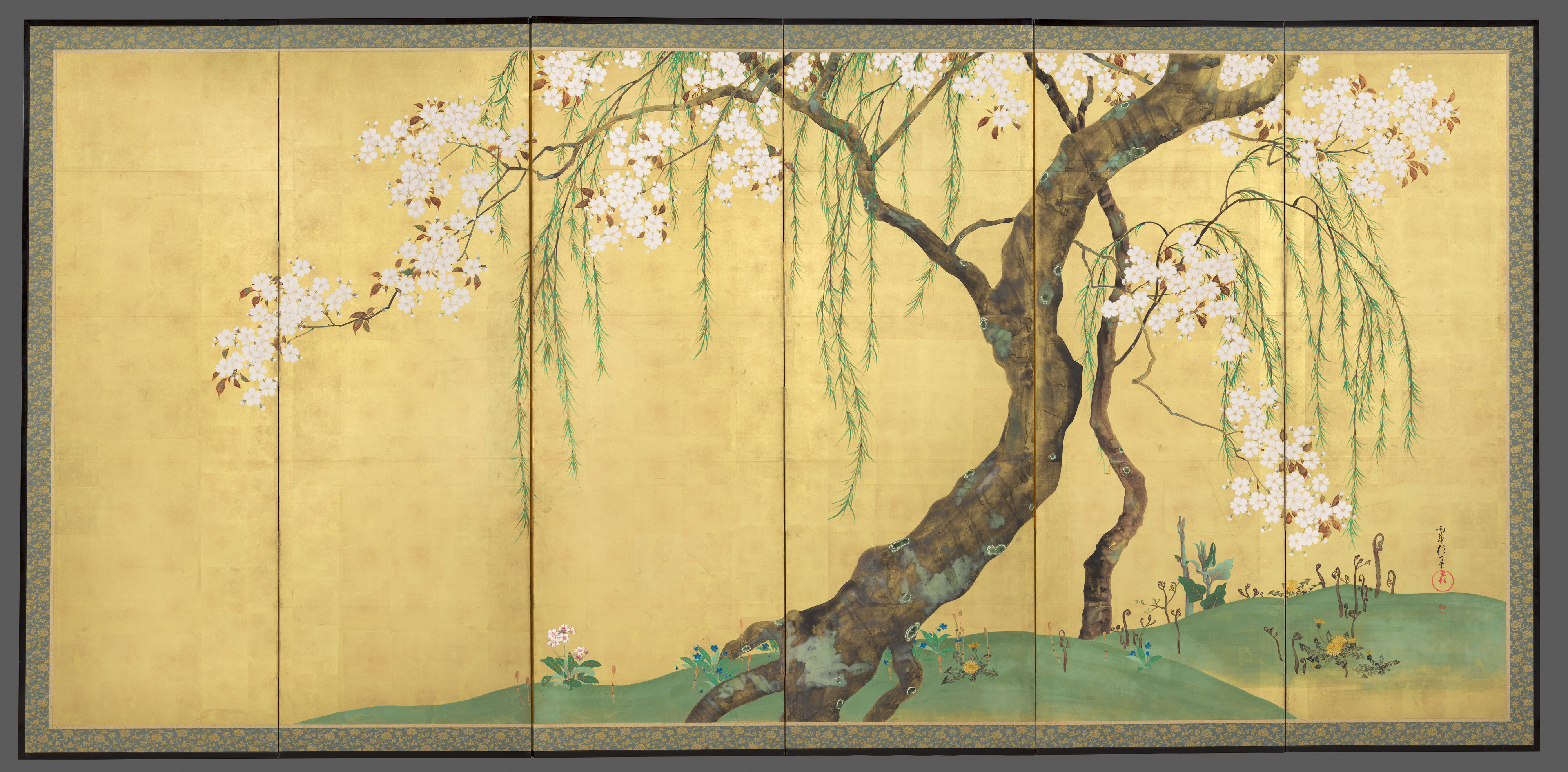
Cherry and Maple Trees
Early 1820s
Pair of six-panel folding screens; ink, color, and gold leaf on paper
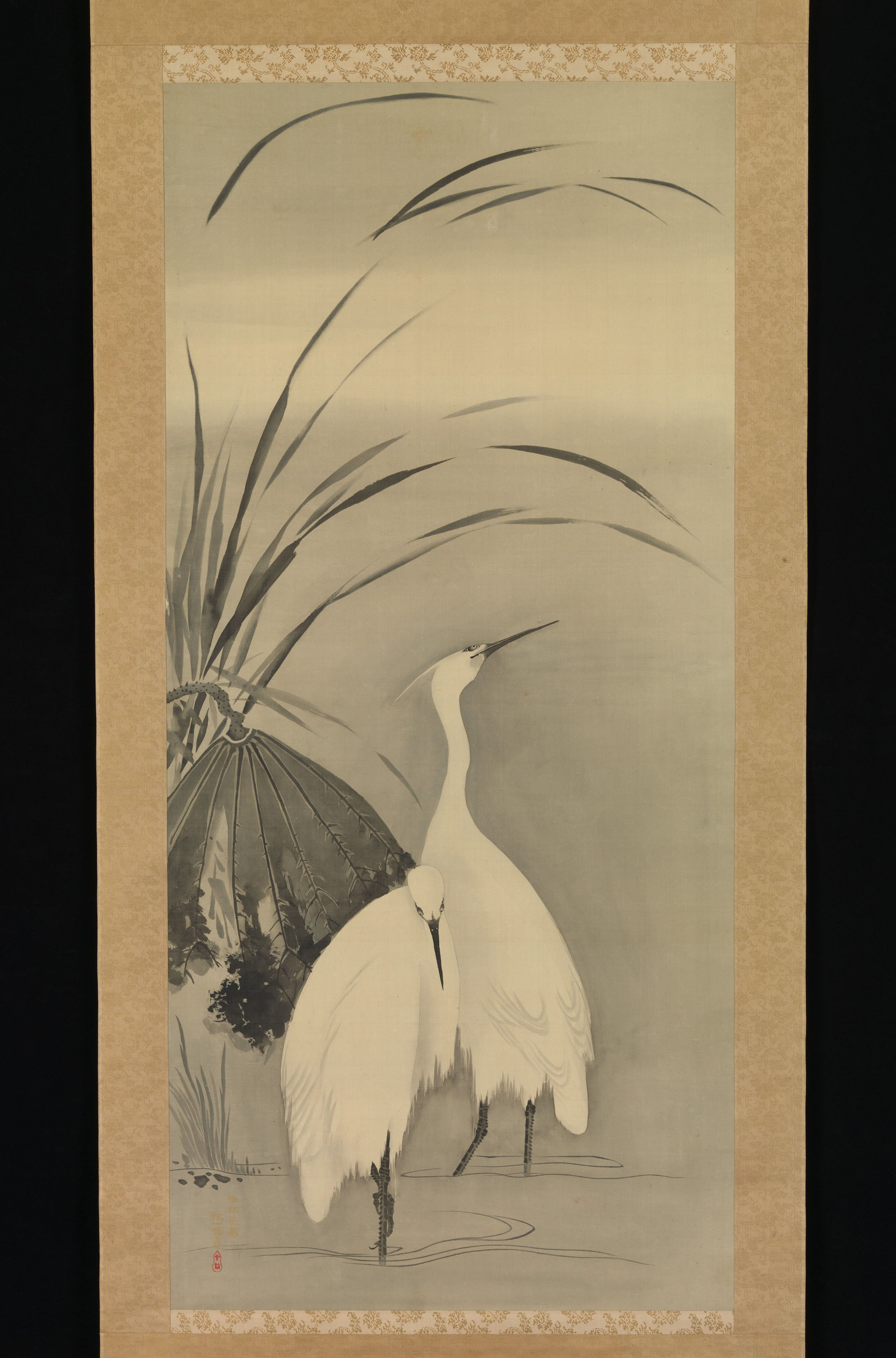
Two Egrets and Lotus
Early 19th century
Hanging scroll; ink on silk
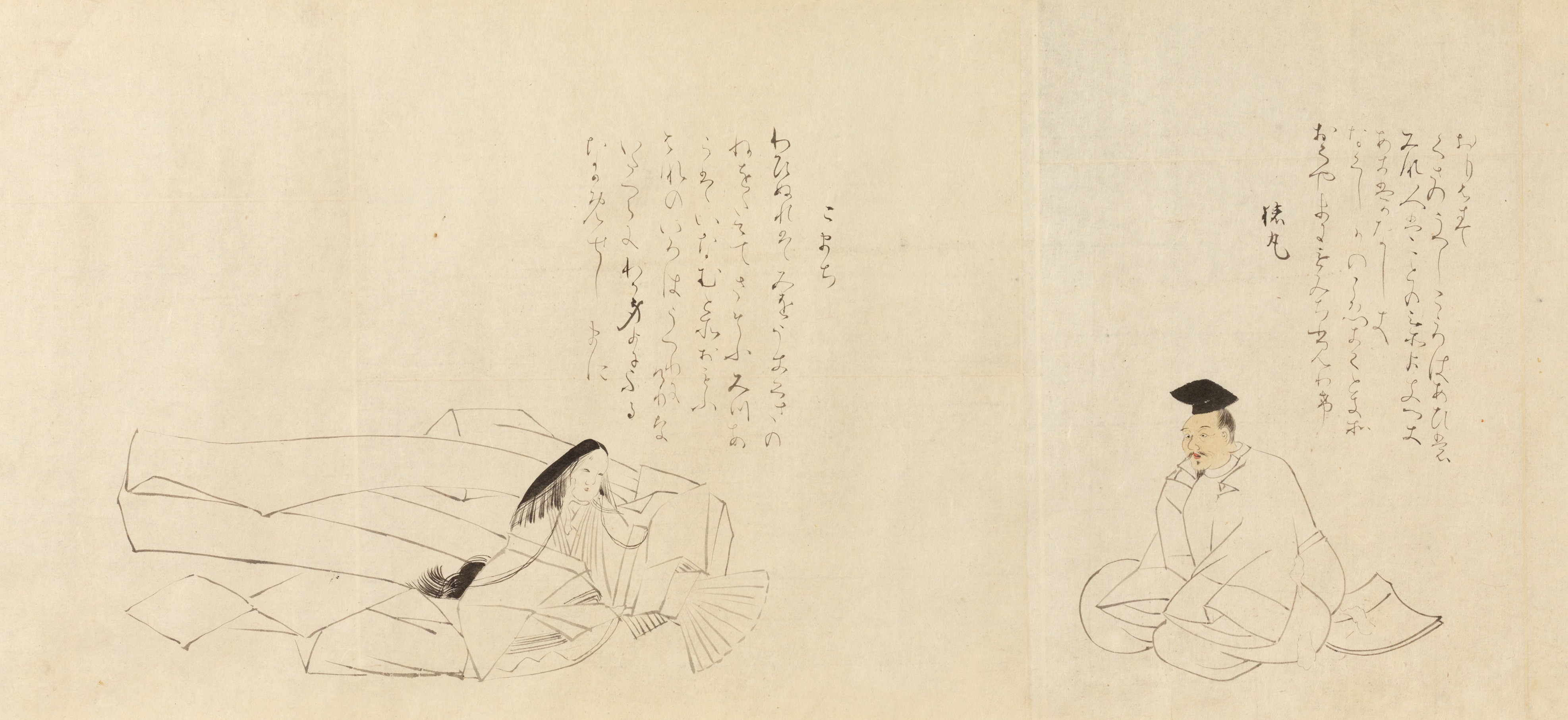
The Thirty-Six Poetic Immortals
1824
Handscroll; ink and color on paper
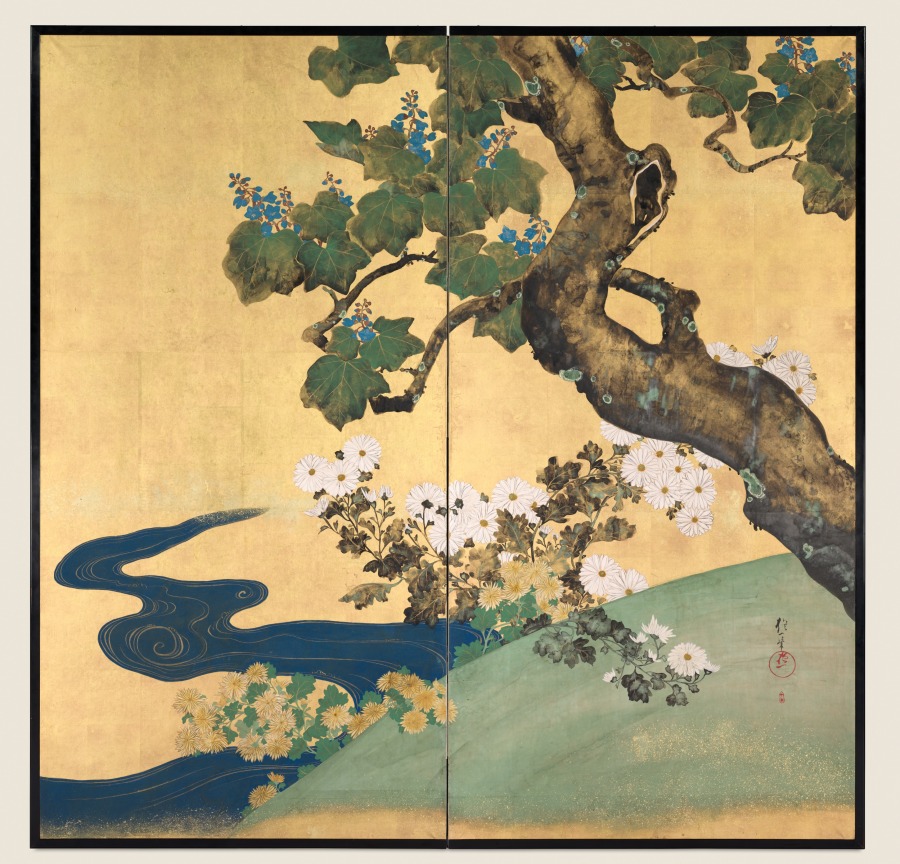
Paulownias and Chrysanthemums
early 1800s
Two-panel folding screen; ink and color on gilded paper
Frequently Asked Questions
Willow Kannon was created by Sakai Hōitsu (酒井抱一) in 1810s.