
Blue Snow
- Medium:
- Mokuhanga (Japanese woodblock)
- Image courtesy of
- Hanga Ten
Description
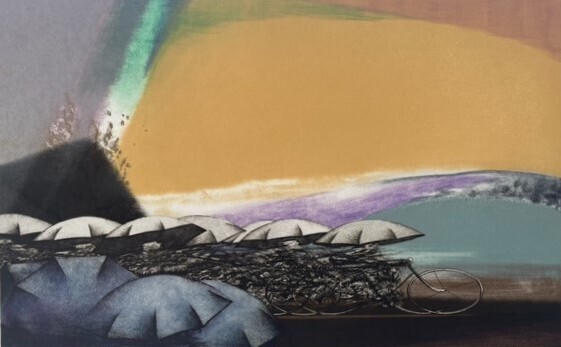
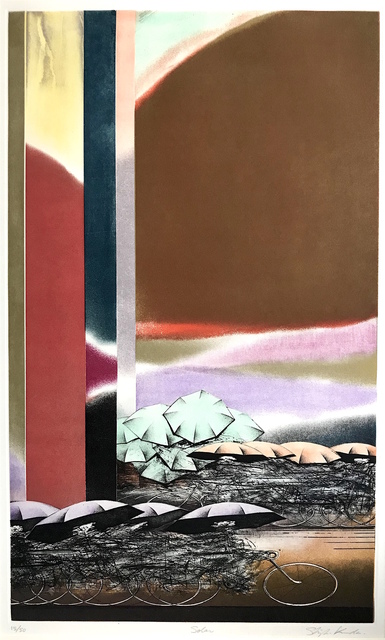
Blue Snow inverts the conventional white-on-dark treatment of snow scenes, suggesting either snow rendered in cool blue tonalities or a snowy landscape unified by a dominant blue cast — the kind of tonal shift visible at twilight when fresh snow takes on the color of the sky above it. Snow scenes (yuki-e) carry a long history in Japanese printmaking, from Hiroshige's Edo-period meisho-e through Hasui's twentieth-century shin-hanga to contemporary practitioners like Kuroda. In traditional snow prints, white pigment is often unprinted areas of the washi itself, with surrounding color blocks defining where snow appears. Kuroda's treatment likely uses bokashi gradients to suggest atmospheric depth, with figures or motifs silhouetted against the blue field. His preoccupation with weather as a vehicle for mood — most evident in his rain prints — extends naturally to snow, which similarly transforms space into something simultaneously concealed and revealed. The print is impressed on washi using baren burnishing, with the absorbent paper allowing pigment to settle into the fibers rather than sitting glossily on top.
More Prints by Shigeki Kuroda


More Snow Scenes Prints
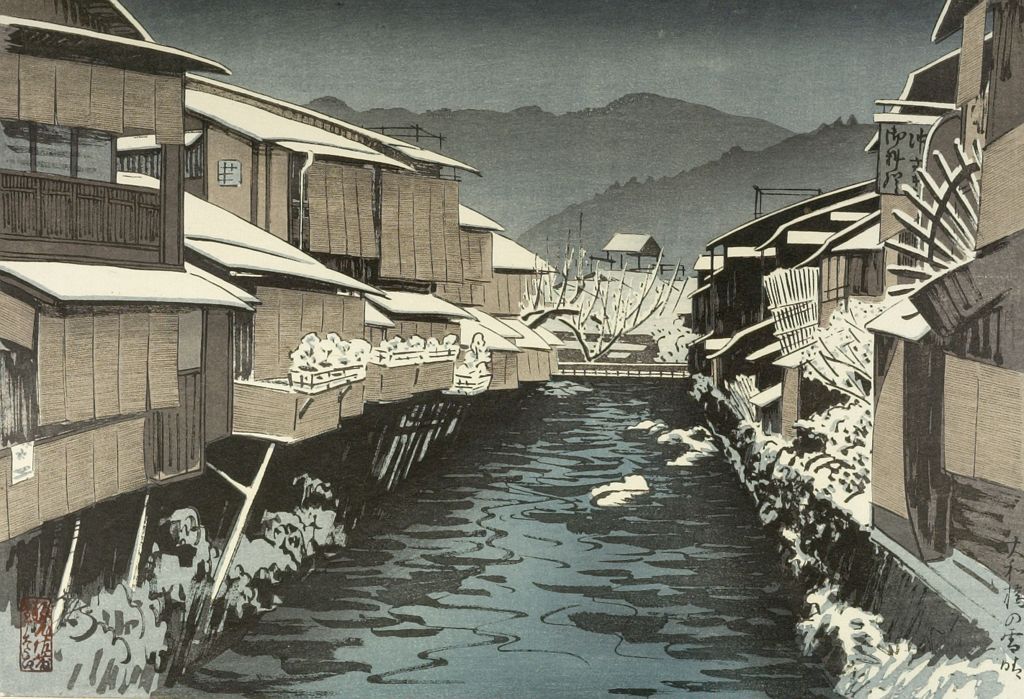
Fair Weather After Snow at Yamato Bridge, Kyoto (Yamato bashi no yukibare), Taishô period, dated 1924
Woodblock print

The Compound of the Tenman Shrine at Kameido in the Snow (Kameido Tenmangu keidai no yuki), from the series "Famous Places in the Eastern Capital (Toto meisho)"
c. 1832/38
Color woodblock print; oban

Miyajima in Snow (Yuki no Miyajima)
Yuki no Miyajima
1929
Color woodblock print; oban
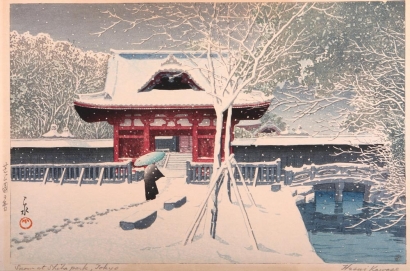
Evening Snow at Shiha Park, Tokyo
1932
Woodblock print
Frequently Asked Questions
Blue Snow was created by Shigeki Kuroda (黒田茂樹).
Blue Snow depicts snow scenes.