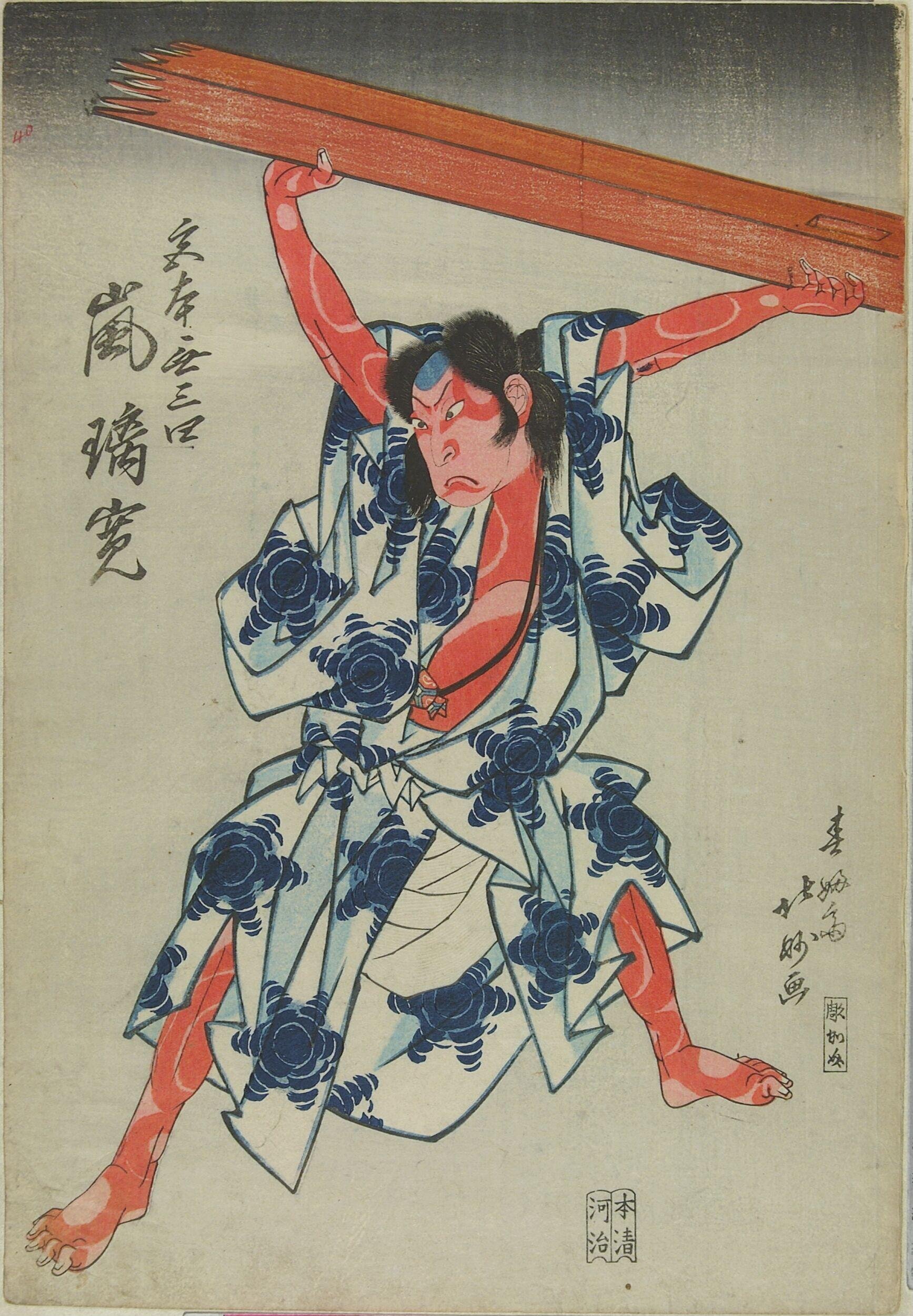
Actor Arashi Rikan as Miyamoto Musashi
- Medium:
- Source:
- Victoria and Albert Museum
Description
This undated yakusha-e by Shunkosai Hokushu, held by the Victoria and Albert Museum (accession O420019), depicts the actor Arashi Rikan as the legendary swordsman Miyamoto Musashi. The role of Musashi, the historical seventeenth-century master swordsman elevated by Edo-period storytelling into a folk hero, was a popular kabuki subject offering the actor a chance to display physical poise and warrior gravitas. Arashi Rikan II was one of the dominant male leads of the late-Bunsei and early-Tenpo Osaka stage, and Hokushu's portraits of him document the post-Utaemon transition of leadership on the kamigata stage. The composition follows his mature Osaka kamigata-e template: a tight half-length view, careful facial study, restrained palette, and the role identification by inscription. The undated character of the print places it somewhere in the late 1820s or very early 1830s, the final phase of his documented yakusha-e practice. The print is preserved at the Victoria and Albert Museum (accession O420019) and is catalogued without a specific date. The Miyamoto Musashi role, drawn from kabuki and storytelling traditions surrounding the historical seventeenth-century swordsman, was a vehicle for displaying tachi-mae (sword-stance) and warrior bearing, and Arashi Rikan II's interpretation of the part would have built on the existing performance lineage of the role on the Osaka stage. Hokushu's portrait of him in the part is one of several prints in the V&A that document the artist's late-career engagement with Rikan II as the heir-apparent of the Osaka kamigata male-lead tradition that Utaemon III and Ebijuro I had defined for the previous two decades.
More Prints by Shunkōsai Hokushū

The Actor Arashi Koroku IV in the Final Farewell Performance of His Career (Shōgai onagori kyōgen) as the Female Bandit Hotei Oichi
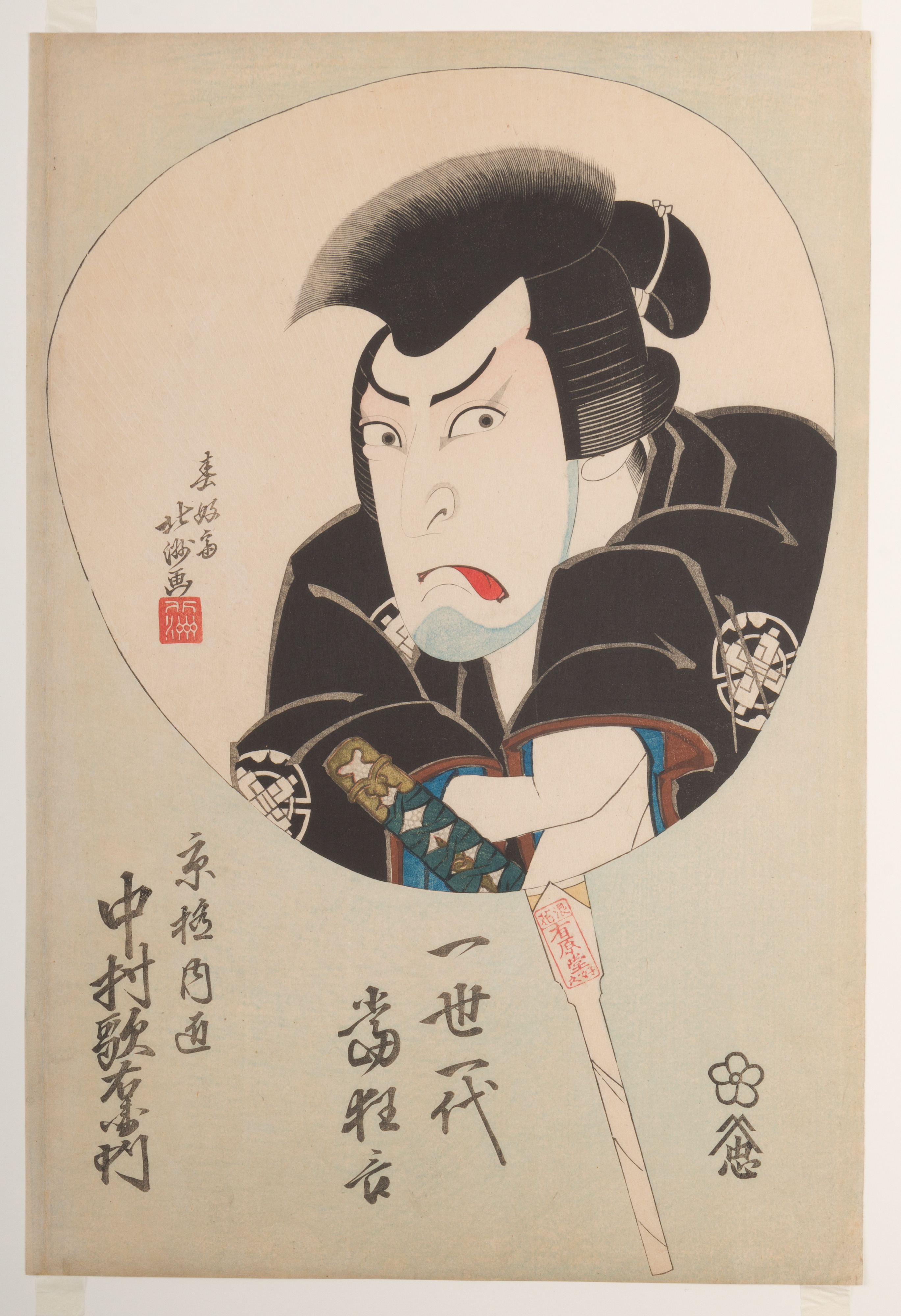
Kabuki Actor Nakamura Utaemon III as the Sword Master Kyōgoku Takumi, from the series Issei ichidai atari Kyōgen (Hits of a Lifetime of Kyōgen)

Actor Ichikawa Ebijūrō I as Tōken (China Dog) Jūbei, in the play Red and Purple, Rich Dyes of Osaka (Benimurasaki ai de someage)
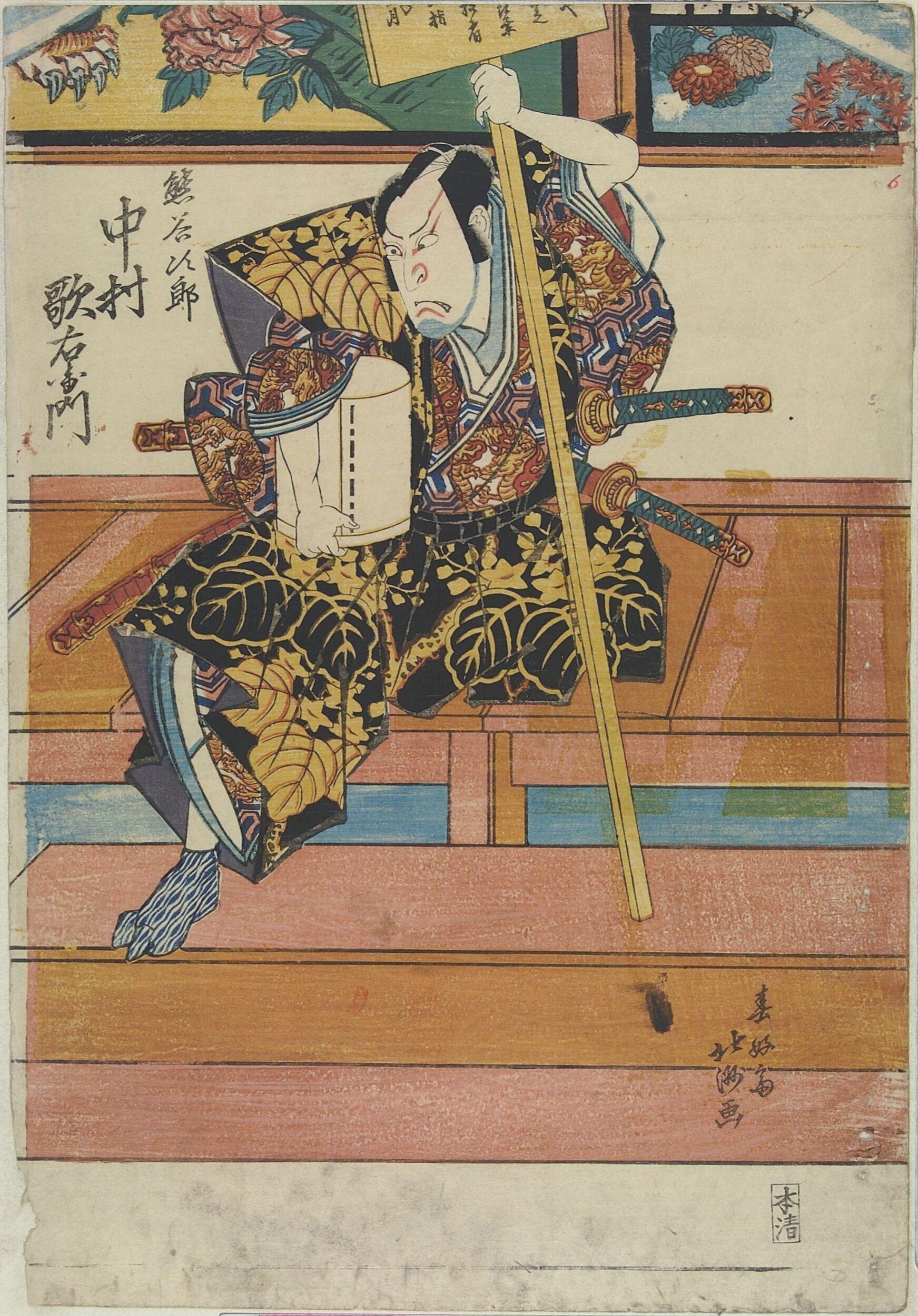
Actor Nakamura Utaemon III as Kumagae Jirō
1825
Frequently Asked Questions
Actor Arashi Rikan as Miyamoto Musashi was created by Shunkōsai Hokushū (春好斎北洲).