Actors Asao Utashiro as Tedai Shinbei, Ichikawa Ichizo II as Gokumon Shobei and Nakamura Utaemon III as Kurofune no Chuemon
- Source:
- Victoria and Albert Museum
Description
Held by the Victoria and Albert Museum (https://collections.vam.ac.uk/item/O409801), this 1827 yakusha-e by Shunkosai Hokushu presents a triptych composition showing the actors Asao Utashiro as Tedai Shinbei, Ichikawa Ichizo II as Gokumon Shobei, and Nakamura Utaemon III as Kurofune no Chuemon, a three-figure ensemble portrait drawn from one of the late-1820s Osaka kabuki productions. The Kurofune no Chuemon and Gokumon Shobei character names, along with the otokodate-styled bearing the roles required, identify the production as belonging to the rogue-and-merchant register of Kamigata kabuki, with Tedai (shop clerk) Shinbei as the salaryman counterweight to the criminal-class characters of Gokumon (literally Prison Gate) Shobei and Kurofune (Black Ship) Chuemon. Nakamura Utaemon III, the dominant Kamigata tachiyaku across the 1810s and 1820s, anchors the composition in the leading rogue role of Kurofune no Chuemon, while Ichikawa Ichizo II and Asao Utashiro contribute the supporting characters in a configuration typical of the late-Bunsei Osaka stage. Hokushu, working at the height of his career in 1827 within the period that would soon transition to the Hokuei-led 1830s, draws the three figures in the personal-likeness manner characteristic of mature Kamigata-e portraiture, the actors' distinctive features preserved beneath the roles' makeup. The triptych format extends Hokushu's standard single-figure half-length composition into a three-figure ensemble that allowed the artist to document the casting partnerships of a specific production within a unified visual frame. The kamigata-e workshop tradition of Osaka, with its emphasis on individual likeness and its more restrained color palette of grays, browns, and indigos, here finds one of its multi-figure applications in Hokushu's mature production. The Victoria and Albert Museum impression preserves the careful color registration across the three sheets that distinguished premium Osaka workshop output. As a late-1820s ensemble portrait, the print belongs to the productive final period of Hokushu's career before the artistic torch passed to his pupil Shunbaisai Hokuei in the early 1830s.
More Prints by Shunkōsai Hokushū

The Actor Arashi Koroku IV in the Final Farewell Performance of His Career (Shōgai onagori kyōgen) as the Female Bandit Hotei Oichi
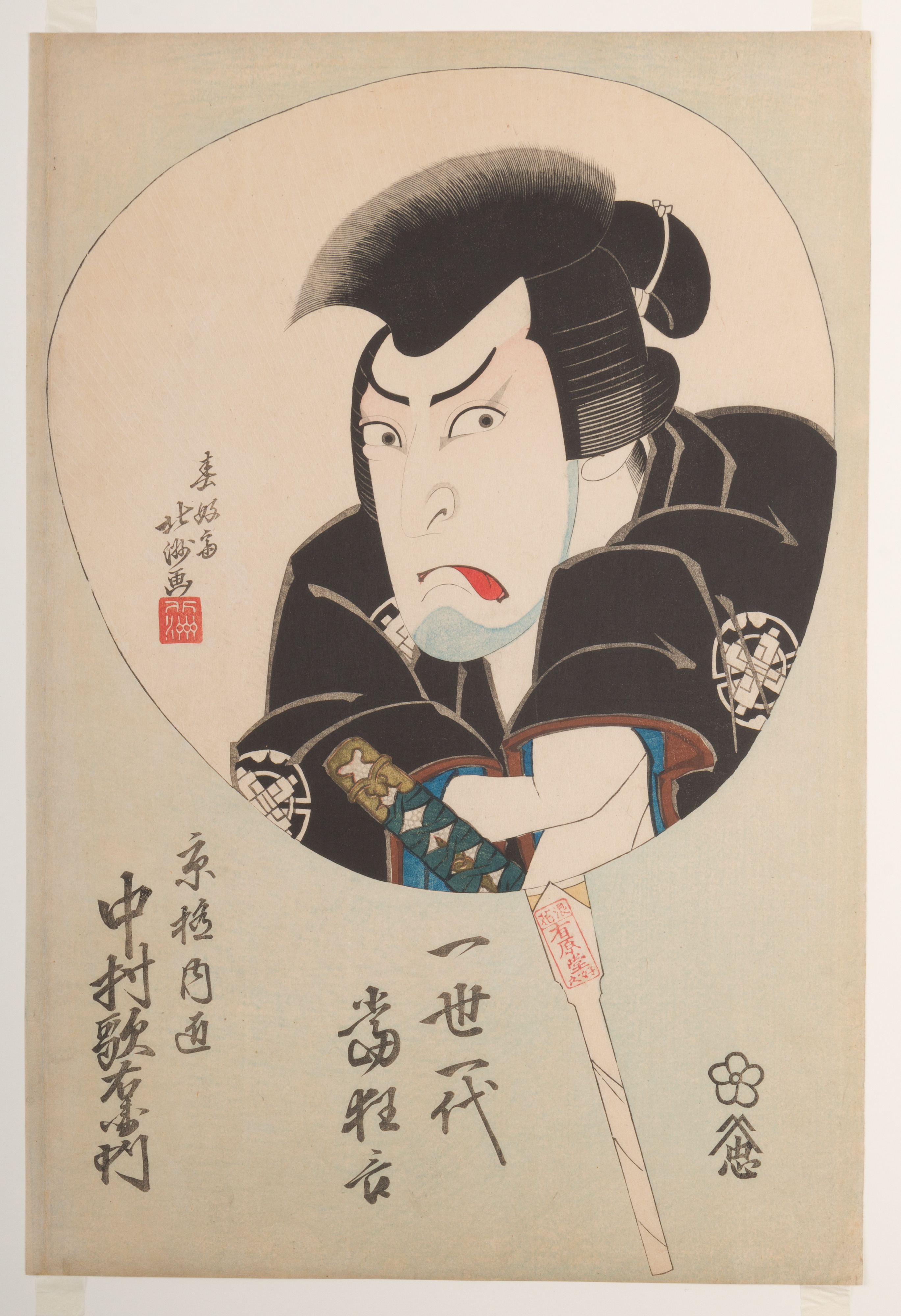
Kabuki Actor Nakamura Utaemon III as the Sword Master Kyōgoku Takumi, from the series Issei ichidai atari Kyōgen (Hits of a Lifetime of Kyōgen)

Actor Ichikawa Ebijūrō I as Tōken (China Dog) Jūbei, in the play Red and Purple, Rich Dyes of Osaka (Benimurasaki ai de someage)
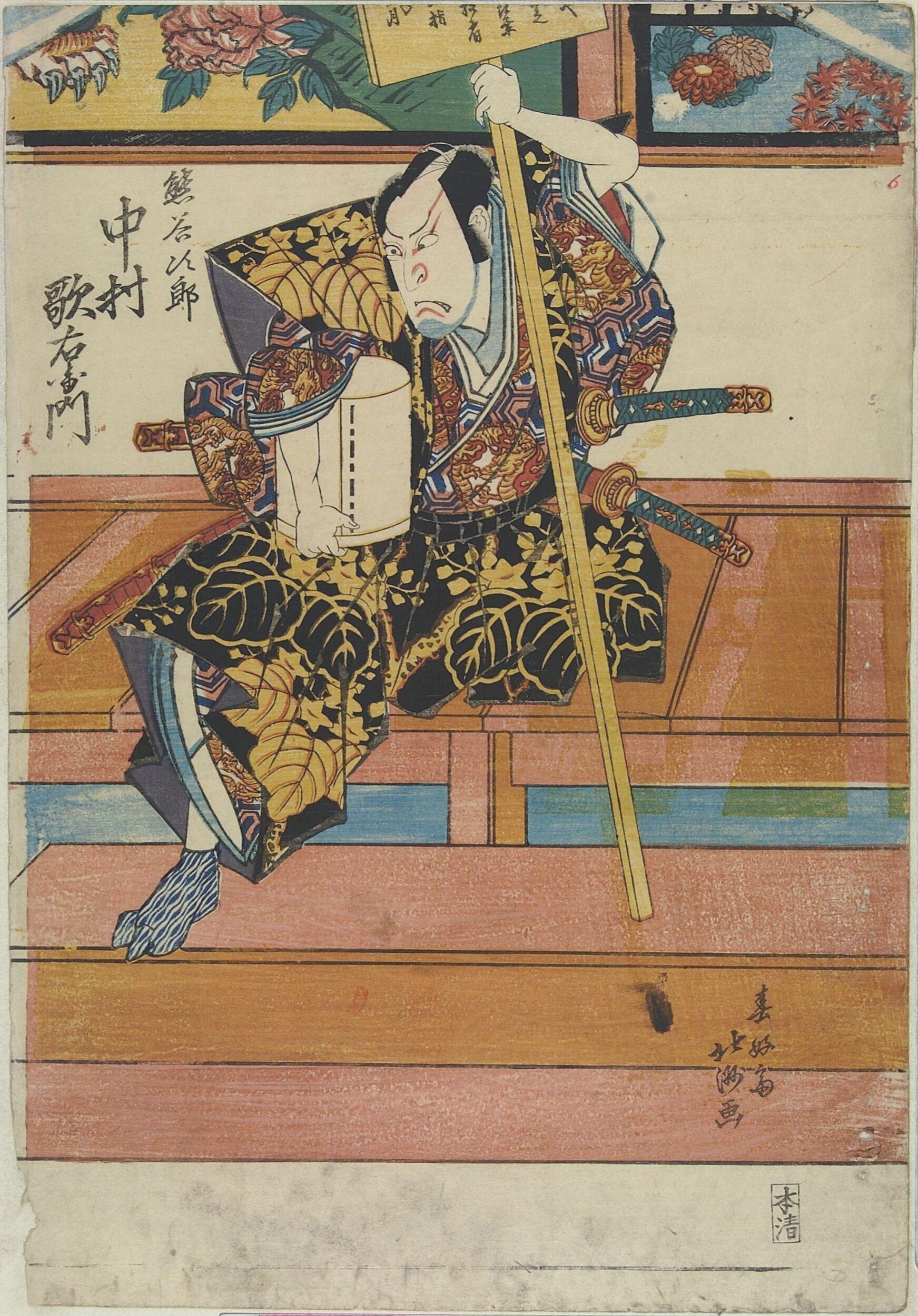
Actor Nakamura Utaemon III as Kumagae Jirō
1825
Frequently Asked Questions
Actors Asao Utashiro as Tedai Shinbei, Ichikawa Ichizo II as Gokumon Shobei and Nakamura Utaemon III as Kurofune no Chuemon was created by Shunkōsai Hokushū (春好斎北洲).