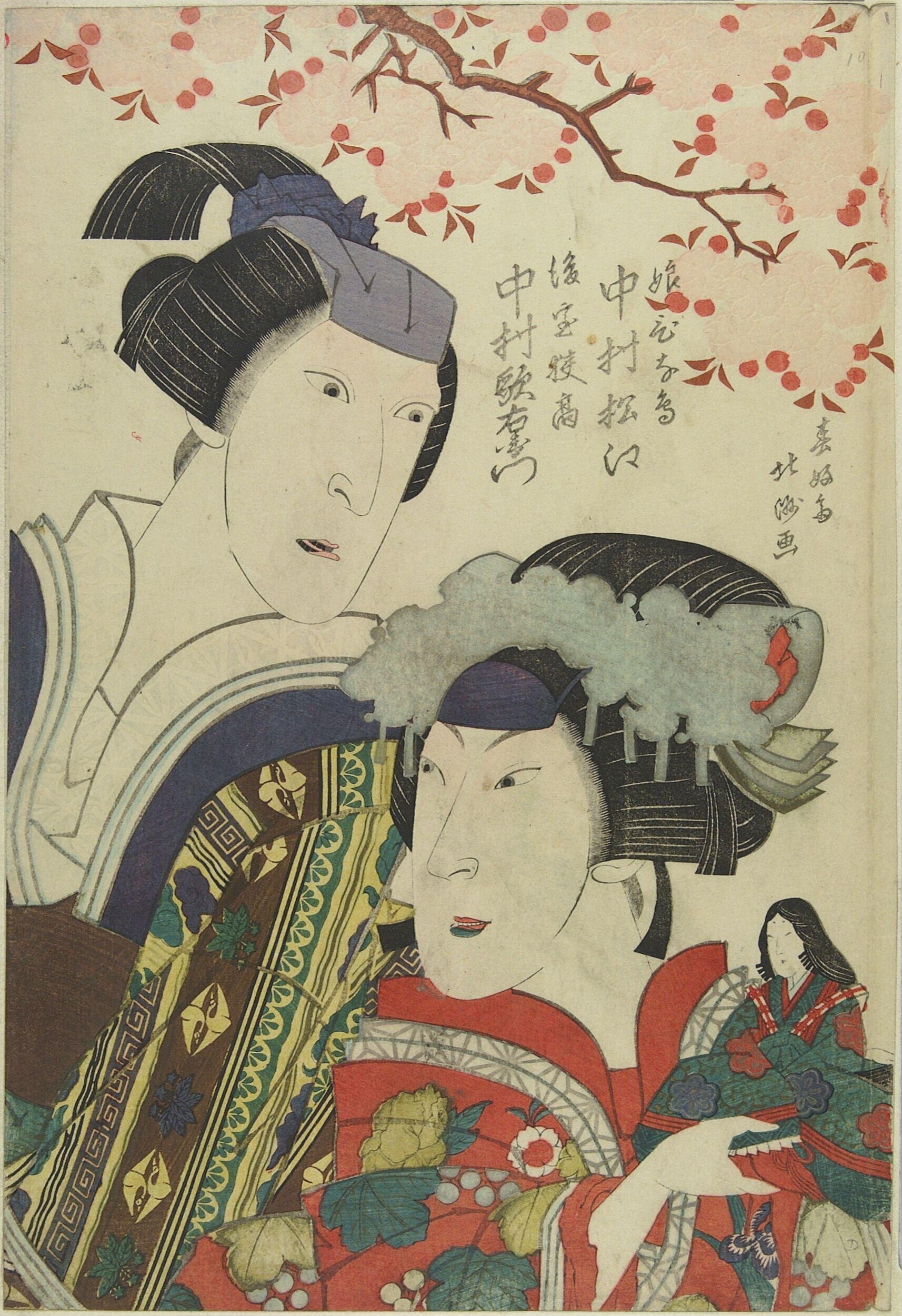
Actors Nakamura Matsue III as the Daughter Hinadori and Nakamura Utaemon III as the Dowager Sadaka
- Date:
- 1821
- Medium:
- Source:
- Victoria and Albert Museum
Description
This 1821 Osaka kamigata-e yakusha-e by Shunkosai Hokushu, held by the Victoria and Albert Museum (accession O422999), portrays Nakamura Matsue III as the daughter Hinadori and Nakamura Utaemon III as the dowager Sadaka in the Yoshino River scene from Imoseyama onna teikin. The pairing, a mother and daughter on one riverbank mirrored by a father and son on the other, is one of the most celebrated tragic tableaux in the kabuki repertoire, and Hokushu's image shows both actors caught in the emotional climax of the scene. Utaemon III's reputation for emotional intensity in onnagata (female-role) parts was central to Osaka kabuki of the period, and Hokushu's depictions of him in such roles are among the most psychologically searching of his portraits. The print exemplifies the Osaka kamigata-e preference for character study over spectacle and the privileging of theatrical moment over decorative effect that distinguishes the school. The print is held by the Victoria and Albert Museum (accession O422999) and forms part of the museum's coverage of the great Osaka productions of 1821. The scene depicted, the mountain-river tableau from Imoseyama onna teikin in which Hinadori on one bank and her would-be groom Koganosuke on the other commit parallel suicides to escape their feuding families, is one of the most emotionally charged moments in kabuki literature. Hokushu's choice to portray the female pair (mother and daughter) rather than the male pair (father and son, captured in the diptych at the Met) underscores the kamigata-e emphasis on onnagata performance as a central component of the Osaka stage's identity.
More Prints by Shunkōsai Hokushū

The Actor Arashi Koroku IV in the Final Farewell Performance of His Career (Shōgai onagori kyōgen) as the Female Bandit Hotei Oichi
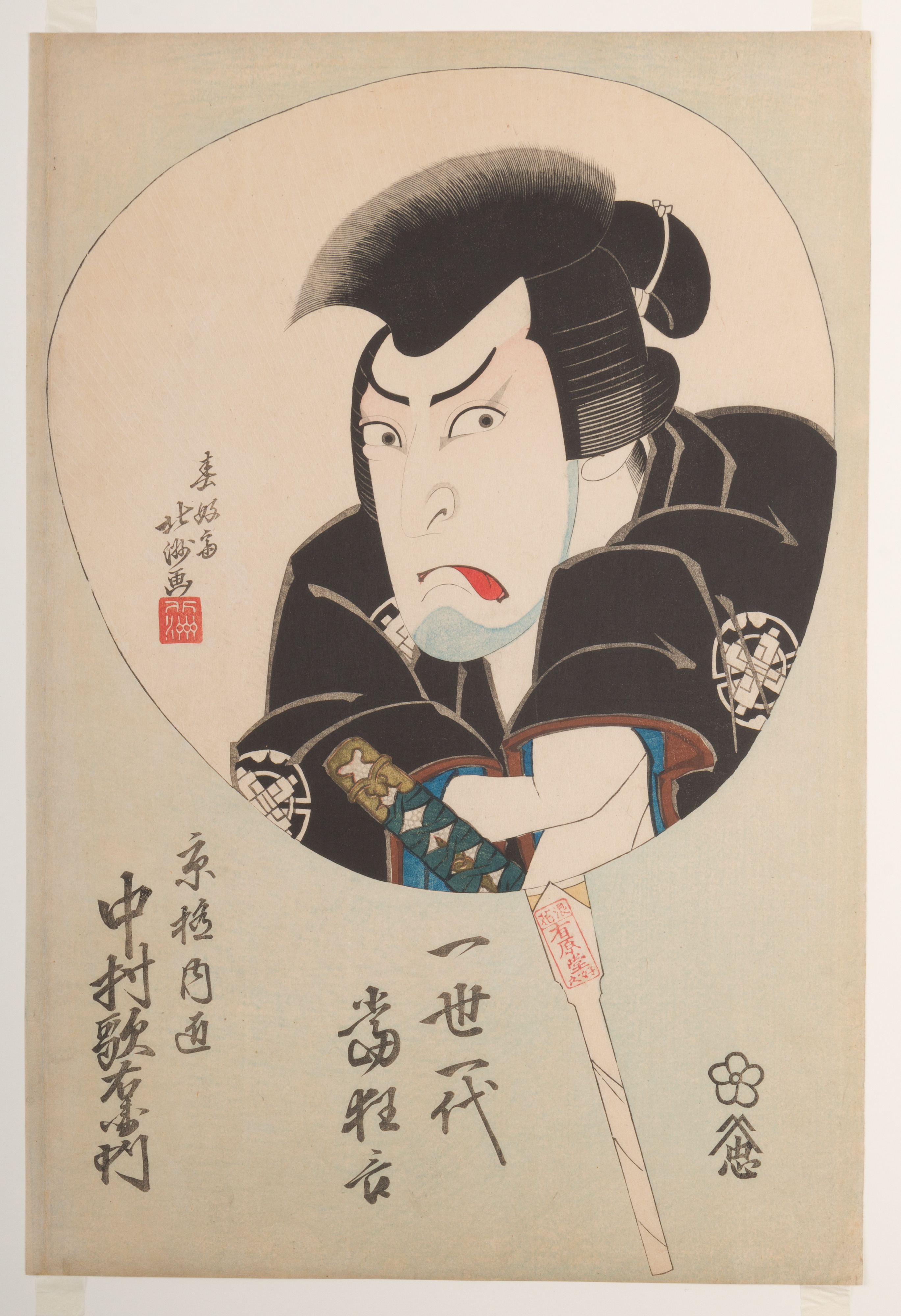
Kabuki Actor Nakamura Utaemon III as the Sword Master Kyōgoku Takumi, from the series Issei ichidai atari Kyōgen (Hits of a Lifetime of Kyōgen)

Actor Ichikawa Ebijūrō I as Tōken (China Dog) Jūbei, in the play Red and Purple, Rich Dyes of Osaka (Benimurasaki ai de someage)
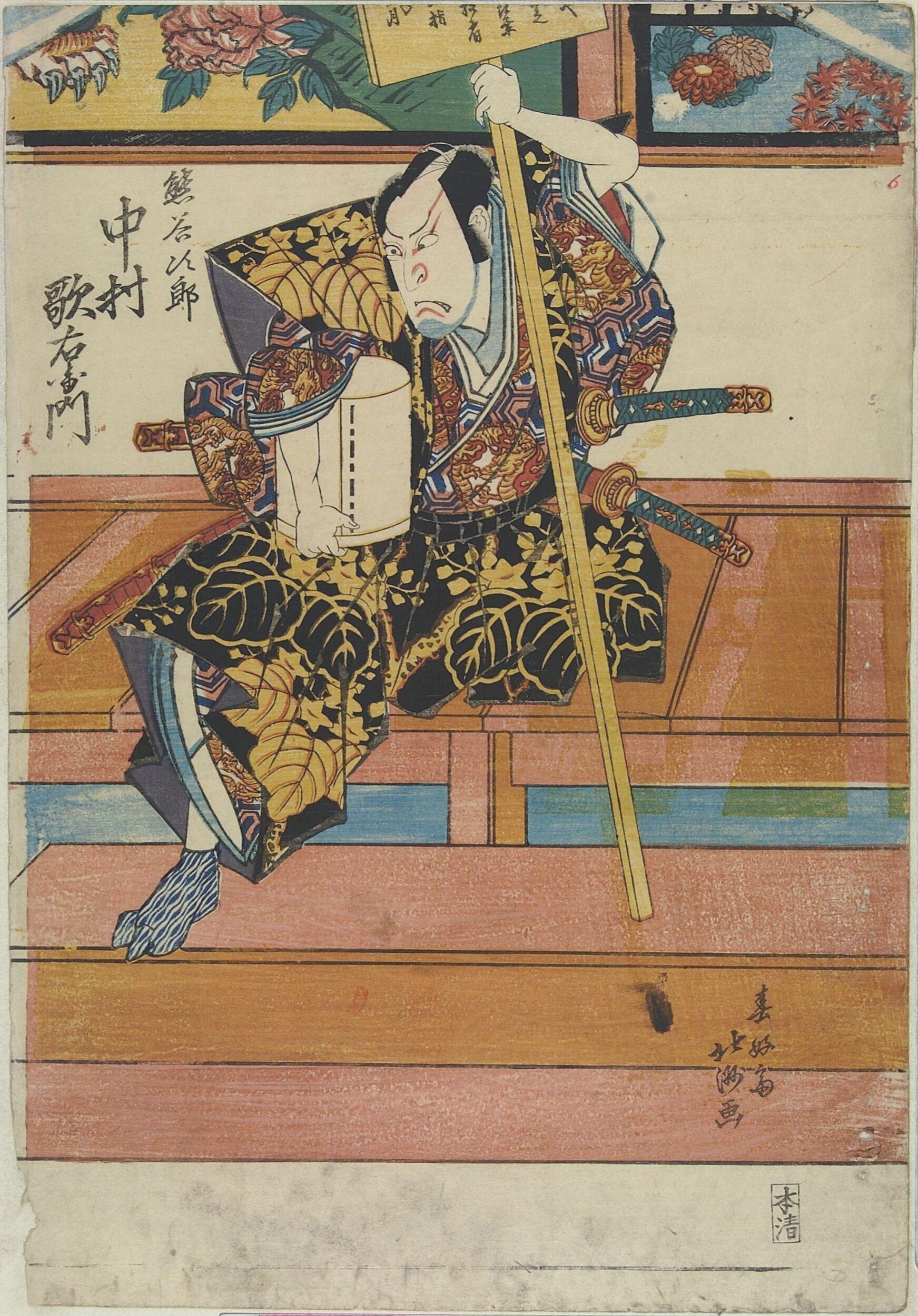
Actor Nakamura Utaemon III as Kumagae Jirō
1825
Frequently Asked Questions
Actors Nakamura Matsue III as the Daughter Hinadori and Nakamura Utaemon III as the Dowager Sadaka was created by Shunkōsai Hokushū (春好斎北洲) in 1821.