
Scene of the Pleasure Quarter at Fukagawa
by Suzuki Harushige (Shiba Kōkan)
- Date:
- late 18th century
- Medium:
- Woodblock print; ink and color on paper
- Source:
- Metropolitan Museum of Art
Description
Scene of the Pleasure Quarter at Fukagawa, a late-eighteenth-century woodblock print in ink and color on paper, is preserved in the collection of the Metropolitan Museum of Art. Fukagawa was Edo's principal unlicensed pleasure quarter, located east of the Sumida River across from the official Yoshiwara district. As an extra-legal entertainment zone, Fukagawa was known for its geisha houses, boat-borne assignations, and a more bohemian, less hierarchical demimonde culture than the regulated Yoshiwara. Harushige's depiction of the Fukagawa district participates in the broader Edo ukiyo-e tradition of documenting the social geography of the pleasure quarters with the same loving specificity that landscape artists reserved for famous views. The print combines the post-Harunobu figural vocabulary that Harushige had inherited and refined with the documentary impulse of urban genre painting, capturing the textures of Edo's most distinctive subculture. The work is a useful counterpoint to Harushige's later career as Shiba Kōkan, the rangaku-influenced painter who would eventually argue in his essays that Japanese pictorial conventions were inadequate for accurate representation — a position whose distance from the conventional ukiyo-e poetics of his own earlier Fukagawa scene is itself one of the great ironies of his dual artistic life.
More Prints by Suzuki Harushige (Shiba Kōkan)

Young Man Walks in as Two Courtesans Read Love Letter
c. 1772/74
Color woodblock print; chuban
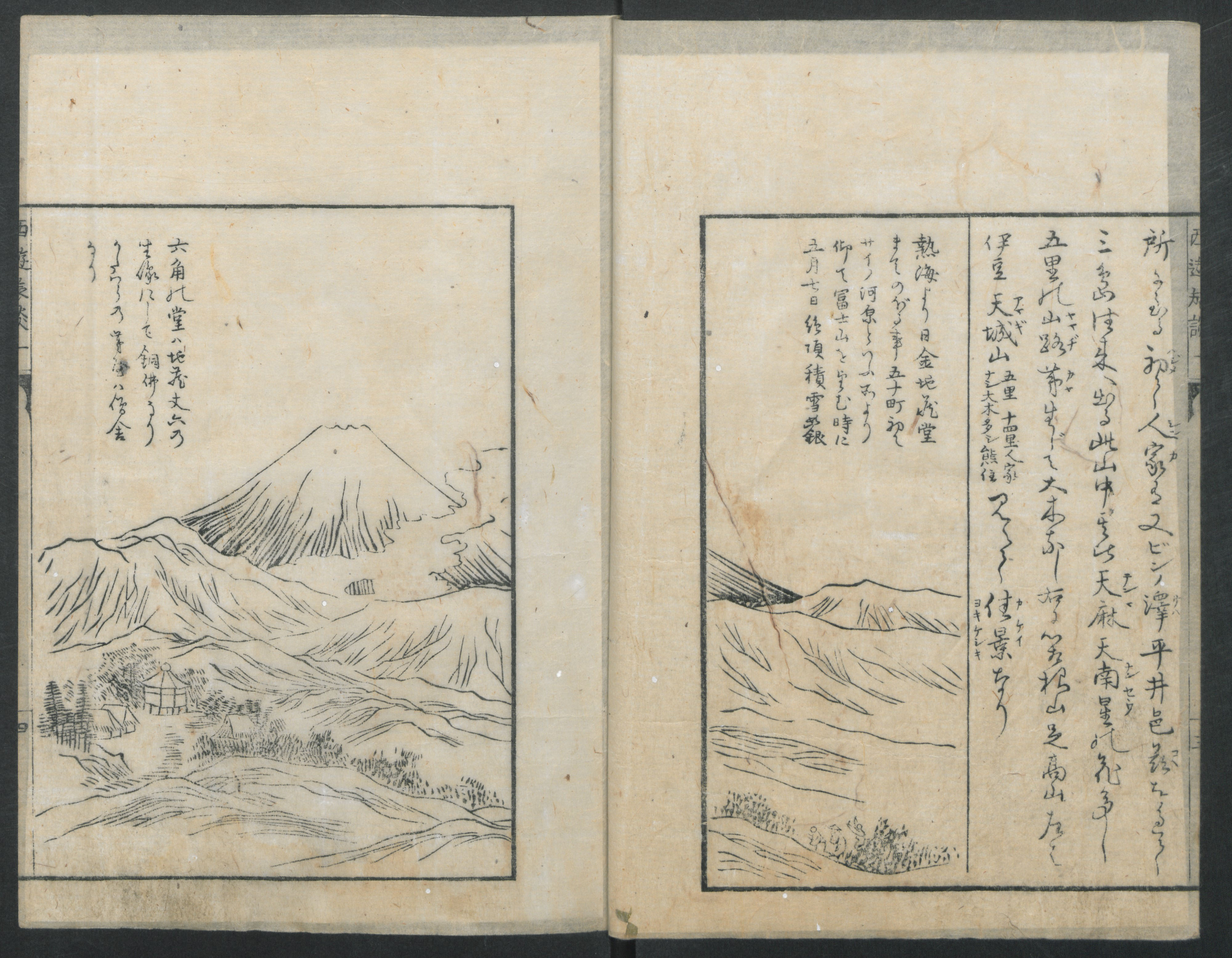
A Diary of Travel from Edo to Nagasaki (Seiyūryōdan)
1803
Five volumes of woodblock printed books; ink on paper

Praying for Rain Komachi (Amagoi Komachi)
Edo period (1615–1868), 1770
Color woodblock print; chuban

The Hagi Jewel River, from an untitled series of Six Jewel Rivers
c. 1770/71
Color woodblock print; chuban
Frequently Asked Questions
Scene of the Pleasure Quarter at Fukagawa was created by Suzuki Harushige (Shiba Kōkan) (鈴木春重) in late 18th century.