
The Hagi Jewel River, from an untitled series of Six Jewel Rivers
by Suzuki Harushige (Shiba Kōkan)
- Date:
- c. 1770/71
- Medium:
- Color woodblock print; chuban
- Source:
- Art Institute of Chicago
Description
The Hagi Jewel River, from an untitled series of Six Jewel Rivers (c. 1770/71), a color woodblock print in chuban format held by the Art Institute of Chicago, belongs to one of the most beloved classical subjects in Japanese visual culture: the Mu Tamagawa, or Six Jewel Rivers, six famous rivers from different provinces each celebrated in classical waka poetry. The Hagi Jewel River in Kawachi province was associated with the autumnal bush clover (hagi) and traditionally paired with verses evoking the loneliness of late summer. As with most ukiyo-e treatments of the theme, Harushige's print operates as mitate-e — a parodic or analogic update — by replacing the implicit classical setting with a contemporary Edo scene in which young beauties pause on a river bank or footbridge against a backdrop of stylized hagi. The print follows Suzuki Harunobu's celebrated Six Jewel Rivers series of the late 1760s so closely in palette, composition, and figural type that early collectors frequently misattributed Harushige's set to Harunobu himself. The refined mauve, sage, and pale yellow tones, the soft outline of foliage, and the elongated proportions of the figures all reflect the post-Harunobu vocabulary that Harushige had mastered to such a degree that he would later claim, with notable candor, to have forged Harunobu prints during this period of his career.
More Prints by Suzuki Harushige (Shiba Kōkan)

Young Man Walks in as Two Courtesans Read Love Letter
c. 1772/74
Color woodblock print; chuban
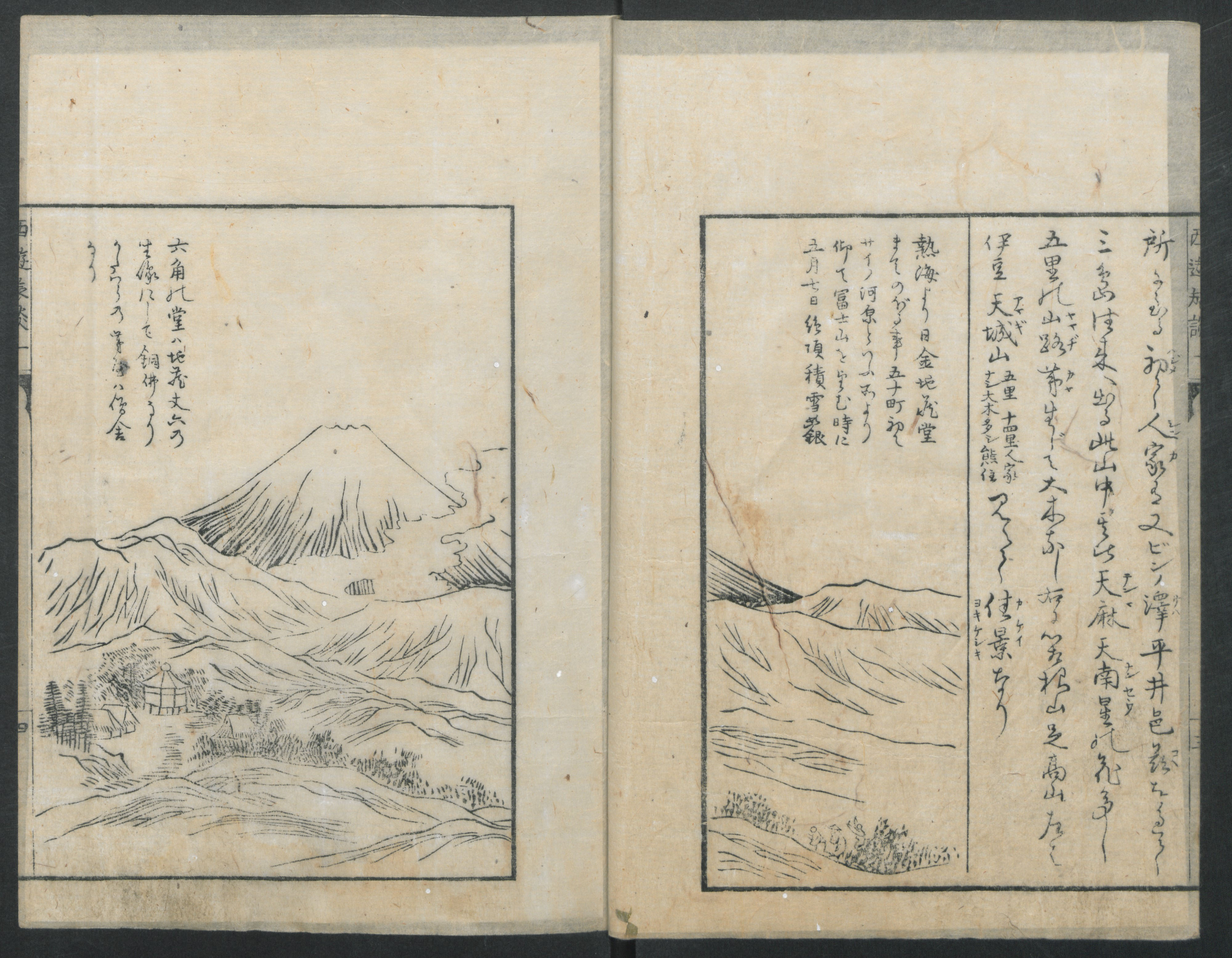
A Diary of Travel from Edo to Nagasaki (Seiyūryōdan)
1803
Five volumes of woodblock printed books; ink on paper

Praying for Rain Komachi (Amagoi Komachi)
Edo period (1615–1868), 1770
Color woodblock print; chuban

Scene of the Pleasure Quarter at Fukagawa
late 18th century
Woodblock print; ink and color on paper
Frequently Asked Questions
The Hagi Jewel River, from an untitled series of Six Jewel Rivers was created by Suzuki Harushige (Shiba Kōkan) (鈴木春重) in c. 1770/71.