
Praying for Rain Komachi (Amagoi Komachi)
by Suzuki Harushige (Shiba Kōkan)
- Date:
- Edo period (1615–1868), 1770
- Medium:
- Color woodblock print; chuban
- Source:
- Art Institute of Chicago
Description
Praying for Rain Komachi (Amagoi Komachi), a color woodblock print in chuban format dating to around 1770, belongs to a long tradition of mitate-e prints that recast the legendary ninth-century poetess Ono no Komachi into contemporary Edo dress. The Komachi cycle — a set of seven canonical episodes from her life — was a favorite subject for ukiyo-e designers, who delighted in transposing courtly classical scenes into the visual idiom of the floating world. The Amagoi (rain-praying) Komachi episode recalls the moment when, during a great drought, Komachi was said to have composed a waka so moving that the heavens released rain. Harushige's treatment, held in the collection of the Art Institute of Chicago, depicts not the legendary poetess but a young Edo beauty whose pose and accoutrements gesture knowingly to the classical theme. The chuban format and refined palette — mauves, soft sages, and pale yellows characteristic of the immediate post-Harunobu period — exemplify Harushige's command of the style of Suzuki Harunobu, the master whose 1770 death had created a stylistic vacancy that Harushige stepped directly into filling. The print's elegant, willow-slender figure with the small head, narrow shoulders, and delicately arched eyebrows shows how completely Harushige had absorbed Harunobu's compositional vocabulary in the early 1770s, before his eventual turn toward Western-style painting under the name Shiba Kōkan.
More Prints by Suzuki Harushige (Shiba Kōkan)

Young Man Walks in as Two Courtesans Read Love Letter
c. 1772/74
Color woodblock print; chuban
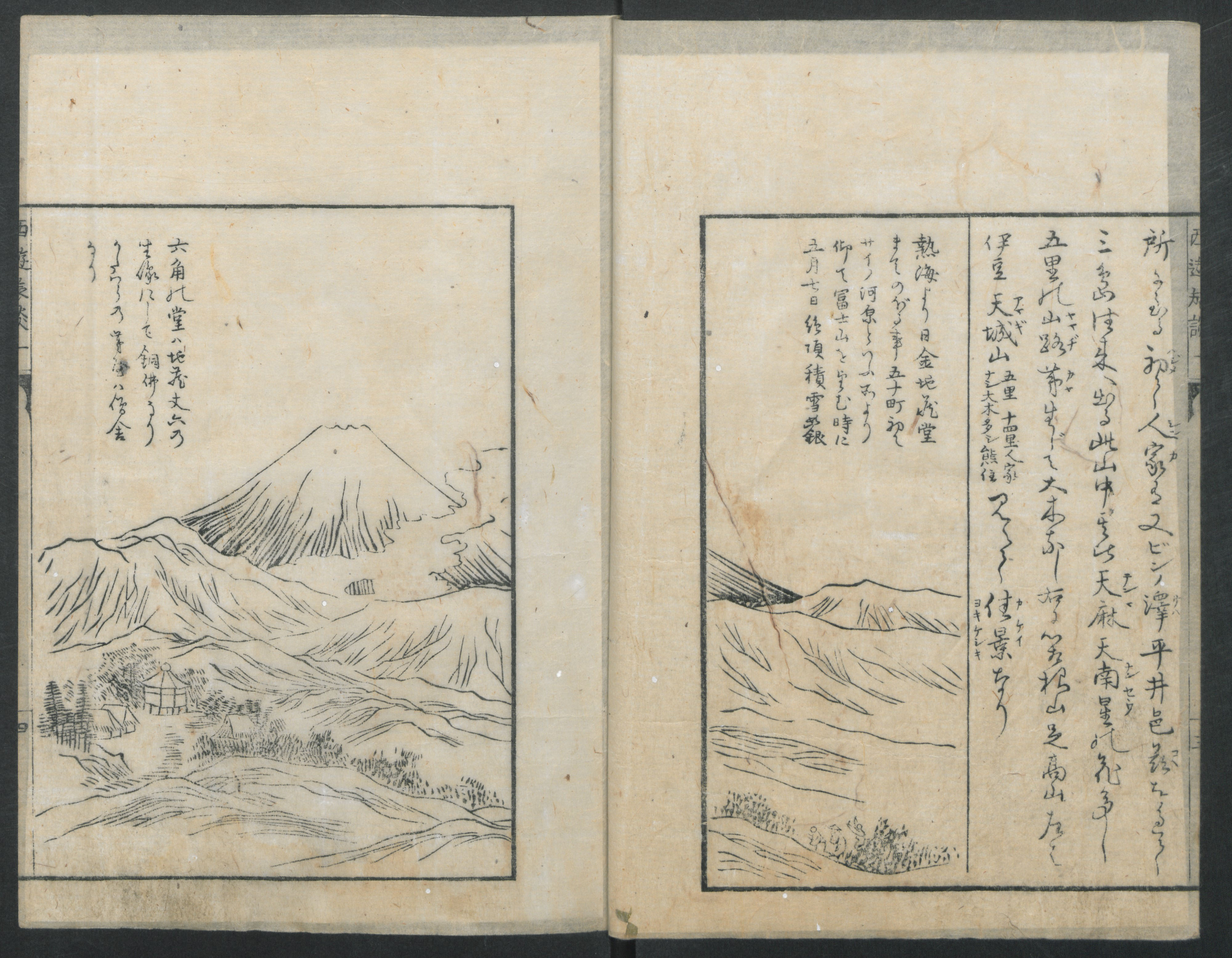
A Diary of Travel from Edo to Nagasaki (Seiyūryōdan)
1803
Five volumes of woodblock printed books; ink on paper

Scene of the Pleasure Quarter at Fukagawa
late 18th century
Woodblock print; ink and color on paper

The Hagi Jewel River, from an untitled series of Six Jewel Rivers
c. 1770/71
Color woodblock print; chuban
More Rain Prints

Rain Shower at Shо̄no, from the series Fifty-three Stations of the Tо̄kaidо̄ (Tо̄kaidо̄ gojusan tsugi)
1962
Woodblock print, ink and color on paper

Shōno: Driving Rain (Shōno hakuu), from the series Fifty-three Stations of the Tōkaidō (Tōkaidō gojūsan tsugi no uchi), also known as the First Tōkaidō or Great Tōkaidō
c. 1833-36
Woodblock print (nishiki-e); ink and color on paper

Omiya in Rain (Ame no Omiya)
Ame no Omiya
1930
Color woodblock print; oban

Evening Shower at Teradomari (Teradomari no yau), from the series "Souvenirs of Travel, Second Series (Tabi miyage dai nishu)"
Teradomari no yau
1921
Color woodblock print; oban
Frequently Asked Questions
Praying for Rain Komachi (Amagoi Komachi) was created by Suzuki Harushige (Shiba Kōkan) (鈴木春重) in Edo period (1615–1868), 1770.
Praying for Rain Komachi (Amagoi Komachi) depicts rain.