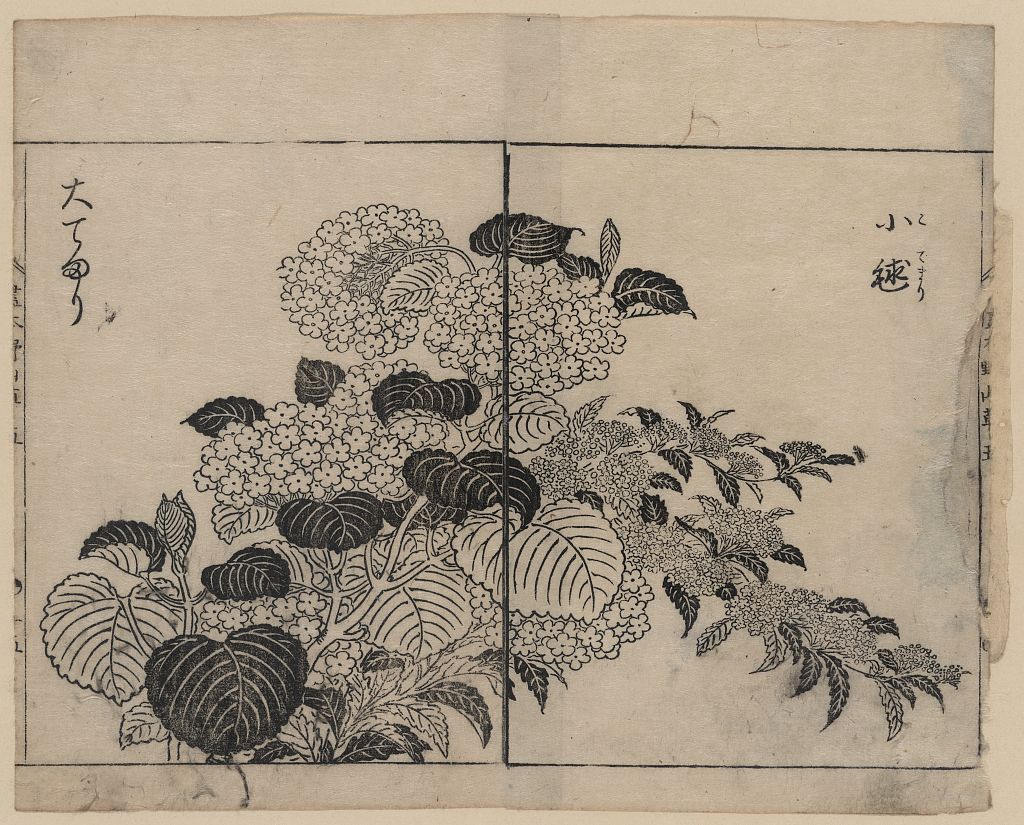
Blossoms from Two Kinds of Hydrangea
- Date:
- 1755
- Medium:
- Woodblock-printed book illustration; ink on paper
- Source:
- Library of Congress
Description
Published in 1755 in Tachibana Yasukuni's Ehon noyamagusa and held in the Library of Congress, this woodblock illustration depicts blossoms from two distinct varieties of hydrangea (ajisai), the early-summer flowering shrub that has been central to Japanese seasonal aesthetics since at least the Heian period. Hydrangeas hold particular significance in the Japanese calendar of seasonal blooms because their characteristic color-shifting blossoms — turning from pale green through blue, purple, and pink as the soil chemistry and the season progress — provide visual interest across the otherwise verdant transition between spring and summer. Yasukuni's careful rendering distinguishes the two varieties through differences in flower-cluster morphology and leaf shape, allowing the book to function as a practical horticultural reference even within its primarily aesthetic format. The brushwork employs the Kano-school draftsmanship Yasukuni inherited from his father Morikuni, with confident outline drawing and graduated tonal modeling that conveys the layered floral structure of the mophead clusters. Ehon noyamagusa was published in Osaka in five volumes in 1755 and remained influential through the nineteenth century, with hydrangea motifs from its pages contributing to the textile, ceramic, and lacquer design vocabulary of Edo-period Japan. The Library of Congress example documents Yasukuni's central role in the Kamigata ehon tradition.
More Prints by Tachibana Yasukuni

Japonica, Bell Flowers, and Anemone
1755
Woodblock-printed book illustration; ink on paper
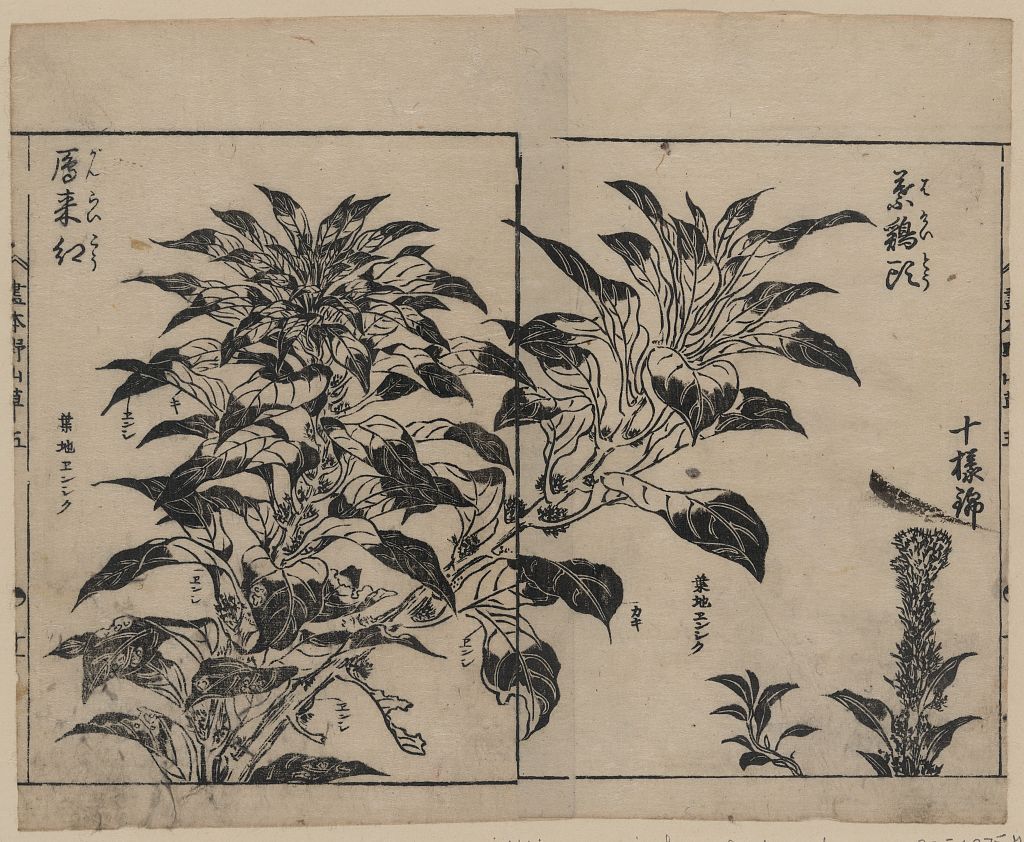
Cockscomb and Two Kinds of Amarantha
1755
Woodblock-printed book illustration; ink on paper
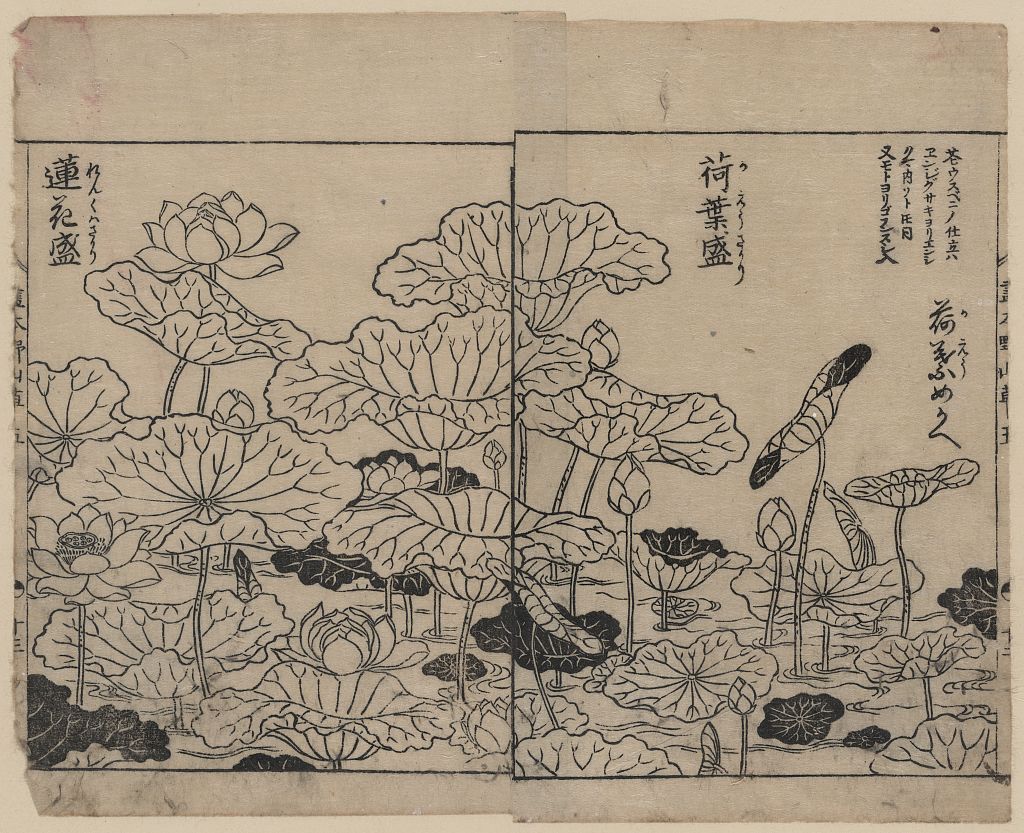
Lotus Plants in Various Stages of Development
1755
Woodblock-printed book illustration; ink on paper
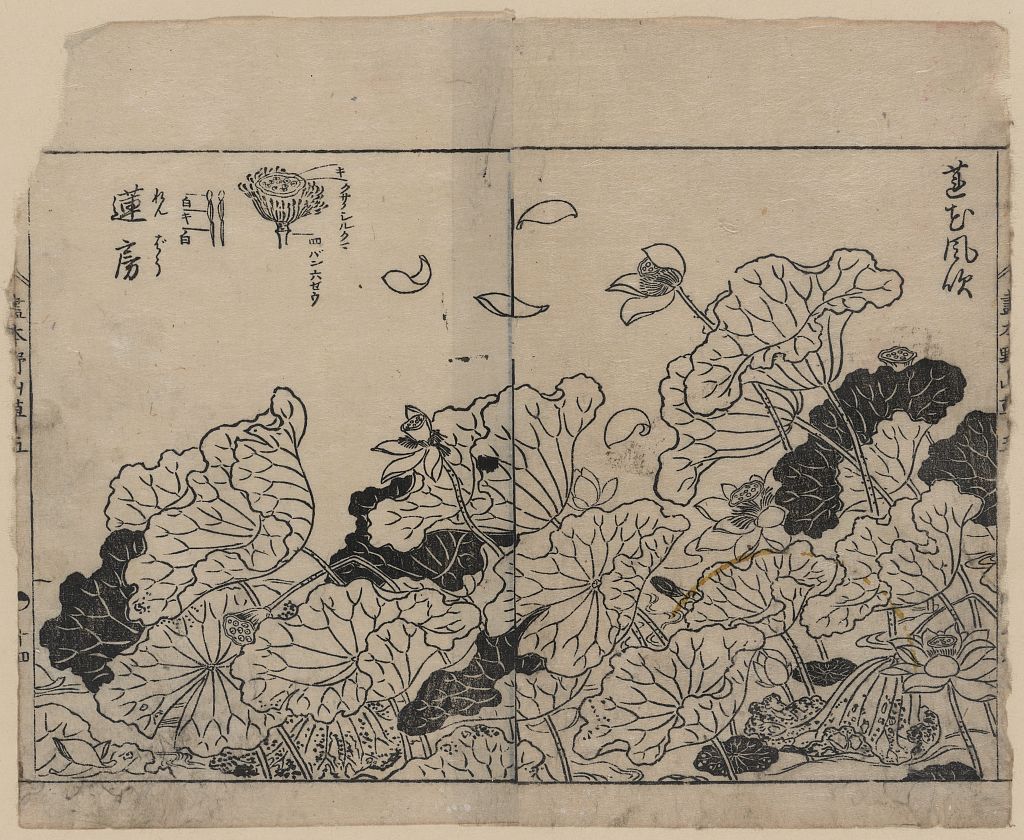
Lotus in the Wind, with Detail of Lotus Pod
1755
Woodblock-printed book illustration; ink on paper
Frequently Asked Questions
Blossoms from Two Kinds of Hydrangea was created by Tachibana Yasukuni (橘保国) in 1755.