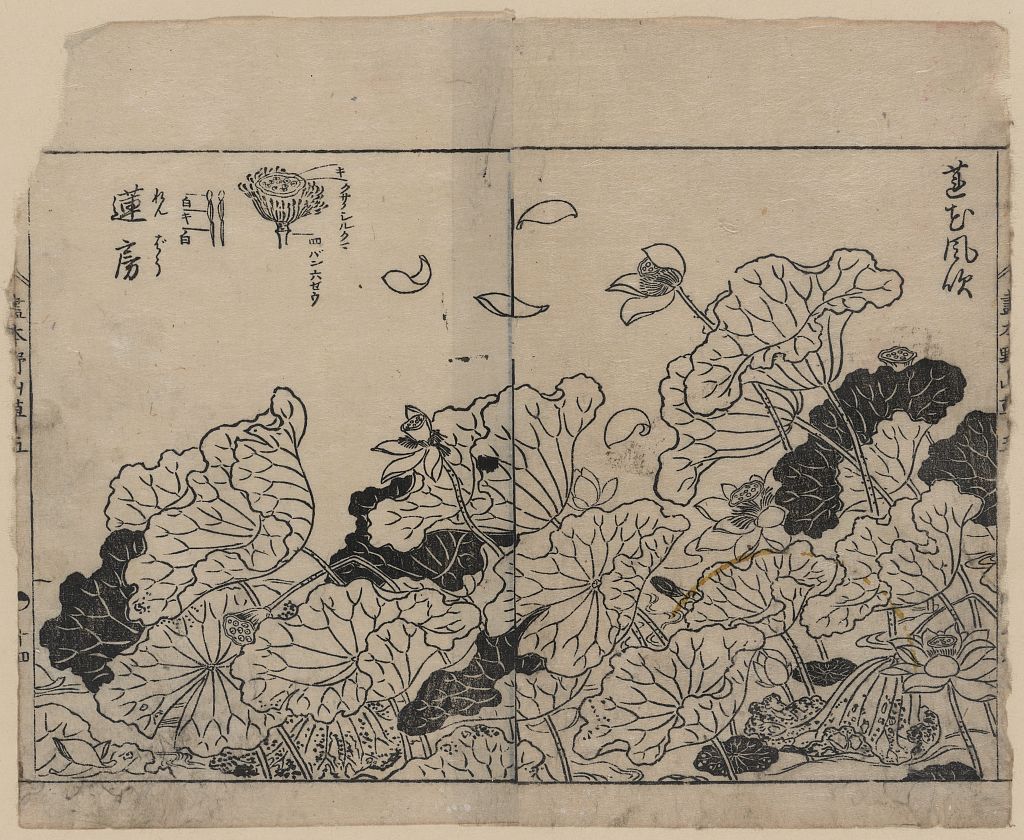
Lotus in the Wind, with Detail of Lotus Pod
- Date:
- 1755
- Medium:
- Woodblock-printed book illustration; ink on paper
- Source:
- Library of Congress
Description
Published in 1755 in Tachibana Yasukuni's Ehon noyamagusa and held today in the Library of Congress, this woodblock illustration depicts a lotus plant bent in the wind, with an accompanying detail study of the distinctive seed pod (renbo) that develops as the flower matures. The lotus held particularly rich symbolic and aesthetic significance in Japanese visual culture, drawing on Buddhist iconography in which the flower's emergence from muddy water represents purity and enlightenment, while its botanical structure — broad parasol leaves, long stems, and the architectural geometry of the seed pod — provided endless compositional possibilities for Japanese artists. Yasukuni's treatment combines the observational specificity that defined the Edo-period honzōgaku natural-history tradition with the calligraphic line work and atmospheric sense of space inherited from the Kano school. The wind-bent posture introduces a kinetic, narrative quality unusual for a strict botanical reference image, suggesting Yasukuni's engagement with the more expressive painterly conventions of his father Morikuni's earlier ehon. The Library of Congress copy preserves the book's substantial influence on eighteenth-century artisanal design across textile, ceramic, lacquer, and print media, where lotus motifs drawn from Ehon noyamagusa would circulate for over a century.
More Prints by Tachibana Yasukuni

Japonica, Bell Flowers, and Anemone
1755
Woodblock-printed book illustration; ink on paper
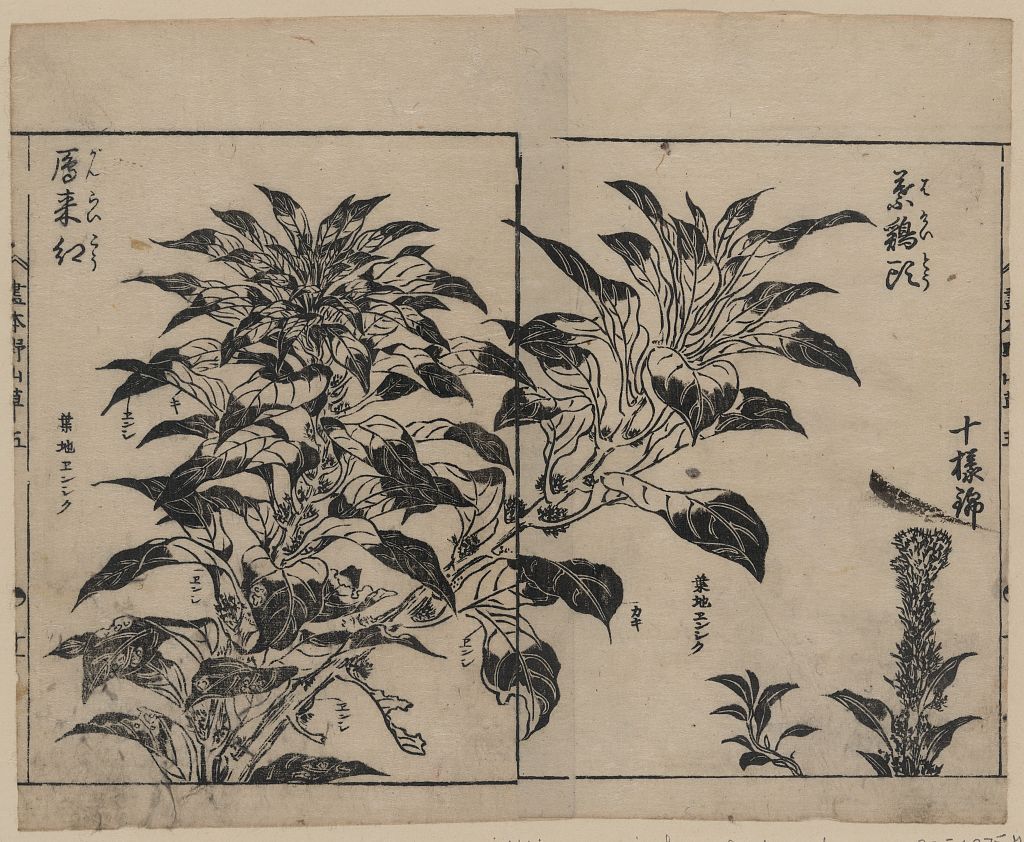
Cockscomb and Two Kinds of Amarantha
1755
Woodblock-printed book illustration; ink on paper
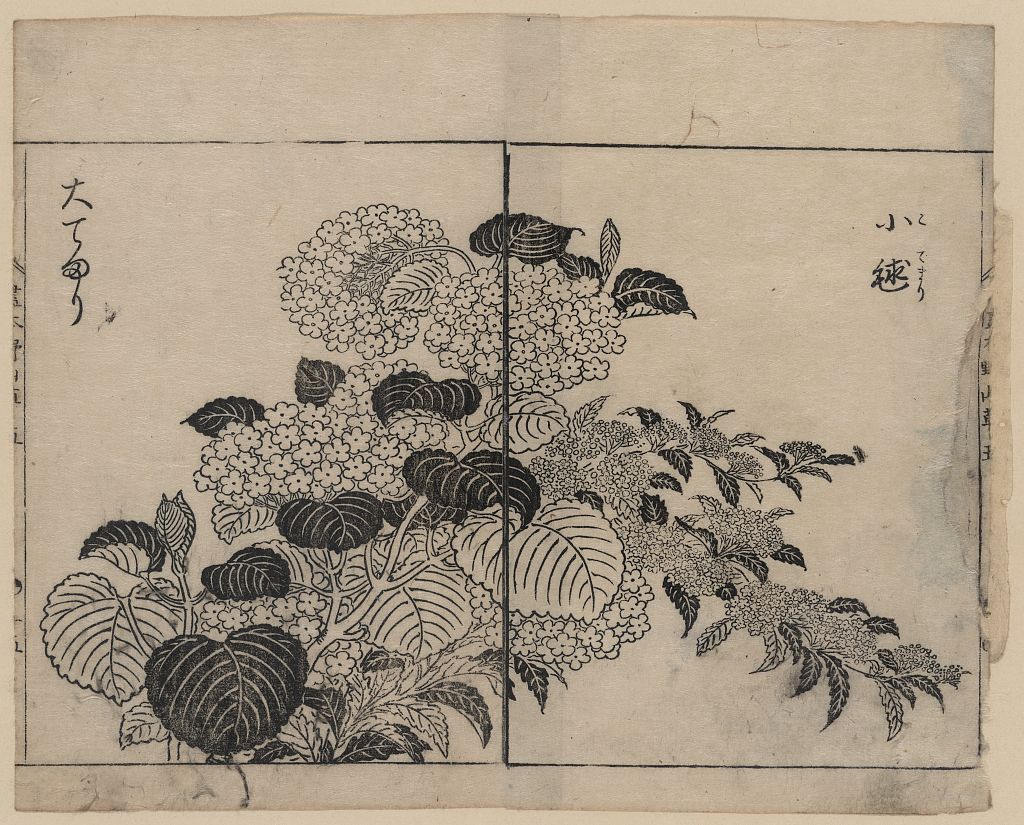
Blossoms from Two Kinds of Hydrangea
1755
Woodblock-printed book illustration; ink on paper
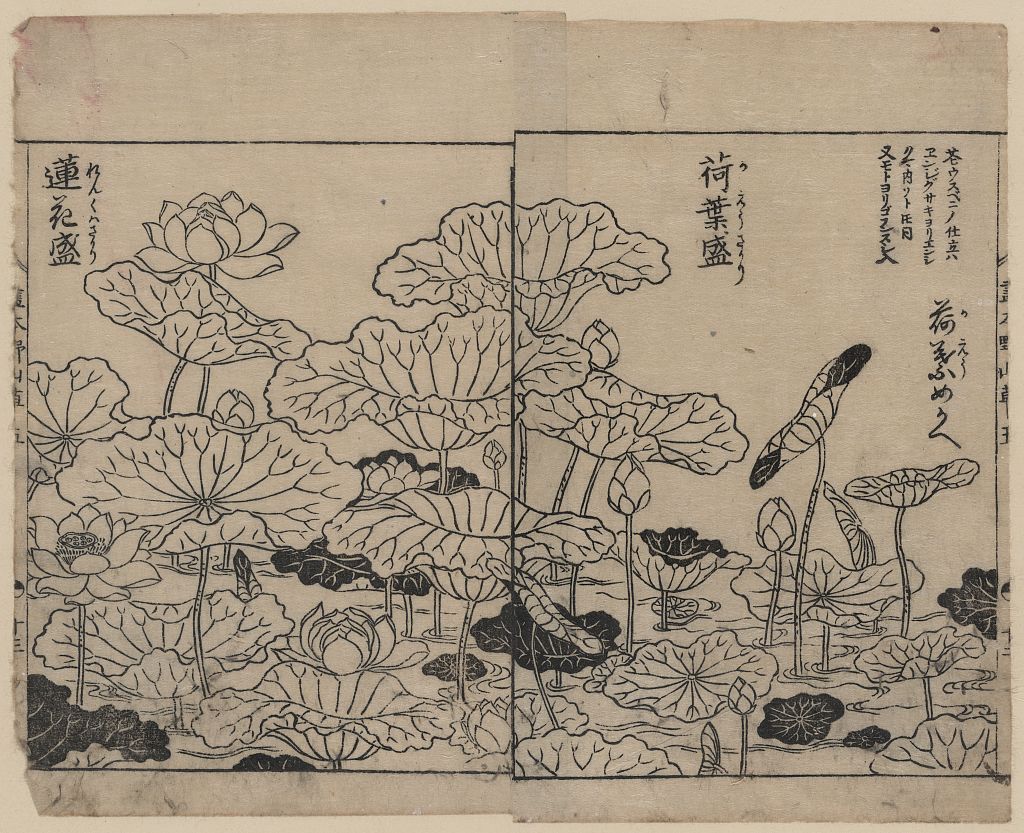
Lotus Plants in Various Stages of Development
1755
Woodblock-printed book illustration; ink on paper
Frequently Asked Questions
Lotus in the Wind, with Detail of Lotus Pod was created by Tachibana Yasukuni (橘保国) in 1755.