
Japonica, Bell Flowers, and Anemone
- Date:
- 1755
- Medium:
- Woodblock-printed book illustration; ink on paper
- Source:
- Library of Congress
Description
Two adjacent botanical panels in black ink on cream-toned paper, each framed by a ruled border and labeled with vertical Japanese characters and plant names. The left panel shows an aster-like flower with globular seed heads and deeply lobed foliage beside a tall leafy stem bearing tubular, bell-shaped blossoms with speckled throats; the right panel pairs a shorter stem of similar bell-shaped flowers with a clump of long, blade-like leaves topped by a slender spike of small blossoms. The linework is fine and uncolored, rendering each plant with botanical clarity against the plain background — consistent with a 1755 woodblock-printed book illustration by Tachibana Yasukuni titled "Japonica, Bell Flowers, and Anemone."
More Prints by Tachibana Yasukuni
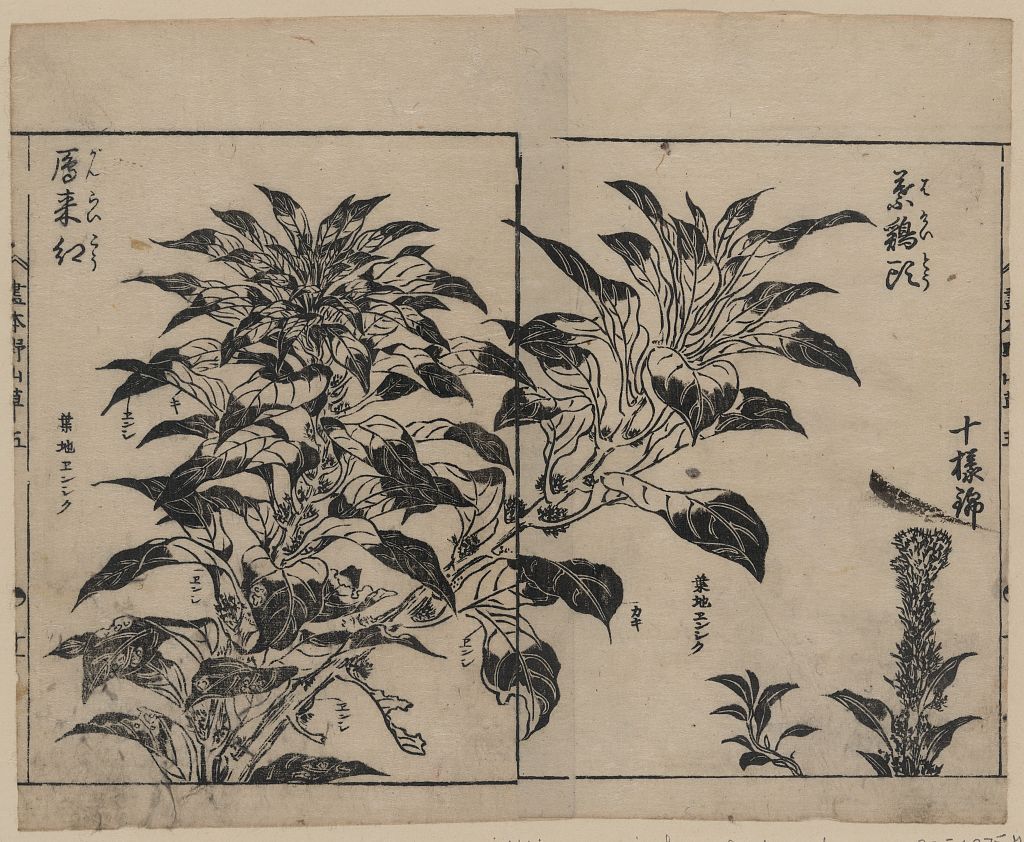
Cockscomb and Two Kinds of Amarantha
1755
Woodblock-printed book illustration; ink on paper
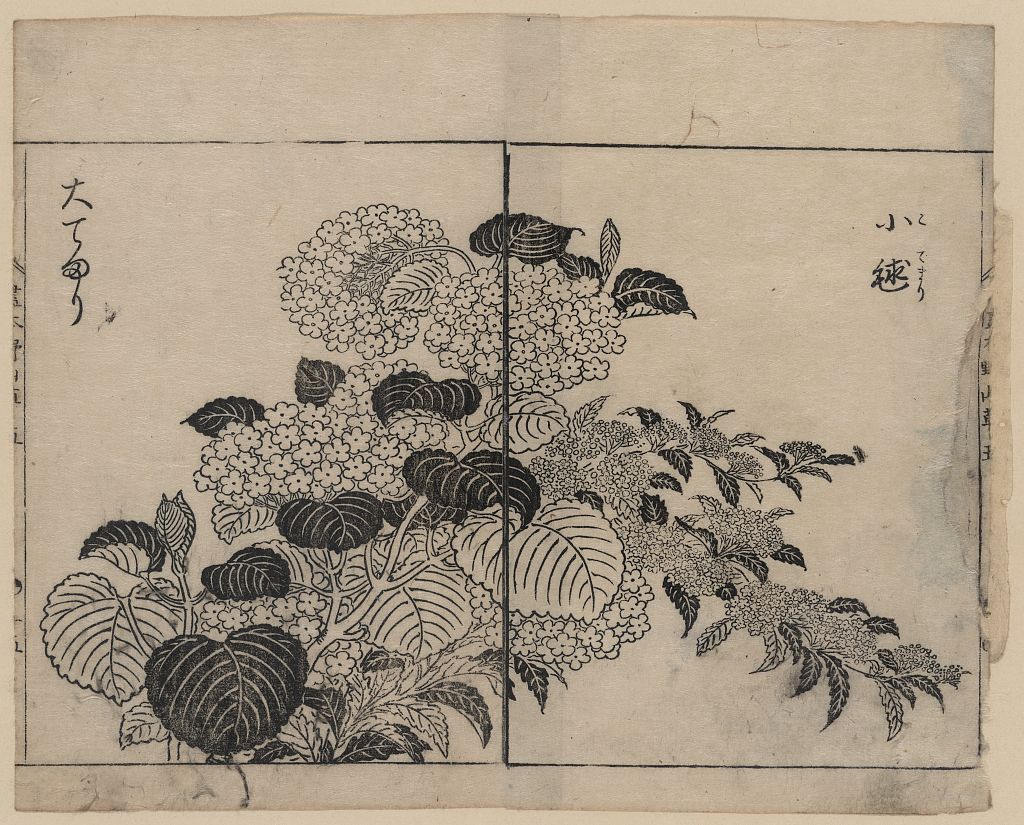
Blossoms from Two Kinds of Hydrangea
1755
Woodblock-printed book illustration; ink on paper
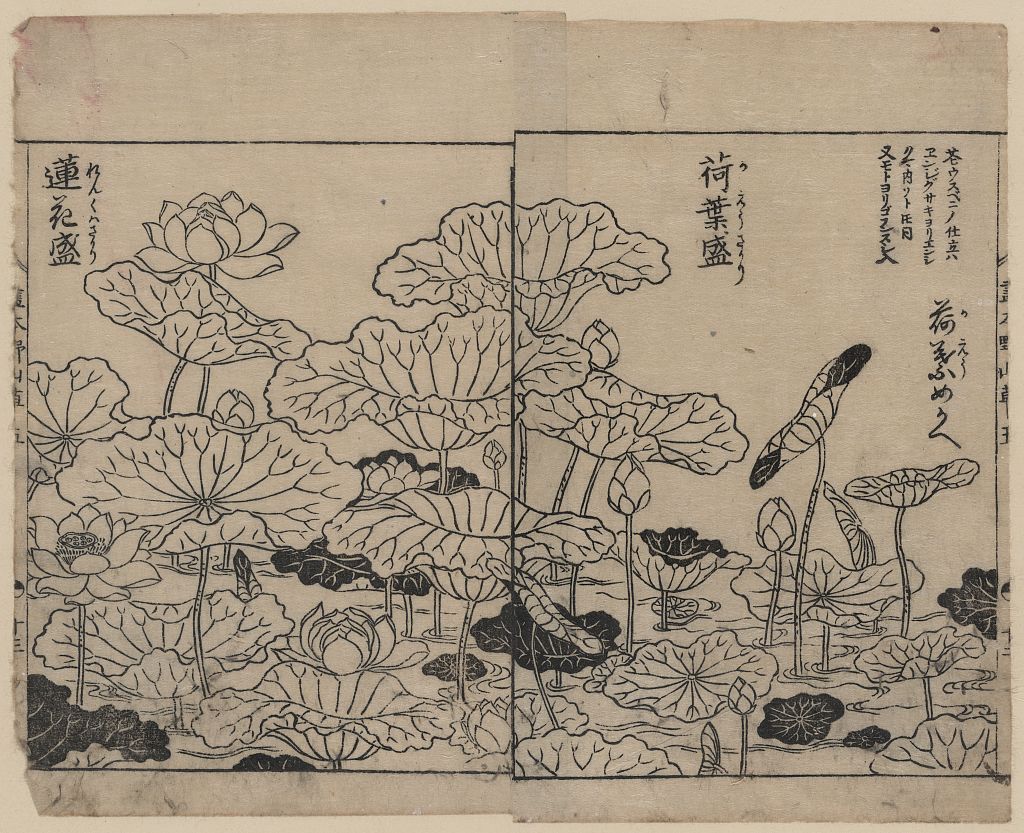
Lotus Plants in Various Stages of Development
1755
Woodblock-printed book illustration; ink on paper
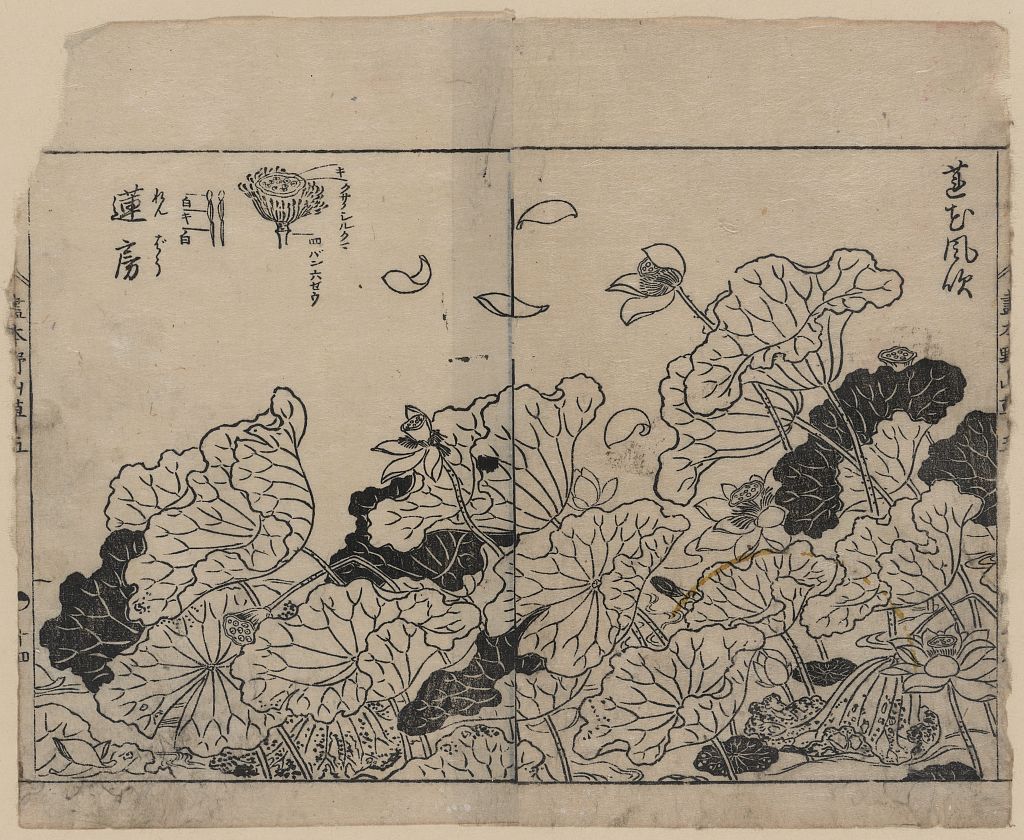
Lotus in the Wind, with Detail of Lotus Pod
1755
Woodblock-printed book illustration; ink on paper
More Birds & Flowers Prints
Frequently Asked Questions
Japonica, Bell Flowers, and Anemone was created by Tachibana Yasukuni (橘保国) in 1755.
Japonica, Bell Flowers, and Anemone depicts birds & flowers.