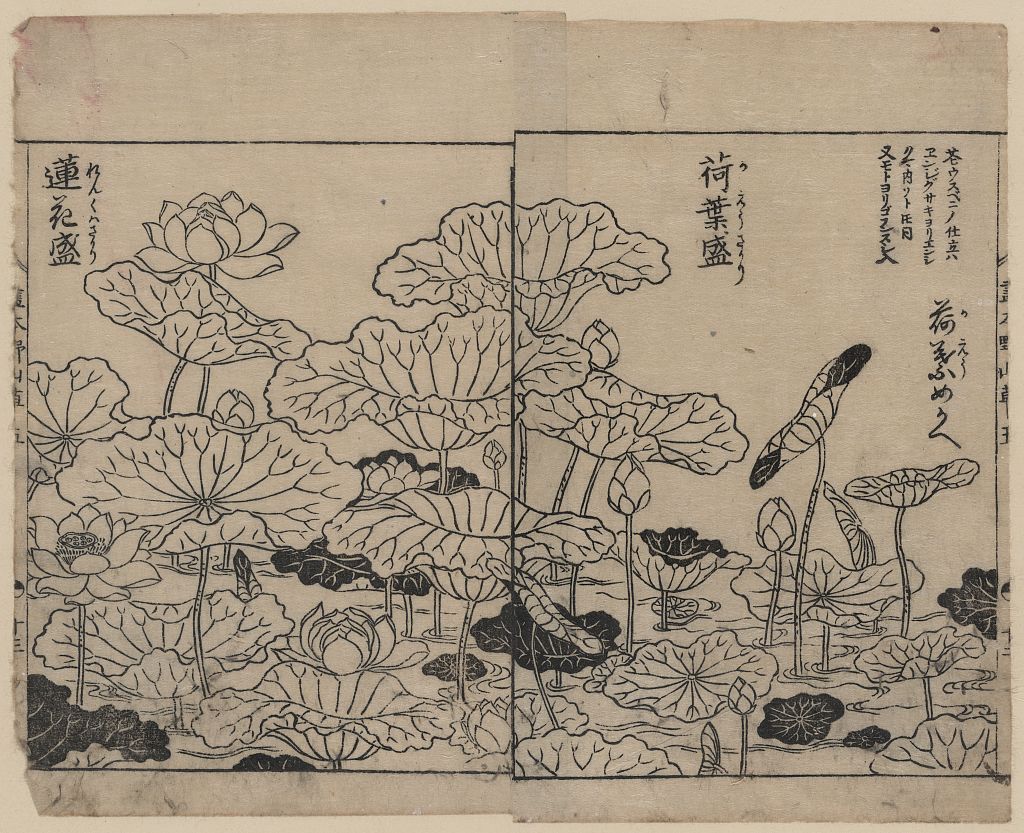
Lotus Plants in Various Stages of Development
- Date:
- 1755
- Medium:
- Woodblock-printed book illustration; ink on paper
- Source:
- Library of Congress
Description
This 1755 woodblock illustration from Tachibana Yasukuni's Ehon noyamagusa, held in the Library of Congress, presents lotus plants (hasu, Nelumbo nucifera) at multiple stages of their seasonal growth cycle — from emerging leaves through full bloom to the architectural seed-pod (renbo) that develops as the flower matures and the petals fall away. This developmental progression approach reflected the broader Edo-period honzōgaku (natural history) interest in documenting plants as living organisms with characteristic life cycles, rather than as static decorative motifs, and showed Yasukuni's engagement with the eighteenth-century Japanese reception of Chinese and Dutch botanical illustration conventions. The lotus held particularly rich Buddhist iconographic meaning in Japanese visual culture, where its emergence from muddy water symbolized spiritual purity and enlightenment, while its architectural pod structure provided one of the most visually distinctive subjects in the plant world. Yasukuni's brushwork maintains the Kano-school draftsmanship inherited from his father Morikuni, with confident outline drawing and tonal modulation through ink wash that conveys both the broad parasol of the leaves and the geometric precision of the seed pod. Ehon noyamagusa was published in Osaka in five volumes in 1755 and remained one of the most influential Japanese botanical pattern books for over a century. The Library of Congress example documents the book's central contribution to eighteenth-century Japanese visual culture.
More Prints by Tachibana Yasukuni

Japonica, Bell Flowers, and Anemone
1755
Woodblock-printed book illustration; ink on paper
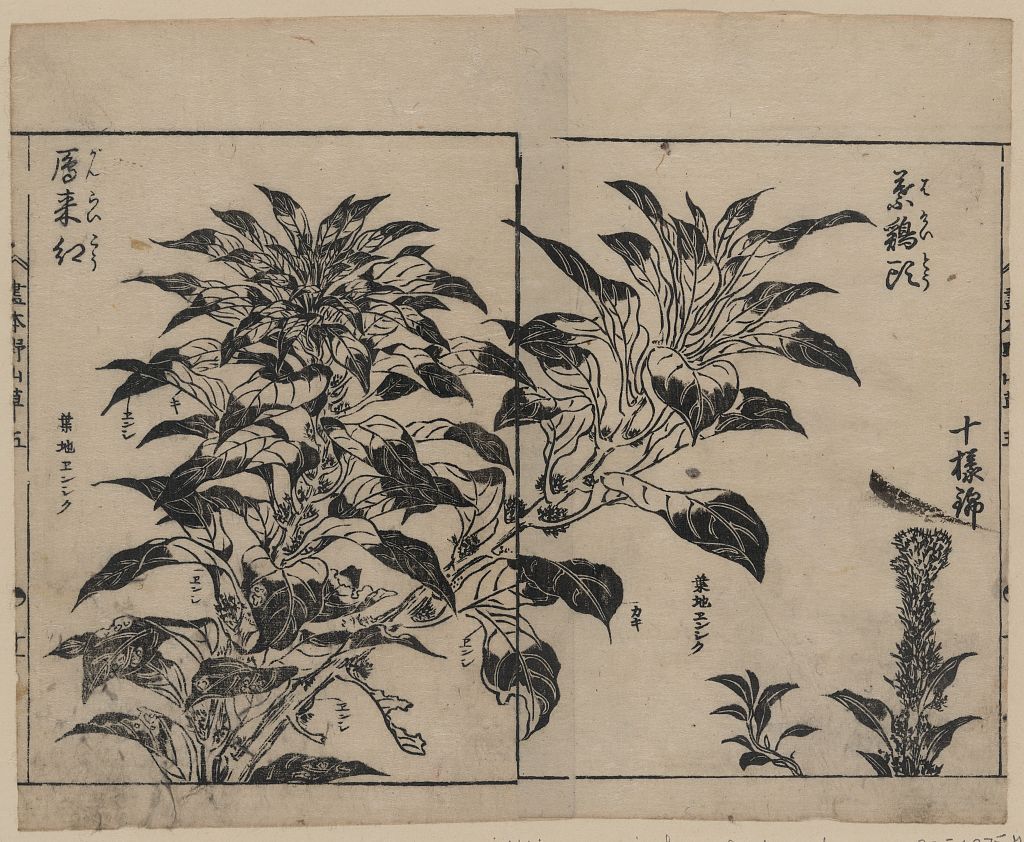
Cockscomb and Two Kinds of Amarantha
1755
Woodblock-printed book illustration; ink on paper
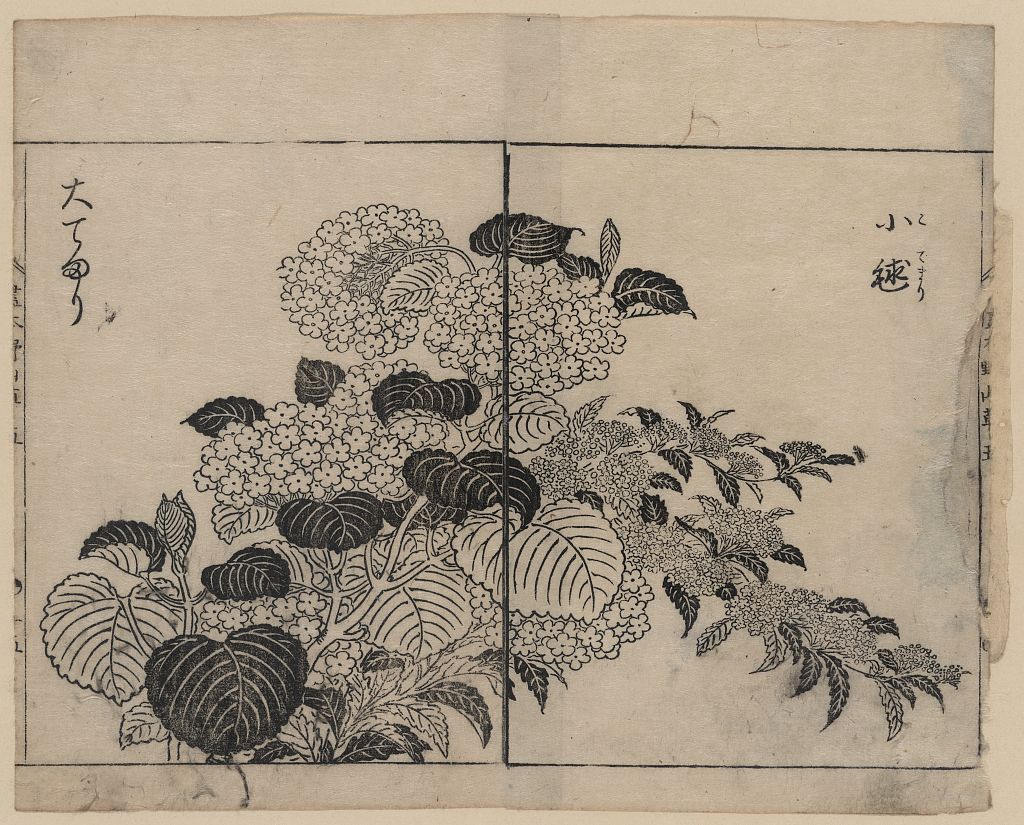
Blossoms from Two Kinds of Hydrangea
1755
Woodblock-printed book illustration; ink on paper
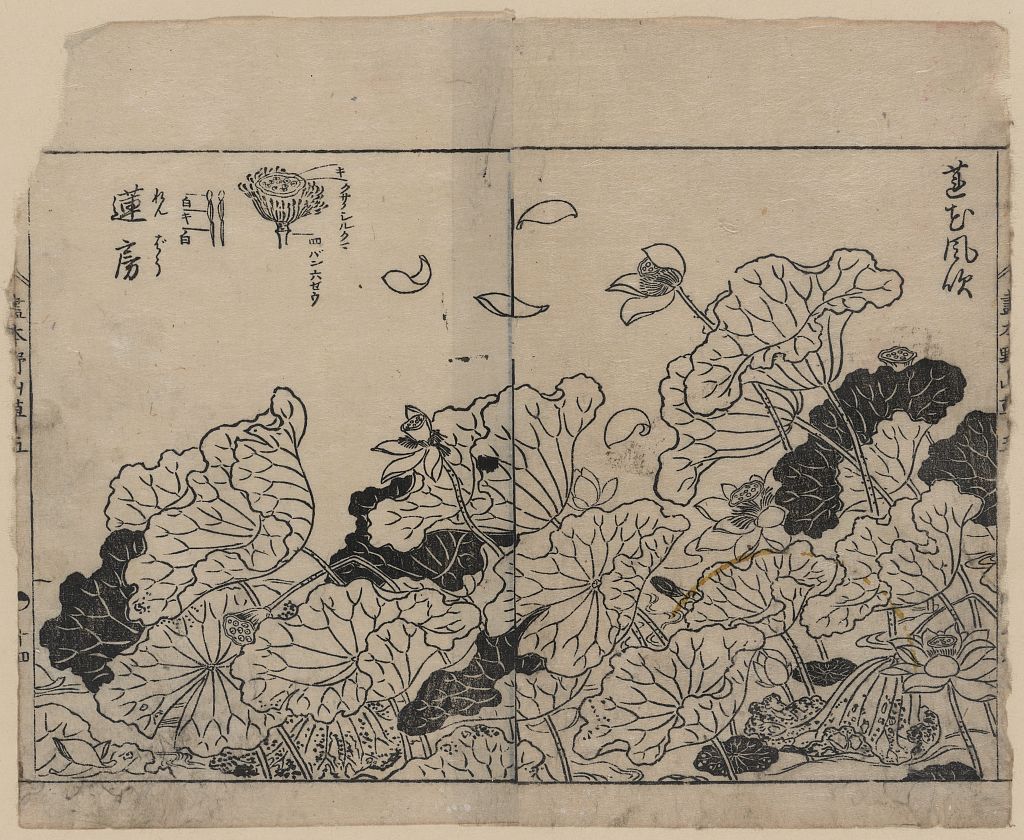
Lotus in the Wind, with Detail of Lotus Pod
1755
Woodblock-printed book illustration; ink on paper
Frequently Asked Questions
Lotus Plants in Various Stages of Development was created by Tachibana Yasukuni (橘保国) in 1755.