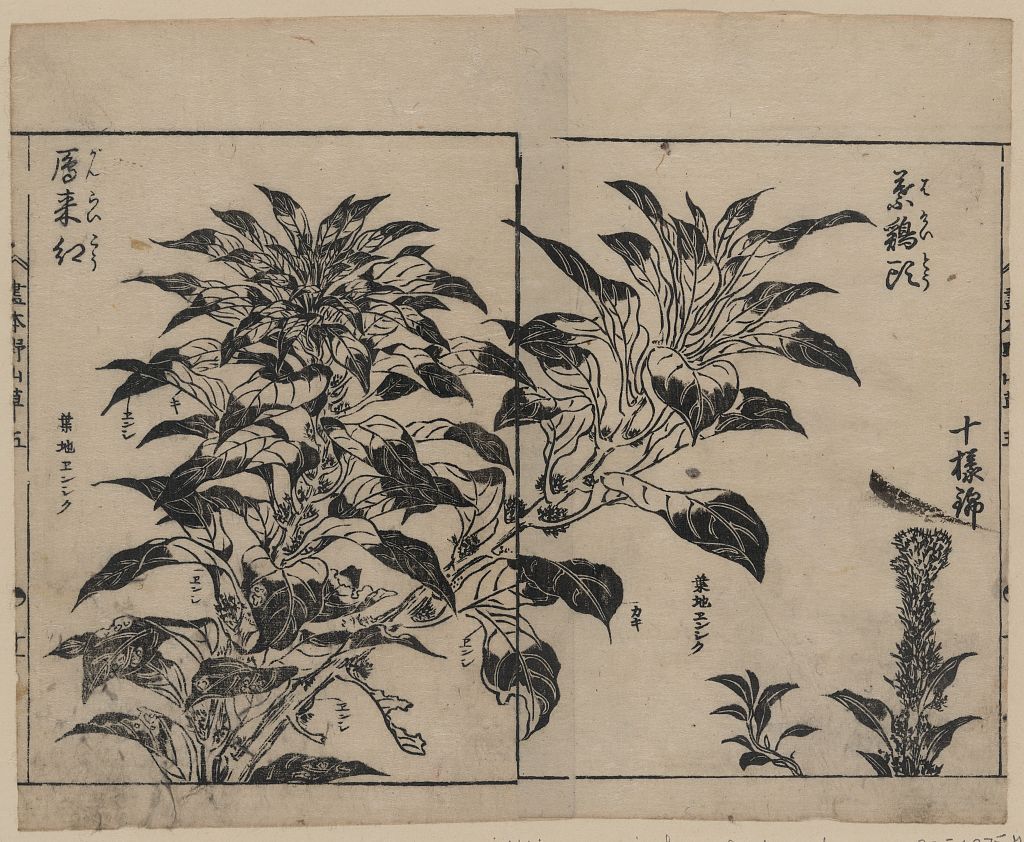
Cockscomb and Two Kinds of Amarantha
- Date:
- 1755
- Medium:
- Woodblock-printed book illustration; ink on paper
- Source:
- Library of Congress
Description
From Tachibana Yasukuni's 1755 Ehon noyamagusa and held in the Library of Congress, this woodblock illustration depicts cockscomb (keitō, Celosia argentea var. cristata) together with two related species of amarantha, all members of the broader Amaranthaceae plant family that were prized in Japanese gardens for their distinctive late-summer plumes and sustained autumn color. The cockscomb's characteristically convoluted crown form, which gives the plant its English name, contrasts with the more delicate vertical spikes of amarantha, allowing Yasukuni to demonstrate the range of floral architecture within a single botanical family. The composition employs the Kano-school draftsmanship Yasukuni inherited from his father Tachibana Morikuni, with confident outline drawing and tonal modulation through repeated ink application that conveys the dense, papery texture of the keitō bloom. Ehon noyamagusa was published in Osaka in five volumes in 1755 and remained in circulation for over a century, supplying motifs to artisans across textile, ceramic, and lacquer media. The Library of Congress example documents Yasukuni's mature illustration practice and his contribution to the Kamigata ehon tradition that his father had helped establish in the early eighteenth century.
More Prints by Tachibana Yasukuni

Japonica, Bell Flowers, and Anemone
1755
Woodblock-printed book illustration; ink on paper
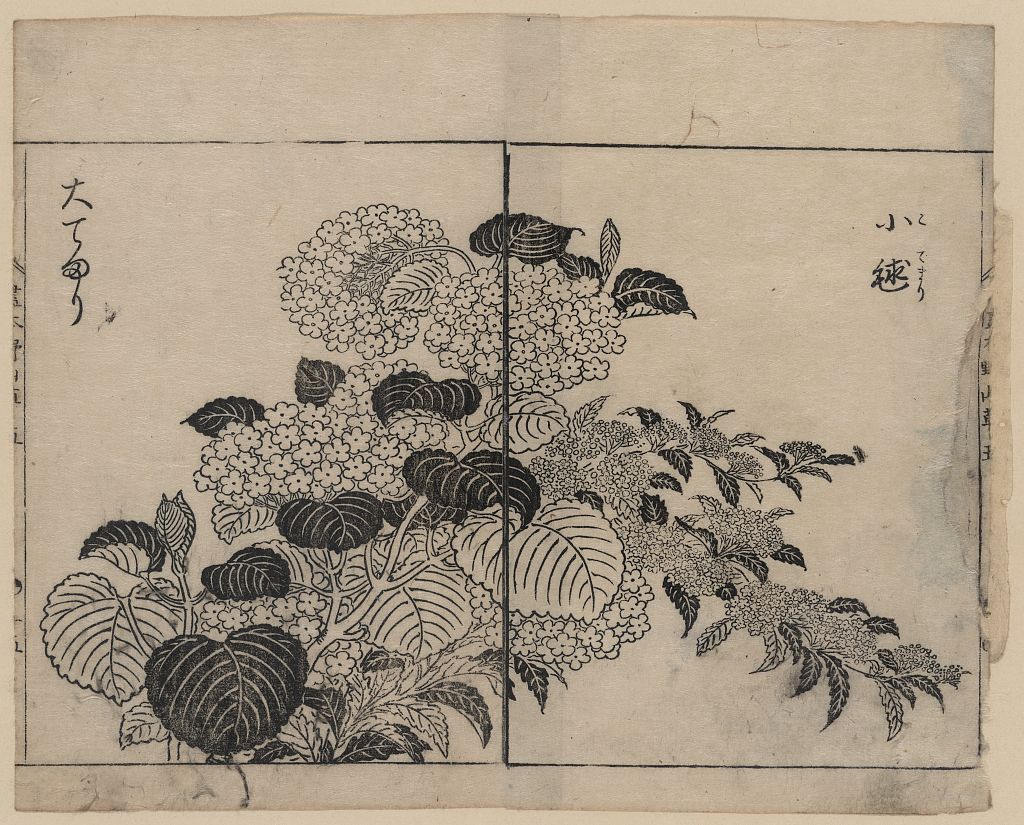
Blossoms from Two Kinds of Hydrangea
1755
Woodblock-printed book illustration; ink on paper
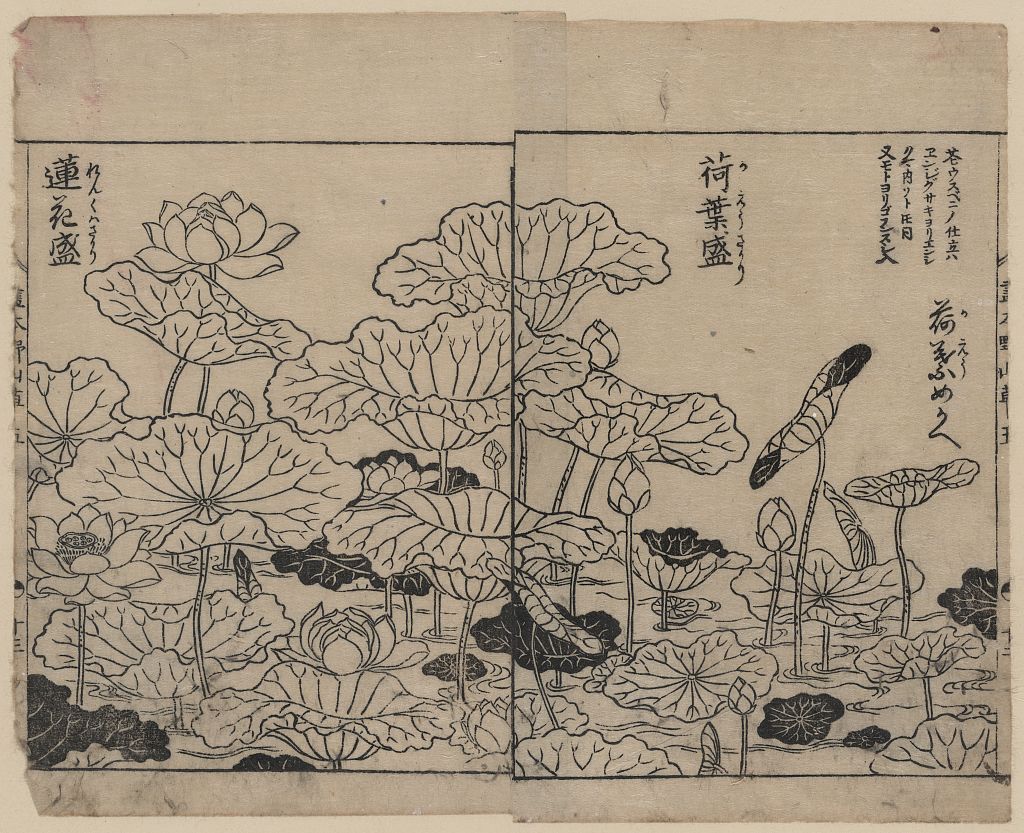
Lotus Plants in Various Stages of Development
1755
Woodblock-printed book illustration; ink on paper
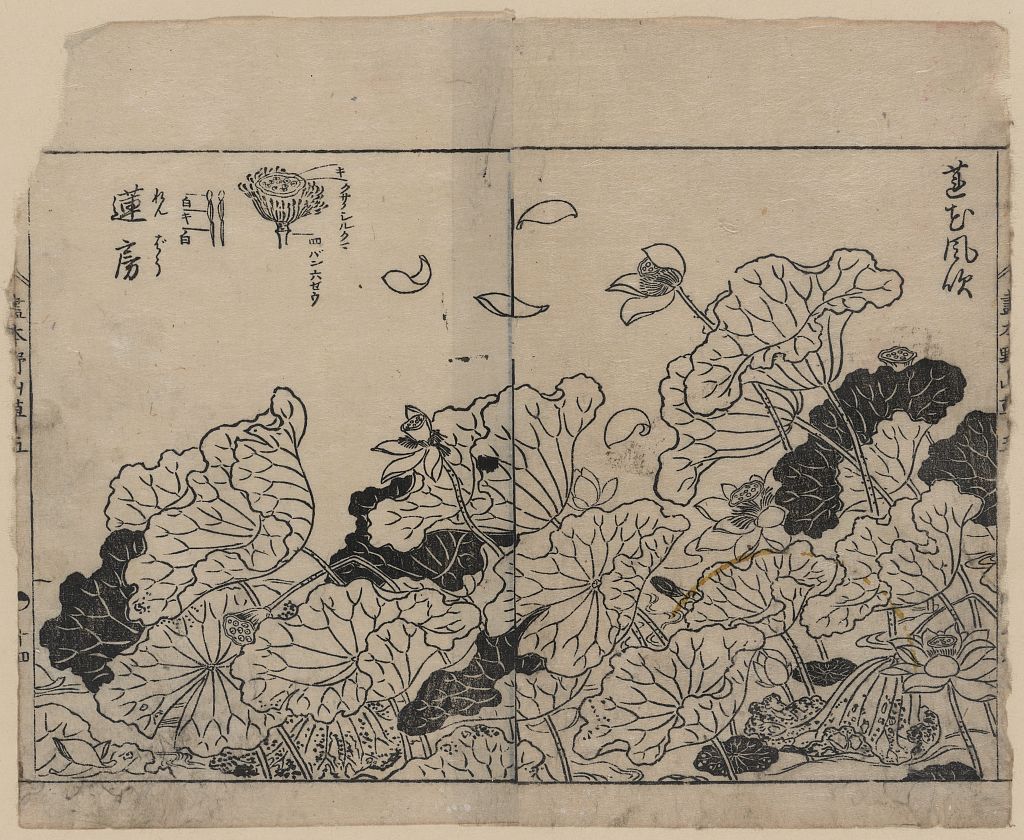
Lotus in the Wind, with Detail of Lotus Pod
1755
Woodblock-printed book illustration; ink on paper
Frequently Asked Questions
Cockscomb and Two Kinds of Amarantha was created by Tachibana Yasukuni (橘保国) in 1755.