Tachibana Yasukuni
橘保国
1717–1792
Japan
Biography
Tachibana Yasukuni (橘保国, 1717–1792) was an Osaka-based painter and book illustrator of the mid-Edo period, best remembered as the son and artistic heir of Tachibana Morikuni (1679–1748), the prolific Kano-school illustrator whose woodblock-printed picture books, or ehon, helped define the genre for eighteenth-century Japan. Yasukuni was born into a household already deeply embedded in the commercial book trade of Kamigata, the Kyoto–Osaka cultural region, and his career carried forward his father's project of translating the brushwork and compositional repertoire of Kano painting into the more broadly disseminated medium of the printed pattern book.
Morikuni had trained under Tsuruzawa Tanzan, a Kano-school painter in Kyoto, and became one of the most prolific book illustrators working in the Kano tradition during the Edo period, based in Osaka. His landmark works — including Ehon shahō bukuro (1720), Ehon tsūhōshi (1729), and Unpitsu sōga, published in 1749, the year after his death — circulated widely and served as essential reference texts for Japanese craftsmen and painters. After Morikuni's death in 1748, Yasukuni carried this work forward.
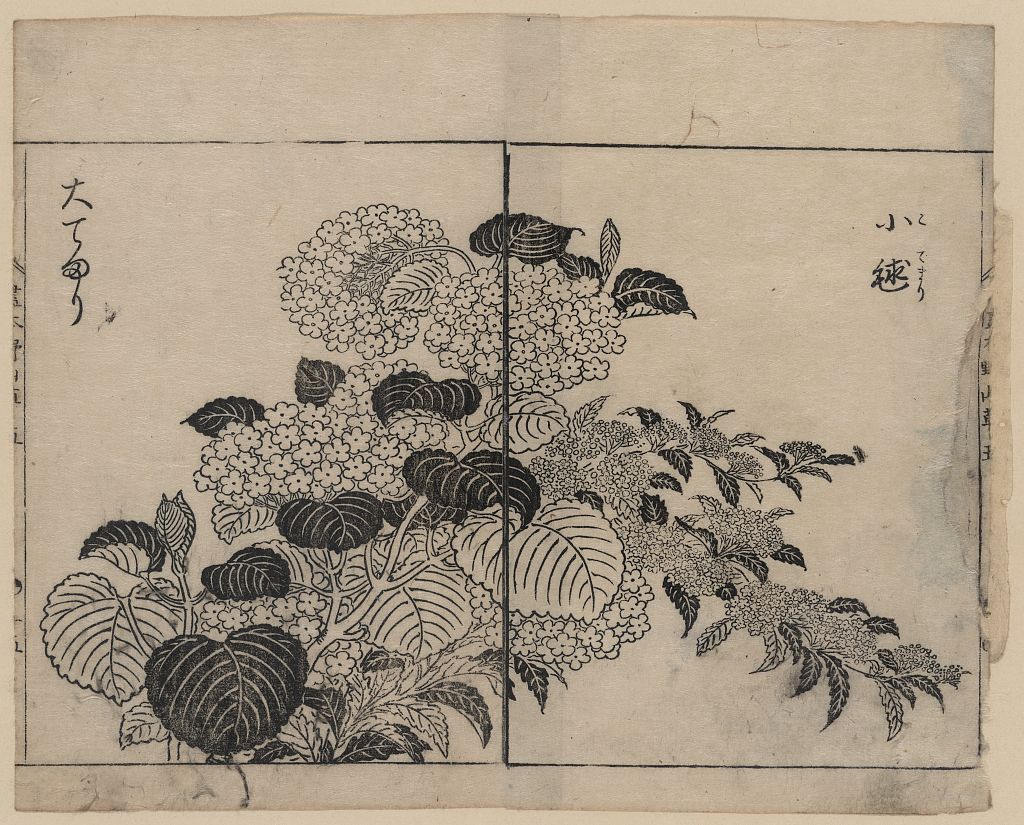
Yasukuni's most important original contribution to the ehon tradition was Ehon noyamagusa (絵本野山草, Picture Book of Mountain and Field Plants), first published in Osaka in 1755 in five volumes. The book is a botanical compendium presenting Japanese flora — peonies, hydrangeas, irises, chrysanthemums, and dozens of other flowering plants, grasses, and trees — through woodblock illustrations that combined the observational accuracy of Edo natural-history drawing with the calligraphic line and atmospheric composition of Kano painting. The work was reprinted during the eighteenth and nineteenth centuries and became one of the more influential Japanese botanical reference books of its era, supplying pattern motifs for textile designers, ceramic painters, lacquer artists, and later generations of ukiyo-e printmakers.
In addition to Ehon noyamagusa, Yasukuni produced or contributed illustrations to other Kamigata ehon, continuing the Tachibana family practice of organizing pictorial reference material around themes — flowers and plants, birds and animals, human figures and occupations — that could serve both as aesthetic appreciation and as practical models for other artisans. His style maintained the Kano-school grounding of his father's work, with confident brush-derived line work and balanced spatial compositions, while exhibiting a slightly softer, more naturalistic treatment of botanical subjects that reflected the broader eighteenth-century interest in honzōgaku (natural history studies) and the growing circulation of Chinese and Dutch botanical illustration through Nagasaki.
Yasukuni died in 1792. He represents an important transitional figure in eighteenth-century Japanese visual culture: an Osaka professional who carried forward the Kano tradition through the printed book, who participated in the rising eighteenth-century interest in botanical observation, and whose Ehon noyamagusa continued to circulate as a practical reference text into the late nineteenth century. Surviving copies of his illustrated books are held in major research libraries and museum collections in Japan and abroad, including the Smithsonian Libraries.
Key Facts
- Active Period
- 1717–1792
- Nationality
- 🇯🇵Japan
- Subjects
- Birds & Flowers
- Works Indexed
- 8
Frequently Asked Questions
Tachibana Yasukuni (橘保国, 1717–1792) was an Osaka-based painter and book illustrator of the mid-Edo period, best remembered as the son and artistic heir of Tachibana Morikuni (1679–1748), the prolific Kano-school illustrator whose woodblock-printed picture books, or ehon, helped define the genre for eighteenth-century Japan. Yasukuni was born into a household already deeply embedded in the commercial book trade of Kamigata, the Kyoto–Osaka cultural region, and his career carried forward his father's project of translating the brushwork and compositional repertoire of Kano painting into the more broadly disseminated medium of the printed pattern book.
Tachibana Yasukuni was active from 1717 to 1792.
Tachibana Yasukuni's prints frequently feature birds & flowers.
Original prints by Tachibana Yasukuni can be found in collections including Library of Congress.
Woodblock Prints by Tachibana Yasukuni (8)

Japonica, Bell Flowers, and Anemone
1755
Woodblock-printed book illustration; ink on paper
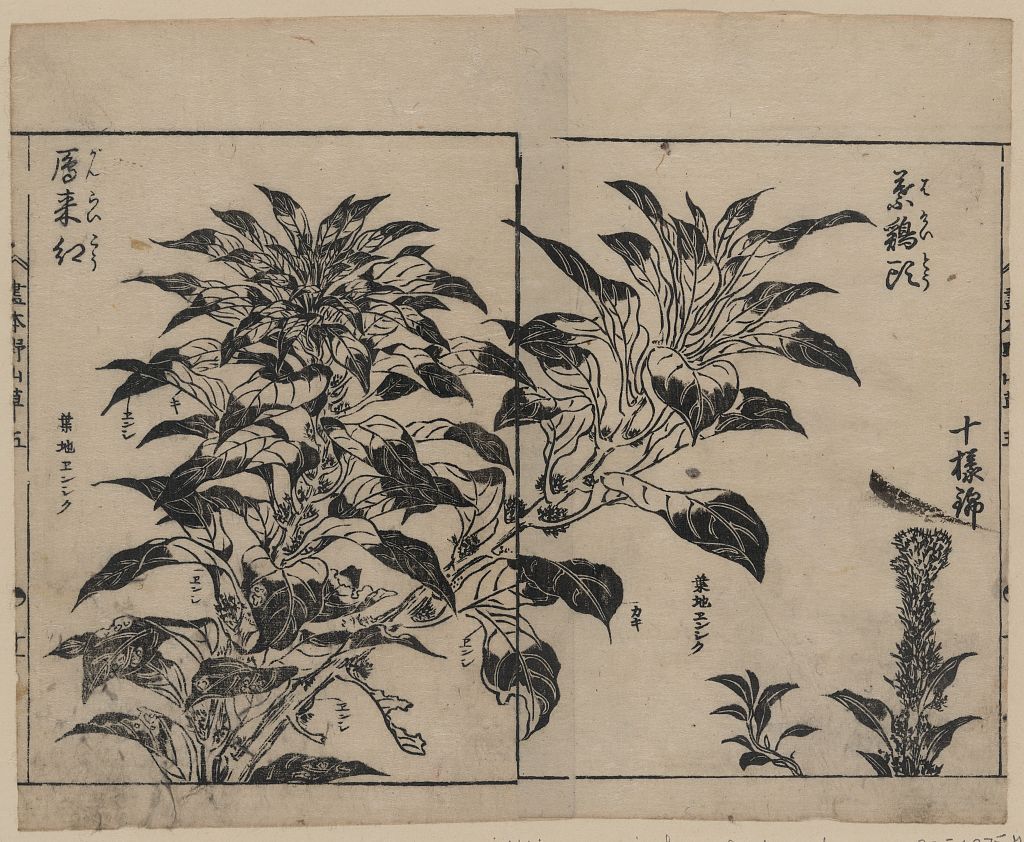
Cockscomb and Two Kinds of Amarantha
1755
Woodblock-printed book illustration; ink on paper
Blossoms from Two Kinds of Hydrangea
1755
Woodblock-printed book illustration; ink on paper
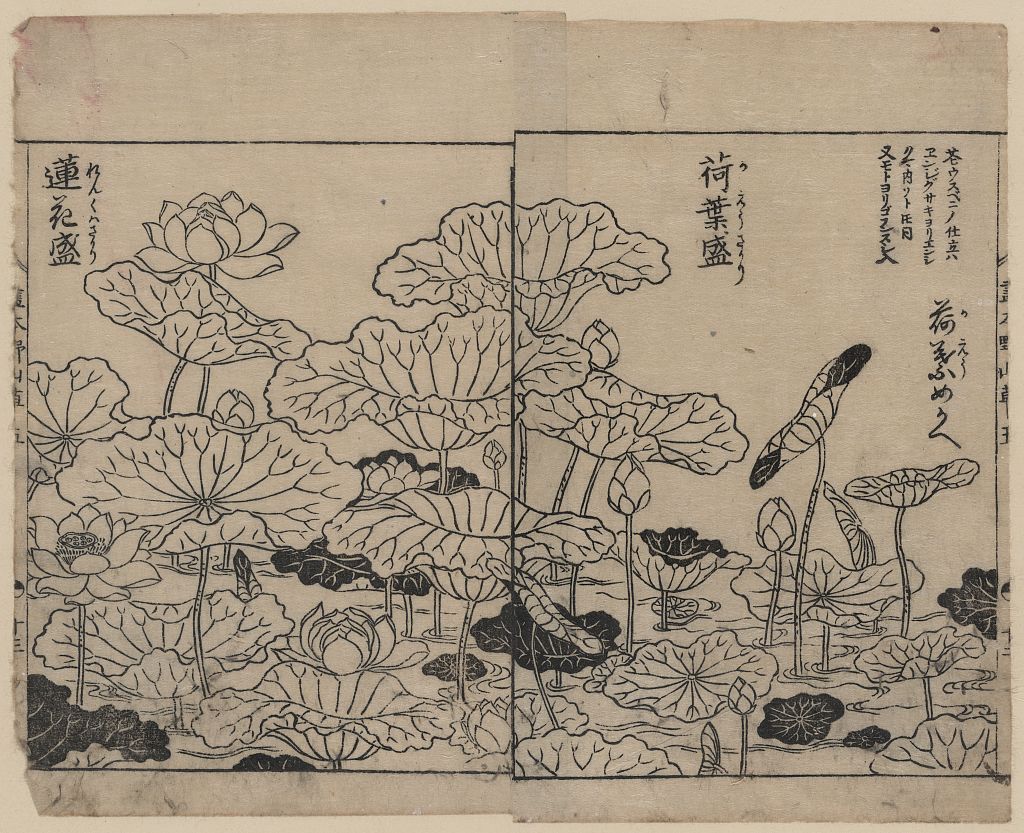
Lotus Plants in Various Stages of Development
1755
Woodblock-printed book illustration; ink on paper
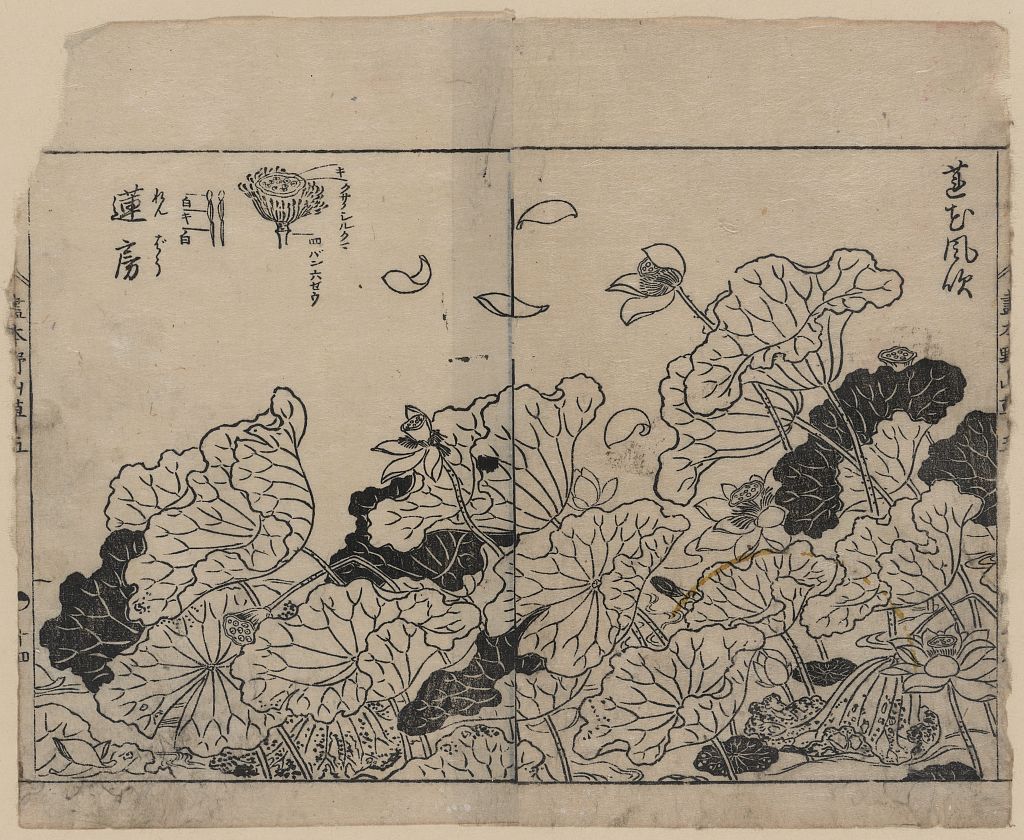
Lotus in the Wind, with Detail of Lotus Pod
1755
Woodblock-printed book illustration; ink on paper
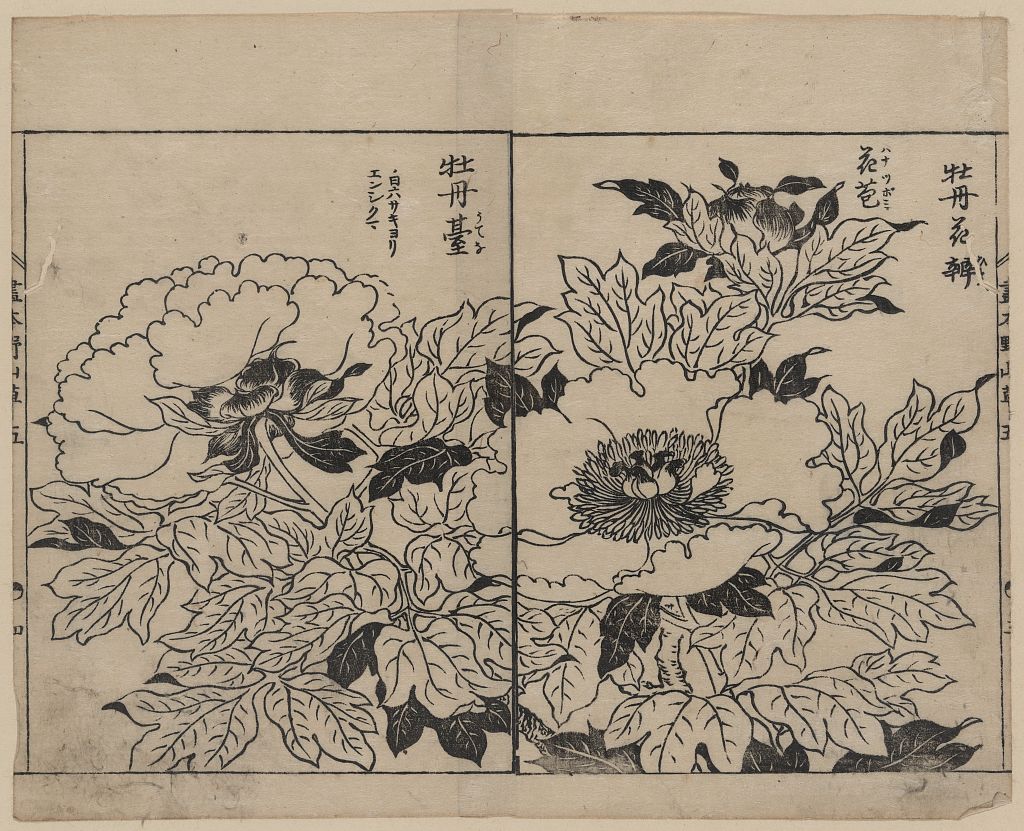
Peony Blossoms
1755
Woodblock-printed book illustration; ink on paper

Vines and Daffodils
1755
Woodblock-printed book illustration; ink on paper

Two Kinds of Pine Needle Flowers and a Kind of Anemone
1755
Woodblock-printed book illustration; ink on paper