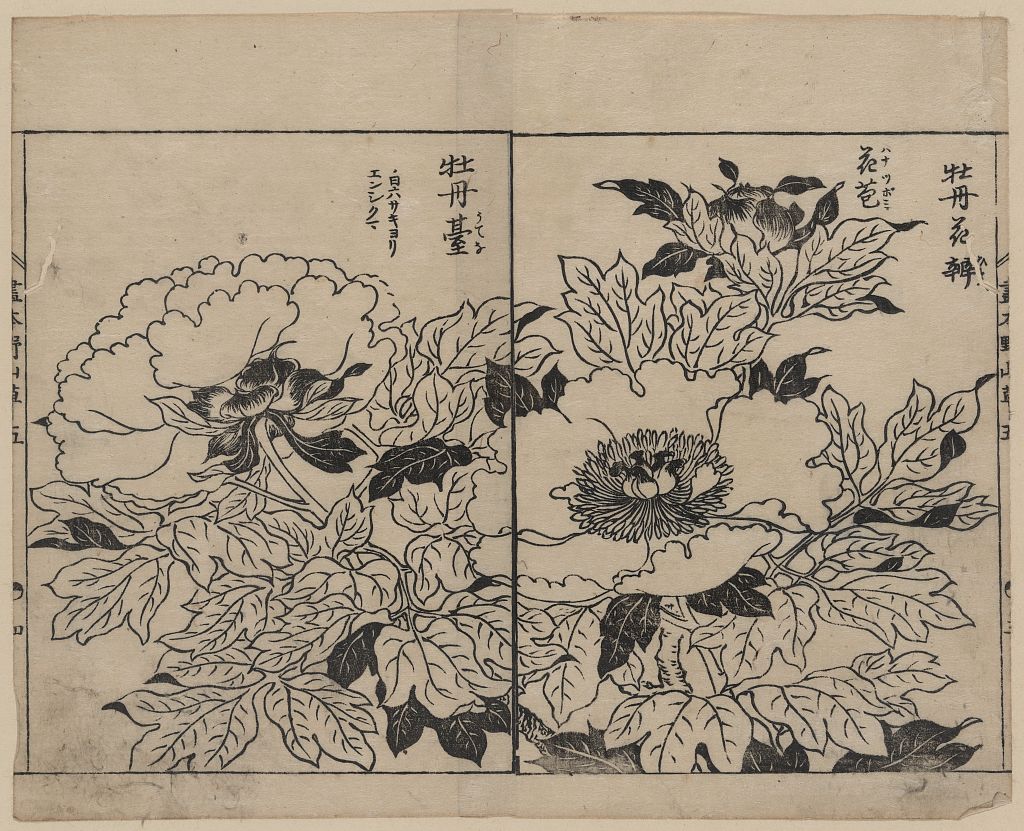
Peony Blossoms
- Date:
- 1755
- Medium:
- Woodblock-printed book illustration; ink on paper
- Source:
- Library of Congress
Description
Held in the Library of Congress and published in Tachibana Yasukuni's 1755 Ehon noyamagusa, this woodblock illustration of peony blossoms (botan, Paeonia) addresses one of the most celebrated and visually elaborate flowers in the Japanese decorative tradition. The peony had entered Japan from Tang-dynasty China, where it had been cultivated as the king of flowers, and through centuries of Japanese garden cultivation and pictorial reproduction it had become inseparable from Chinese-derived aesthetic conventions, particularly within Kano-school painting where peonies were a standard subject for both formal screens and intimate album leaves. Yasukuni's treatment shows multiple blossoms at varying stages of opening, surrounded by the characteristic deeply lobed leaves, in a composition that allowed the book to function as a complete pictorial reference for the plant. The brushwork carries forward the Kano draftsmanship of his father Morikuni, with confident outline definition, layered tonal modeling through ink wash, and a spatially balanced arrangement. Ehon noyamagusa was published in Osaka in five volumes in 1755 and remained in continuous circulation through the late nineteenth century, with peony motifs from its pages circulating widely into textile design, ceramic decoration, and woodblock printmaking. The Library of Congress example preserves Yasukuni's contribution to the visual canon of one of East Asia's most enduring floral subjects.
More Prints by Tachibana Yasukuni

Japonica, Bell Flowers, and Anemone
1755
Woodblock-printed book illustration; ink on paper
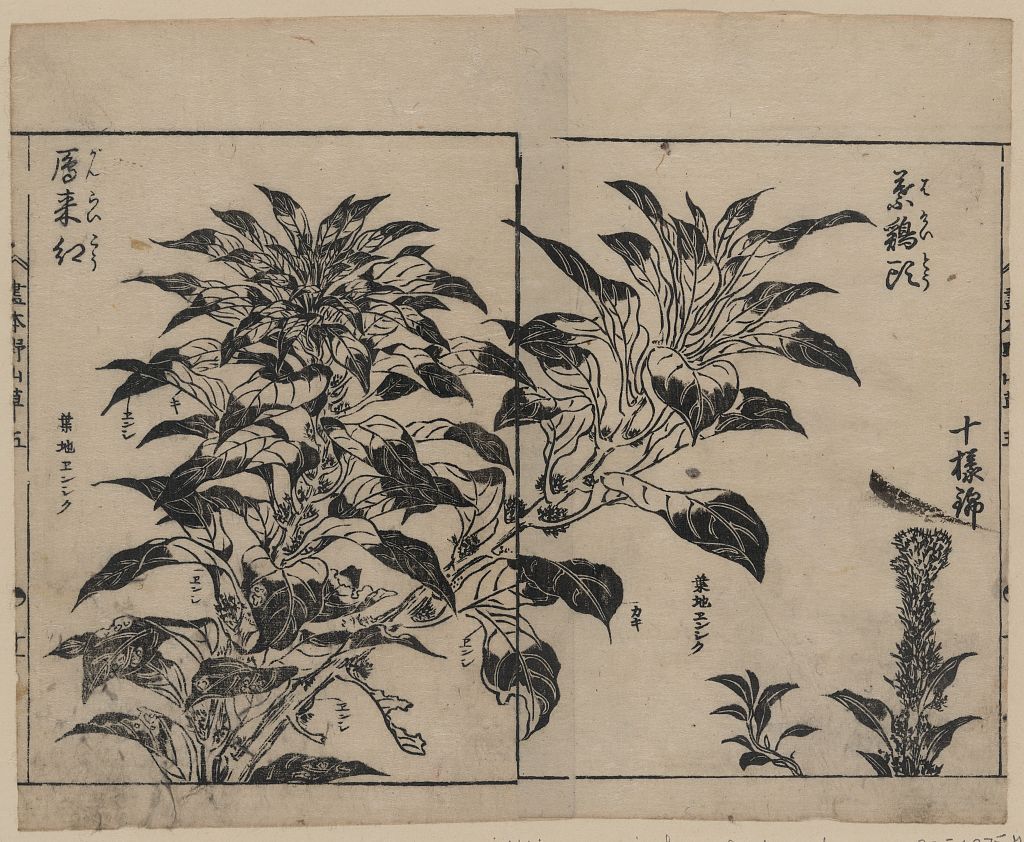
Cockscomb and Two Kinds of Amarantha
1755
Woodblock-printed book illustration; ink on paper
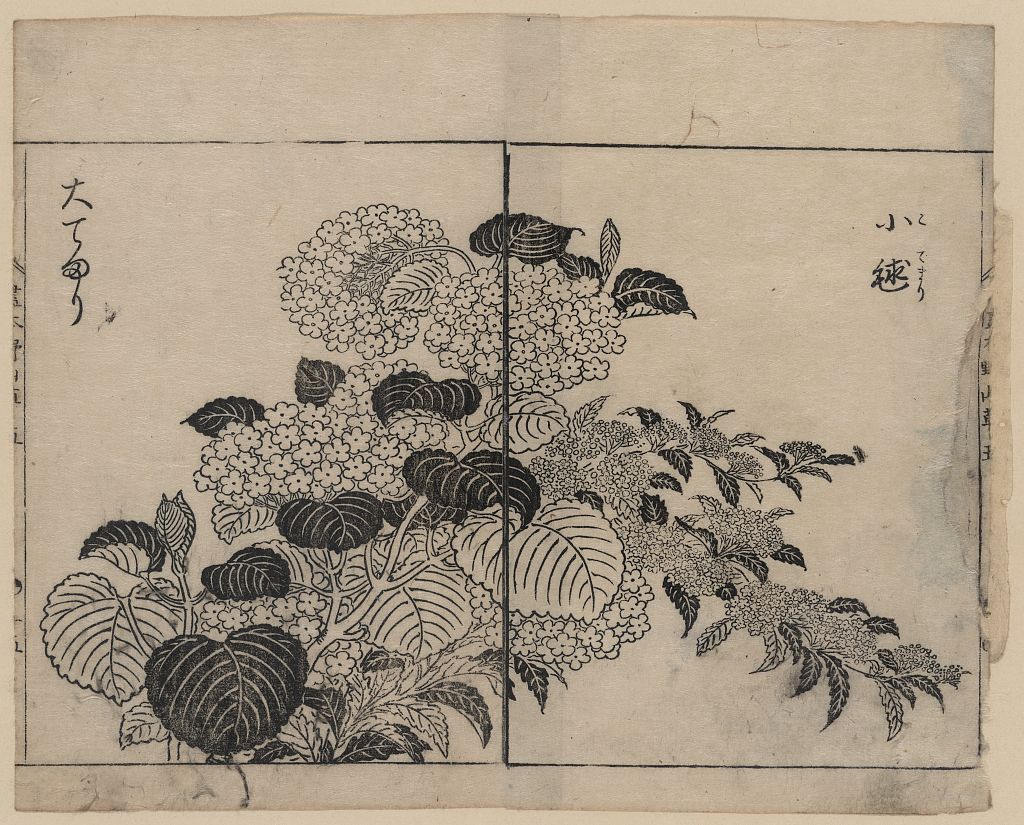
Blossoms from Two Kinds of Hydrangea
1755
Woodblock-printed book illustration; ink on paper
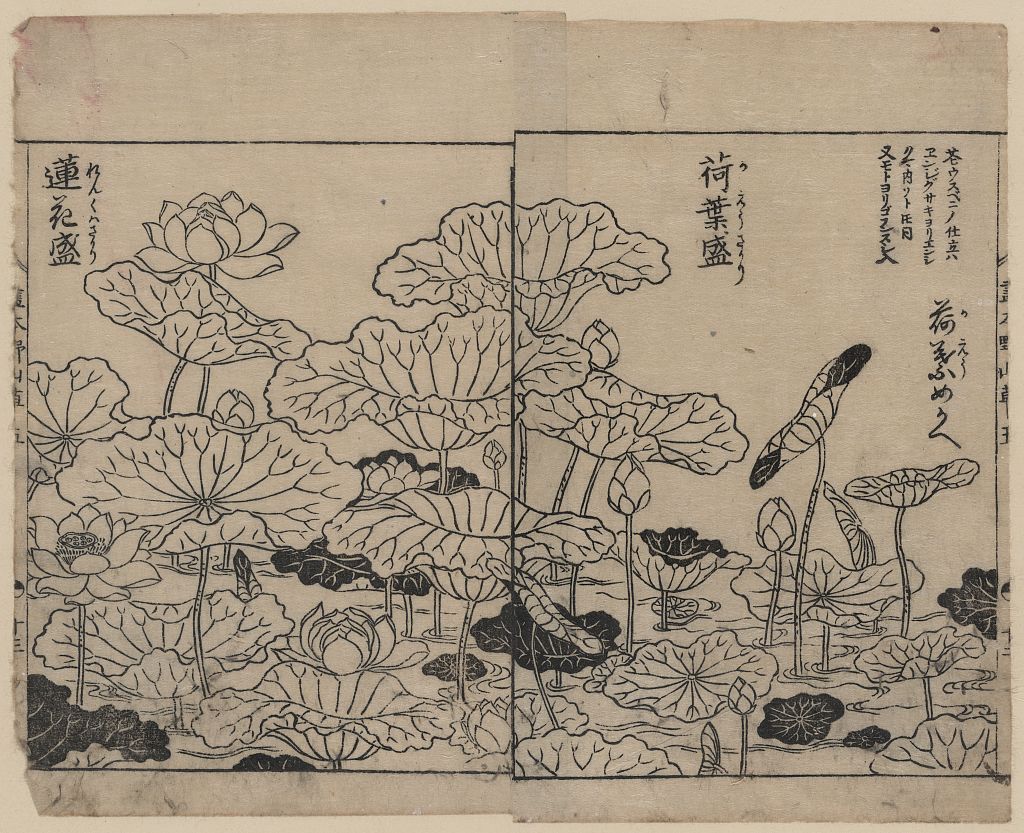
Lotus Plants in Various Stages of Development
1755
Woodblock-printed book illustration; ink on paper
Frequently Asked Questions
Peony Blossoms was created by Tachibana Yasukuni (橘保国) in 1755.