
Two Kinds of Pine Needle Flowers and a Kind of Anemone
- Date:
- 1755
- Medium:
- Woodblock-printed book illustration; ink on paper
- Source:
- Library of Congress
Description
This 1755 woodblock illustration from Tachibana Yasukuni's Ehon noyamagusa (Picture Book of Mountain and Field Plants) presents two species of pine-needle flowers alongside a variety of anemone, each rendered with the careful attention to leaf structure, stem articulation, and floral form that characterized the book's botanical methodology. Held in the Library of Congress collection, the print shows Yasukuni's command of the Kano-school brush conventions inherited from his father Tachibana Morikuni: confident outline drawing, controlled tonal variation through repeated ink application, and a balanced spatial composition that arranges multiple specimens across the page without crowding. The needle-flowers and anemone are depicted in the manner of eighteenth-century honzōgaku (natural history) illustration, with each plant shown in full from root area to bloom, a pedagogical convention that allowed the book to function simultaneously as aesthetic appreciation and practical reference. Ehon noyamagusa was first published in five volumes in 1755 and became one of the most widely reproduced botanical pattern books of the Edo period, supplying motifs to textile designers, ceramic painters, and later generations of ukiyo-e artists. The Library of Congress example is part of the substantial Japanese illustrated books holding assembled by the LoC Prints and Photographs Division and documents Yasukuni's central contribution to the eighteenth-century Osaka ehon tradition.
More Prints by Tachibana Yasukuni

Japonica, Bell Flowers, and Anemone
1755
Woodblock-printed book illustration; ink on paper
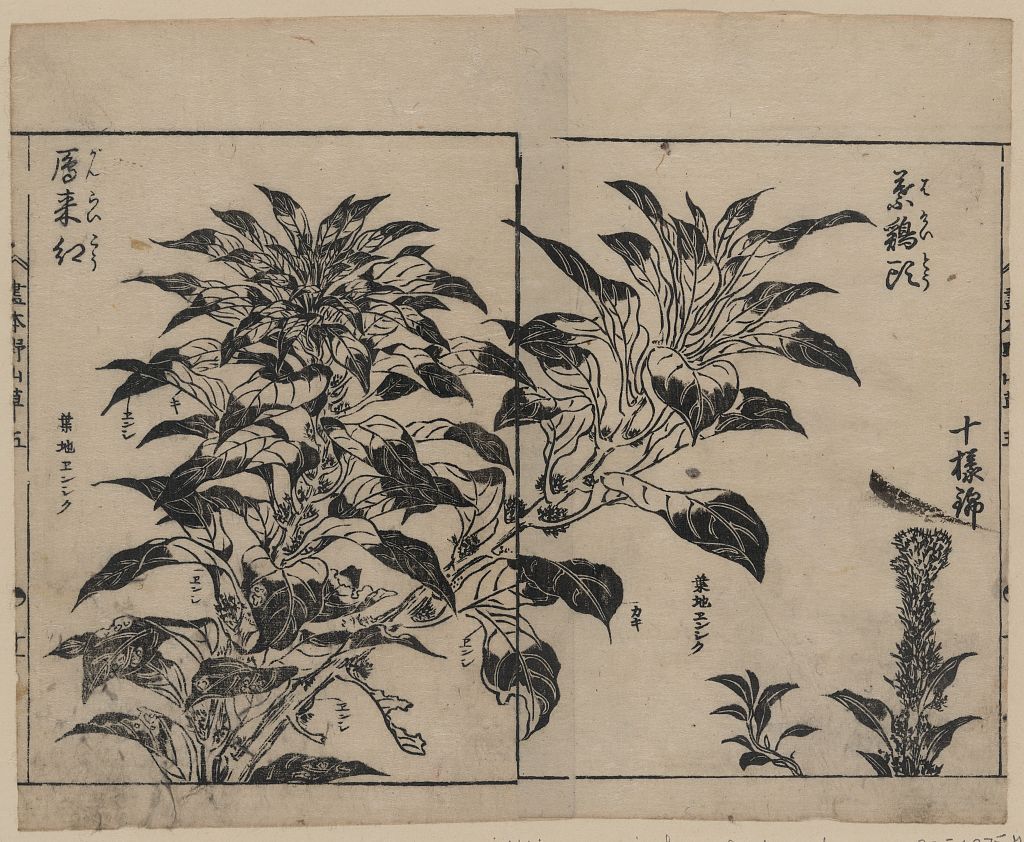
Cockscomb and Two Kinds of Amarantha
1755
Woodblock-printed book illustration; ink on paper
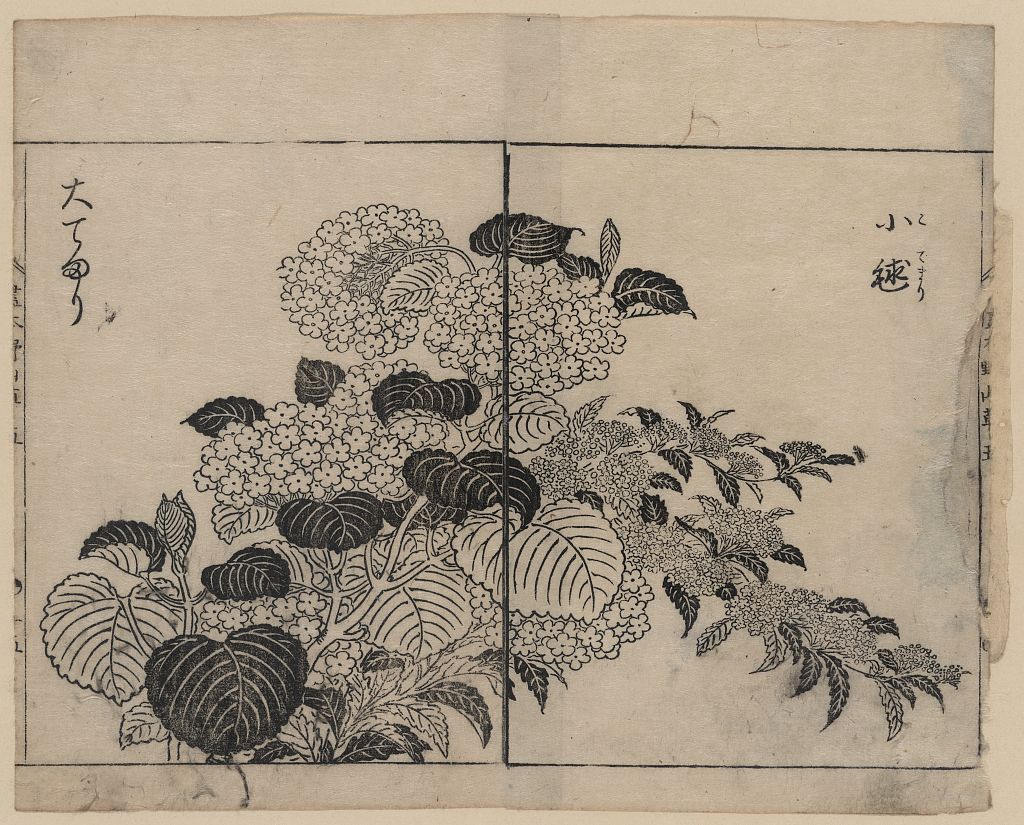
Blossoms from Two Kinds of Hydrangea
1755
Woodblock-printed book illustration; ink on paper
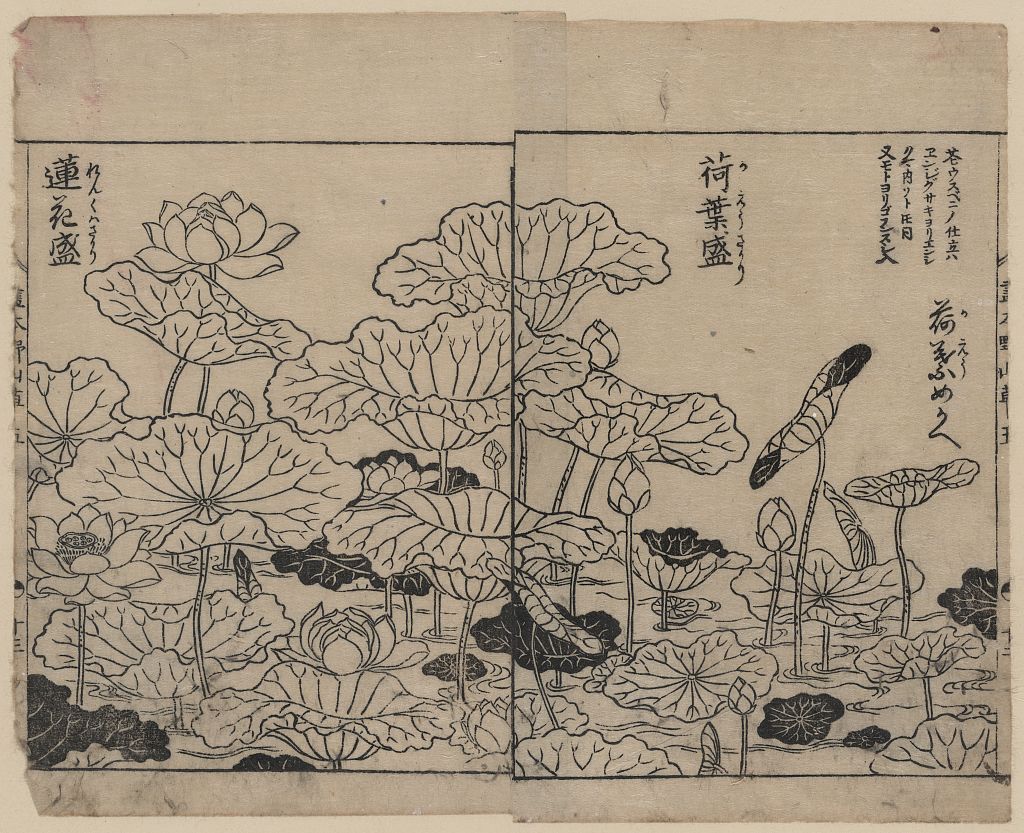
Lotus Plants in Various Stages of Development
1755
Woodblock-printed book illustration; ink on paper
More Birds & Flowers Prints
Frequently Asked Questions
Two Kinds of Pine Needle Flowers and a Kind of Anemone was created by Tachibana Yasukuni (橘保国) in 1755.
Two Kinds of Pine Needle Flowers and a Kind of Anemone depicts birds & flowers.