
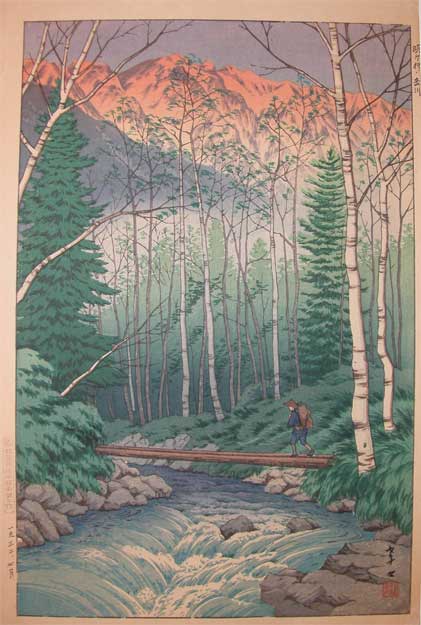
Takegawa River at Dawn
- Source:
- ukiyo-e.org
Description
Takegawa River at Dawn is a Japanese woodblock print by Takashi Henmi that returns to the Takegawa subject under the same first-light conditions, offering a closely related yet independently composed view of the river at the moment when night transitions into day. The image emphasizes the broad, still surface of the water, with banks, vegetation, and the suggestion of low buildings or distant terrain arranged in horizontal bands that recall the structural calm of classical Japanese landscape design. Soft gradations of grey, blue, and warm pink in the sky are achieved through traditional bokashi wiping on the printing block, a technique central to the Japanese woodblock vocabulary that Takashi Henmi inherited and adapted within the sosaku-hanga movement. As a sosaku-hanga, or creative print, the work reflects the early- to mid-twentieth-century shift in which Japanese printmakers took personal responsibility for every stage of production, designing, carving, and printing each impression themselves rather than dividing those tasks among workshop specialists. The result is a more individual, painterly feeling than is typical of either Edo-period ukiyo-e or its commercial shin-hanga successors, with visible woodgrain, slight variations in pressure, and a deliberately understated palette. Cataloged through ukiyo-e.org's aggregated records, drawing on the JAODB image database, the print sits comfortably within Henmi's broader interest in quiet riverine and shoreline subjects observed at transitional hours. For collectors of Japanese woodblock prints and students of sosaku-hanga, Takegawa River at Dawn exemplifies how a single artist could revisit a beloved local motif, refining composition and tonal mood while remaining firmly within the meditative, place-rooted sensibility that defines this strand of twentieth-century Japanese landscape printmaking.
More Prints by Henmi Takashi



Featured in Collections
Curated cross-cuts that include this print.
Frequently Asked Questions
Takegawa River at Dawn was created by Henmi Takashi (逸見享).