
Lake Biwa
- Medium:
- Mokuhanga (Japanese woodblock)
- Image courtesy of
- Saru Gallery
Description
Lake Biwa, the largest freshwater lake in Japan, lies northeast of Kyoto and has been a meisho subject since the medieval period, codified in the Eight Views of Omi (Omi hakkei)—a set of seasonal and atmospheric scenes that included evening bells, returning sails, and autumn moon. The associated Music tag suggests this print may reference one of these established views, perhaps Mii-dera no banshō (the evening bell at Mii-dera) or another scene tied to musical or auditory imagery in classical waka. Tokuriki's lake compositions characteristically employ broad horizontal banding—sky, distant mountains, water surface, foreground shore—with bokashi gradations softening transitions. Sailboats, fishing craft, or pine-clad headlands typically punctuate the middle distance. The palette tends toward indigo, slate, and warm tan washi tones. Lake Biwa appears recurrently in Tokuriki's catalogue, reflecting both its proximity to his Kyoto base and its standing within the meisho-e tradition that shin-hanga publishers actively revived during the twentieth century to address domestic and export markets seeking continuity with classical landscape conventions.
More Prints by Tomikichiro Tokuriki
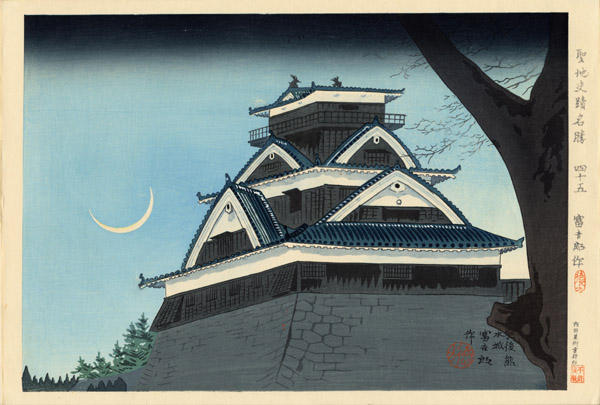
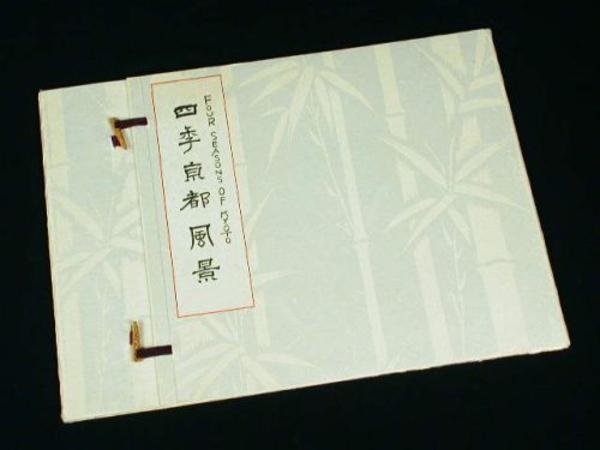
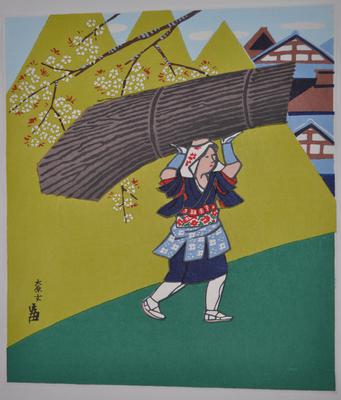

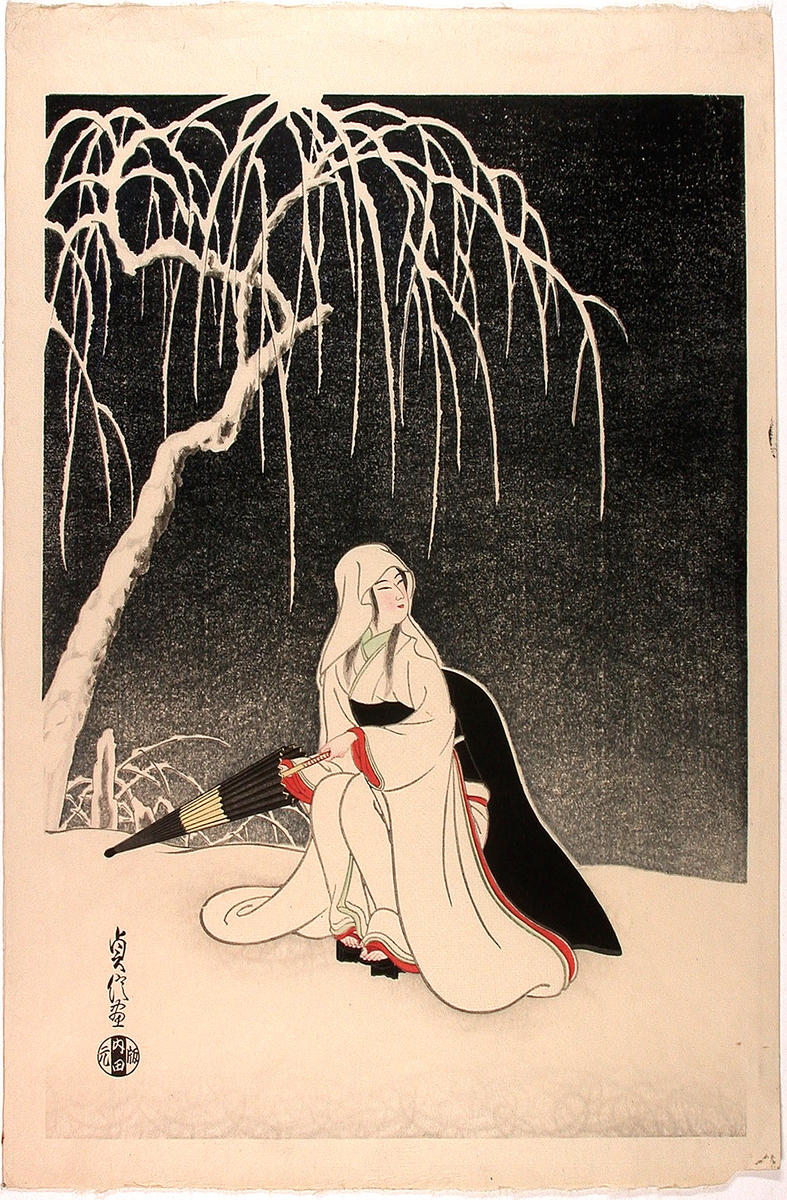
More Music Prints
Featured in Collections
Curated cross-cuts that include this print.
Frequently Asked Questions
Lake Biwa was created by Tomikichiro Tokuriki (徳力富吉郎).
Lake Biwa depicts music and rivers & lakes.