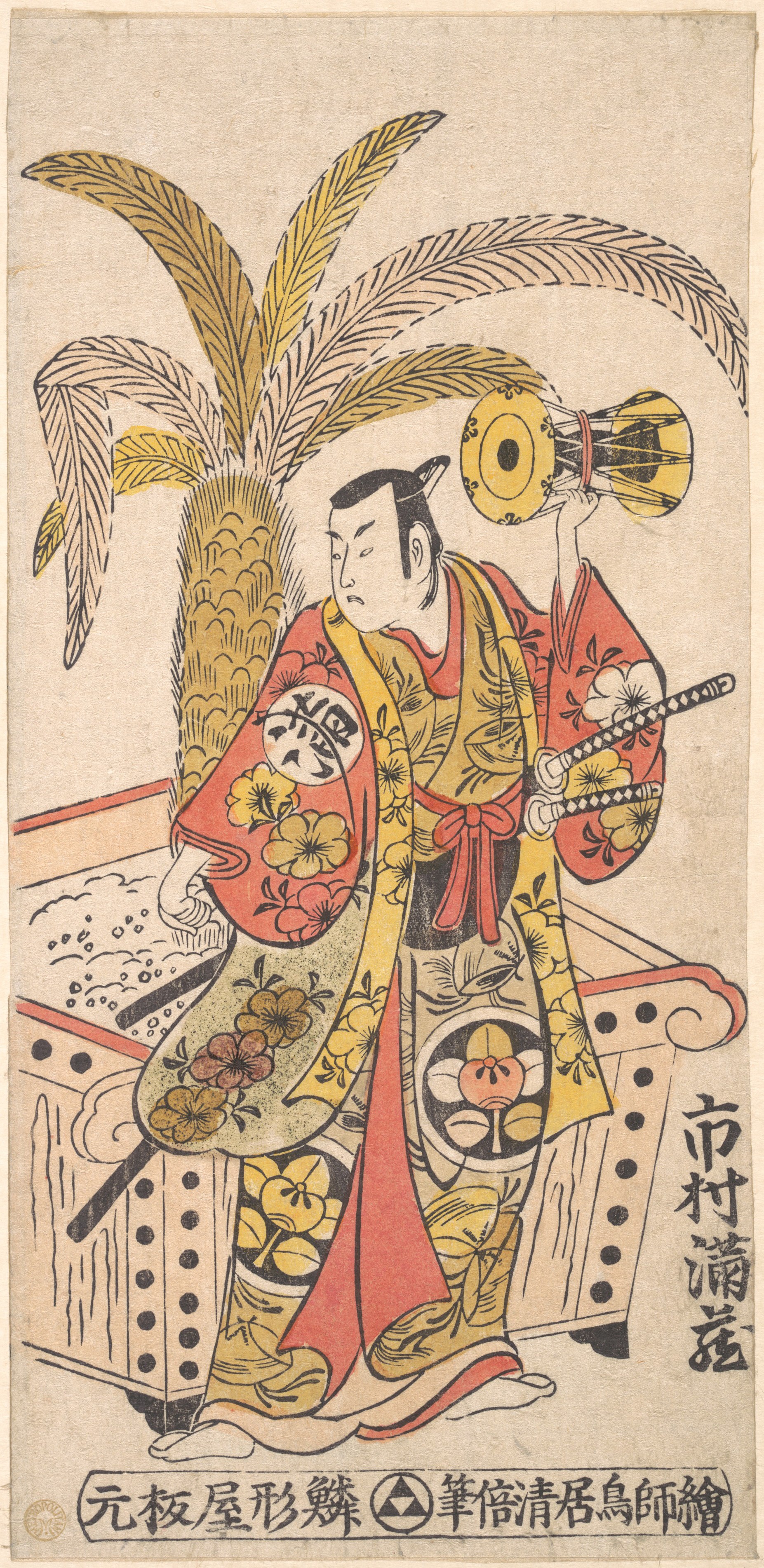
- Date:
- ca. 1730
- Medium:
- Woodblock print; ink and color on paper
- Source:
- Metropolitan Museum of Art
Description
Print, dated 1720, carries only the generic museum title within the Metropolitan Museum of Art collection record (source_url https://www.metmuseum.org/art/collection/search/37135), but the 1720 date situates the work within the late phase of Torii Kiyomasu I's documented career, before the death of the first Kiyomasu around 1722 and the transfer of the signature to the workshop's second-generation bearer. Without a specific actor, role, play, or subject identification preserved in the museum record, the print must be situated within the general Torii workshop output of the early 1720s, when the workshop was producing both single-sheet yakusha-e in the established hosoban or wide-bordered tate-e format and tsuji banzuke advertising posters for the three licensed Edo theatres. The bold contour line characteristic of the Torii hand, descended from the hyotan-ashi gourd-leg and mimizu-gaki earthworm-line stylisations the workshop had developed for kabuki imagery, carried the workshop's visual signature across all of these production categories. The early-1720s Torii workshop was transitioning fully from the earlier hand-coloured tan-e mode toward the larger monochrome sumizuri-e sheets that allowed greater compositional ambition, with the bold black outline taking on nearly the entire expressive weight of the design. The Metropolitan impression preserves a representative document of the workshop's late Kiyomasu I production at the moment of transition between the founding tan-e period and the maturing sumizuri-e idiom, even where the specific iconographic identification of the print remains unrecovered from the surviving museum record.
More Prints by Torii Kiyomasu I

The Actors Arashi Koroku I as Makomo no Mae and Ichikawa Uzaemon VIII as Taira no Koremochi in the play "Shusse Momijigari," performed at the Ichimura Theater in the eleventh month, 1747
1747
Color woodblock print; hosoban, benizuri-e

The Actors Sanogawa Ichimatsu I as Soga no Goro and Ikushima Daikichi II as Kewaizaka no Shosho in the play "Monzukushi Nagoya Soga," performed at the Ichimura Theater in the first month, 1748
1748
Color woodblock print; hosoban, benizuri-e
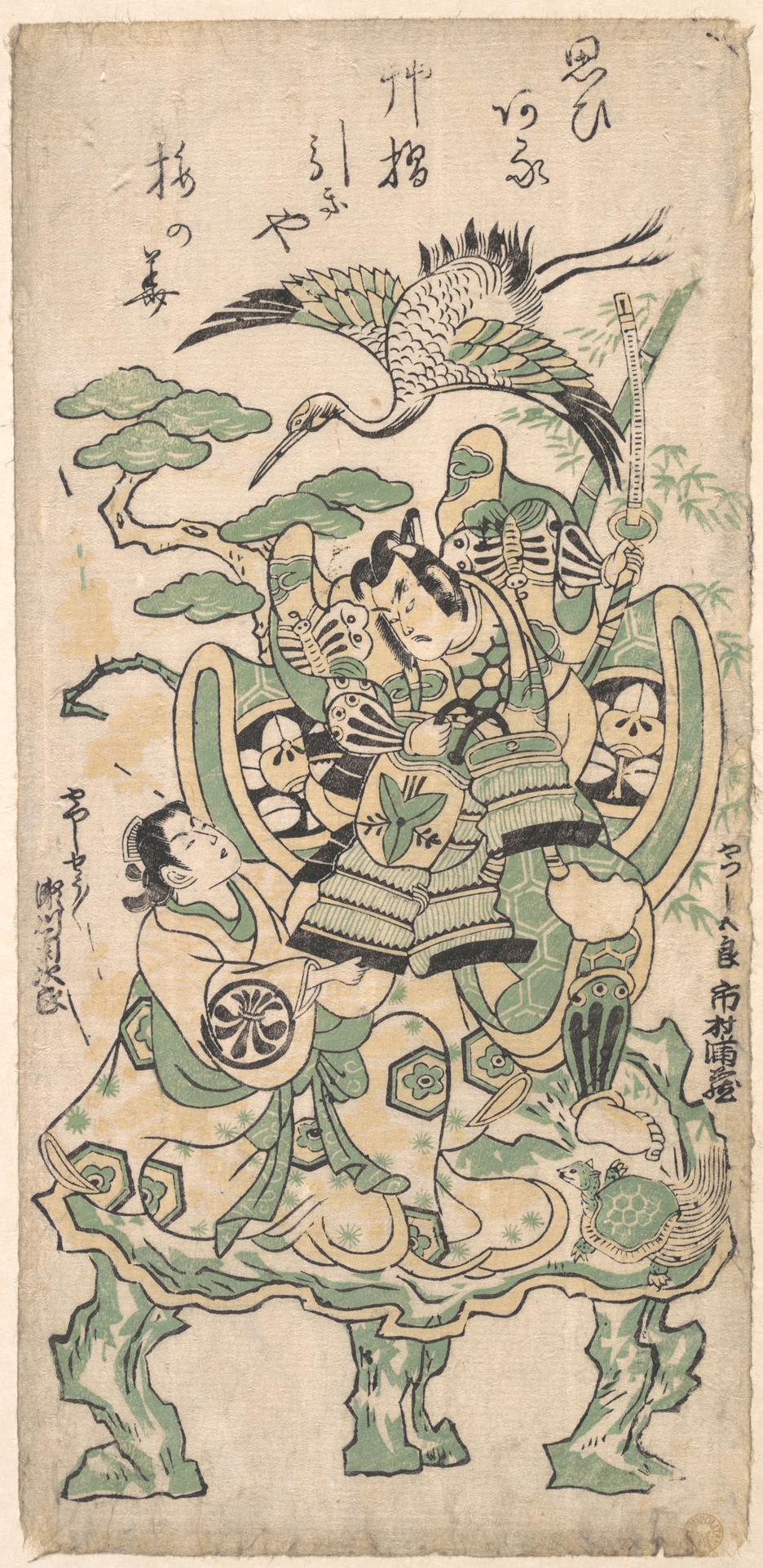
Ichimura Manzo as Yatsushi Goro and Segawa Kikujiro as Yatsushi Shosho
ca. 1745
Woodblock print; ink and color on paper
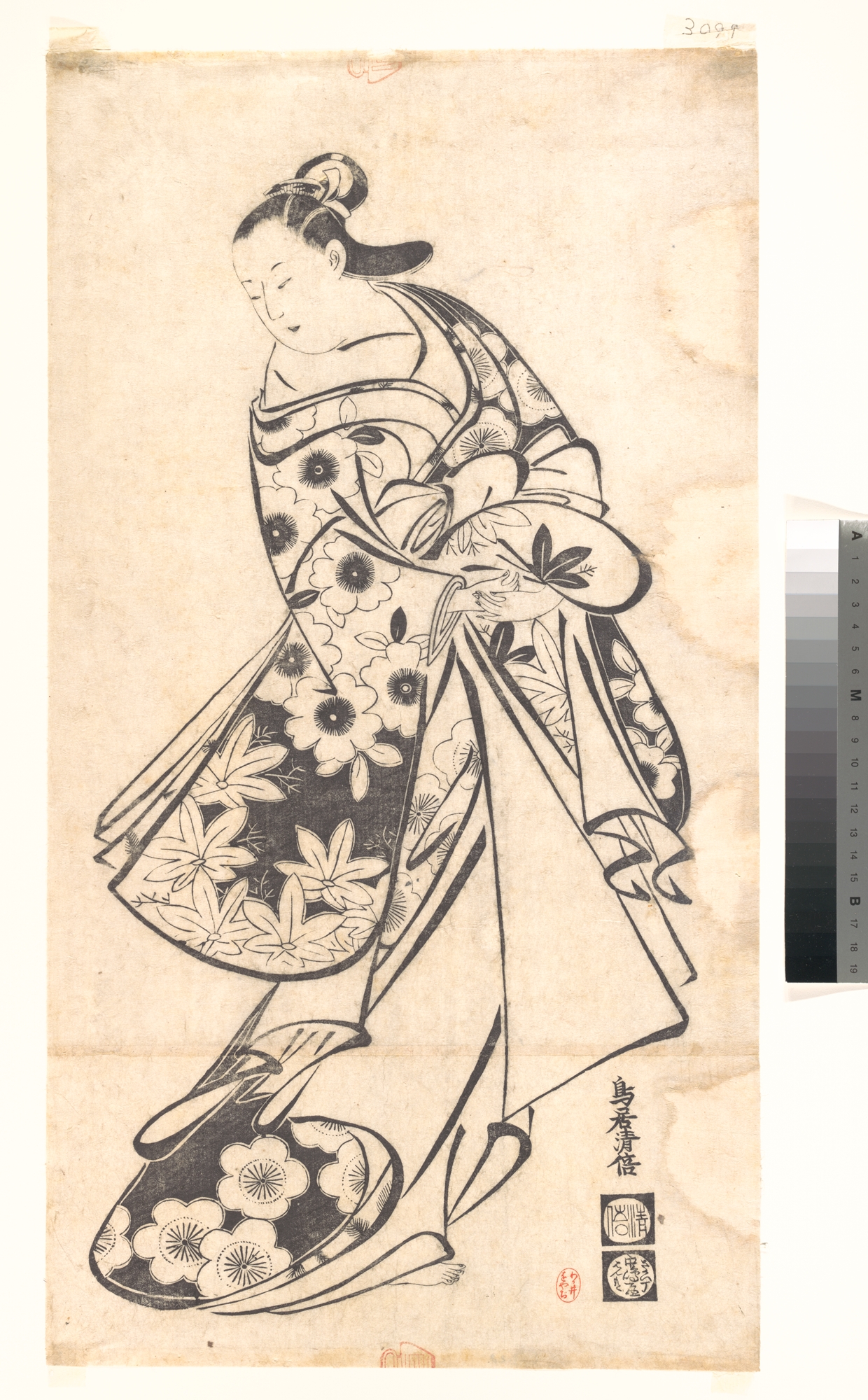
Courtesan
ca. 1712
Monochrome woodblock (tan-e) print; ink on paper
Frequently Asked Questions
Print was created by Torii Kiyomasu I (鳥居清倍) in ca. 1730.