
View of the Monkey Bridge
- Date:
- 1824
- Medium:
- Woodblock print (surimono), ink and color on paper
- Source:
- Art Institute of Chicago
Description
Totoya Hokkei's 1824 surimono View of the Monkey Bridge, held by the Art Institute of Chicago, depicts the celebrated Sarubashi spanning a deep gorge in the mountainous Kai province, one of Japan's most famous landscape sites. The bridge was renowned for its ingenious cantilevered construction and for the dramatic scenery in which it stood, qualities that made it a favored subject in painting, poetry and print. As a senior pupil of the Hokusai school, Hokkei drew on Katsushika Hokusai's keen interest in topographical subject matter, and he was capable of translating such a landscape into the small, deluxe format of an Edo kyoka-e surimono. Surimono of this period were printed in small editions on thick hosho paper, with techniques including graded color, mica, metallic pigments and karazuri embossing reserved for private commissions. These finishes would have lent atmospheric depth to the cliffs, vegetation and structural timbers of the bridge. Kyoka verses inscribed alongside the image would have elaborated the scene with literary references — the monkey bridge had inspired classical poetry as well as Edo writing — and personalized the print for its original recipients. The Art Institute of Chicago's impression anchors Totoya Hokkei's design within an institutional collection where it can be studied as a representative example of the Hokusai school's contribution to landscape surimono in the 1820s.
More Prints by Totoya Hokkei

Potted Plant (Ueki), from the series "Eighteen Illustrations of the Ladder of Ancient Words (Kogentei juhachiban tsuzuki)"
1831
Color woodblock print; shikishiban, surimono
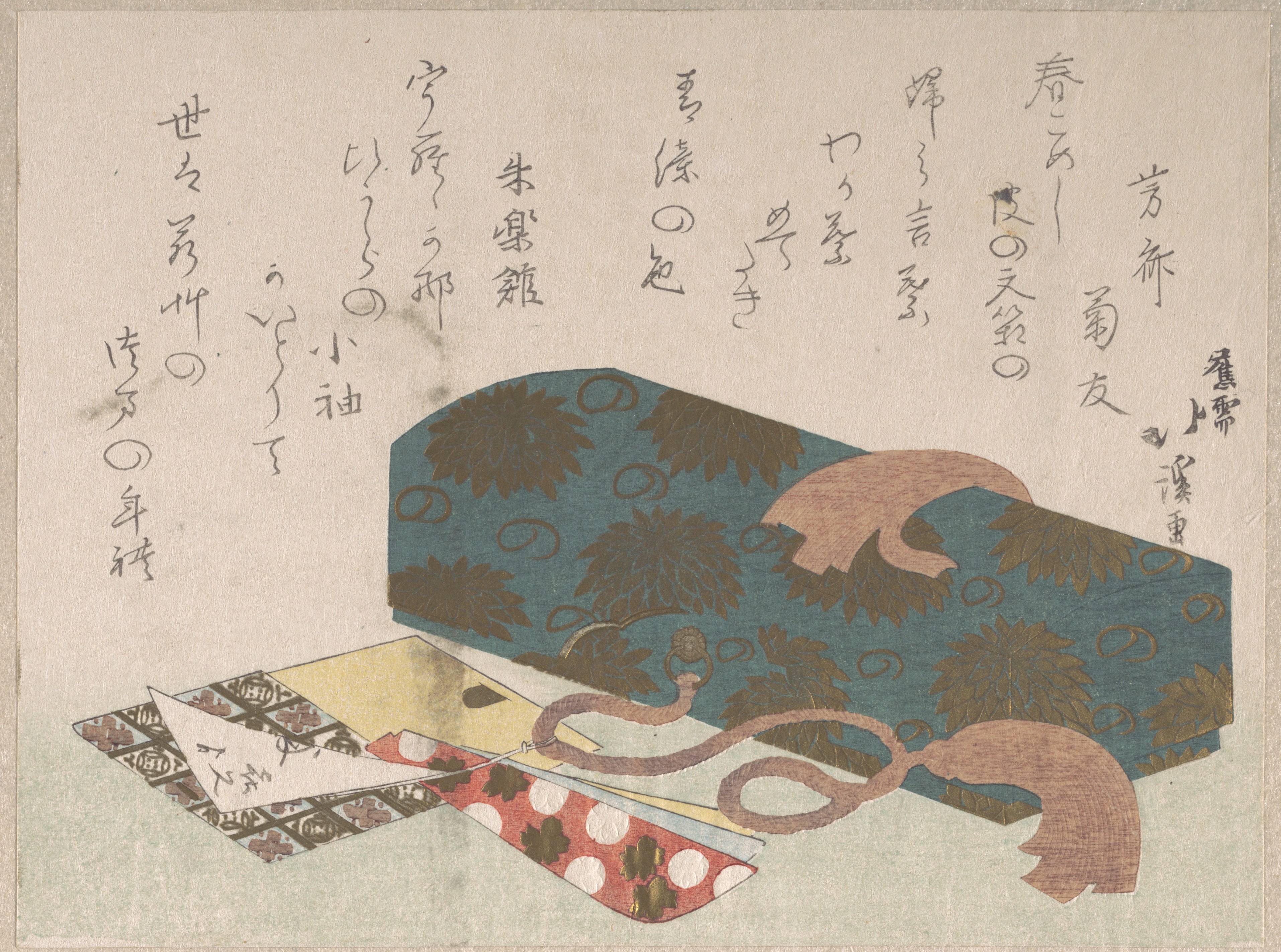
Letter-box and Toothpick Holders
19th century
Part of an album of woodblock prints (surimono); ink and color on paper

Illustration of a Chinese poem, from the series "Picture Book of Chinese Poems (Toshi gafu no uchi)"
c. 1830/44
Color woodblock print; chuban

Kyōka Verse Anthology of Elegant Friends (Kyōka gayū shū) 狂歌雅友集
1826 (Bunsei 9)
Woodblock printed book; ink and color on paper
More Bridges Prints
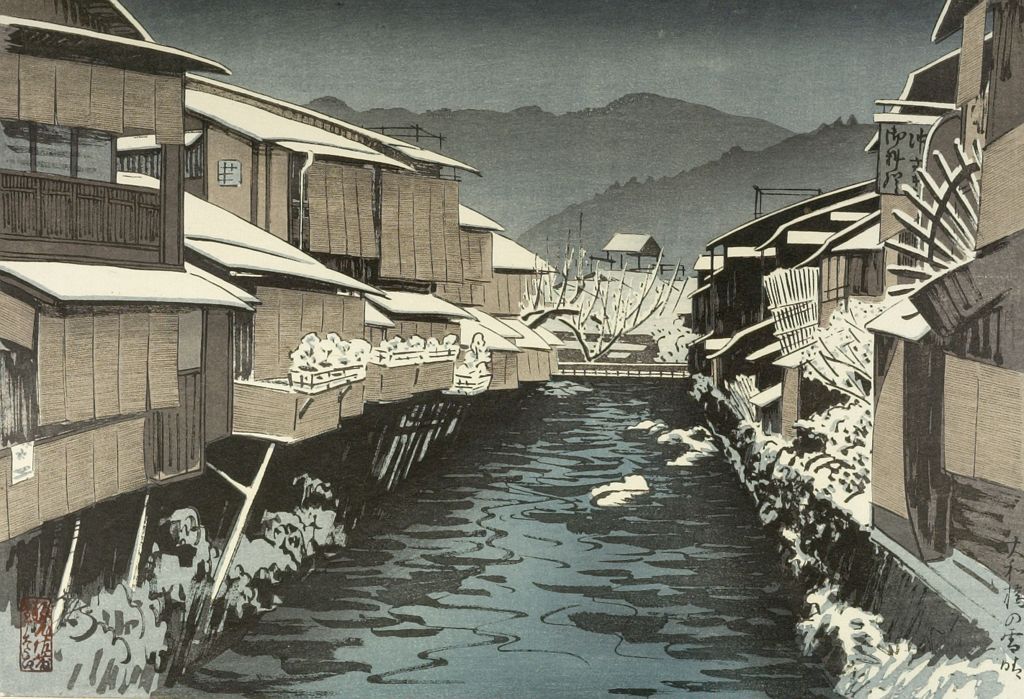
Fair Weather After Snow at Yamato Bridge, Kyoto (Yamato bashi no yukibare), Taishô period, dated 1924
Woodblock print
![Mount Fuji on a Moonlit Night, Kawai Bridge (Tsukiyo no Fuji [Kawaibashi]), from the series "Selection of Views of the Tokaido (Tokaido fukei senshu)" by Kawase Hasui](https://www.artic.edu/iiif/2/d0960668-1e73-339a-b182-fb995a54bff0/full/843,/0/default.jpg)
Mount Fuji on a Moonlit Night, Kawai Bridge (Tsukiyo no Fuji [Kawaibashi]), from the series "Selection of Views of the Tokaido (Tokaido fukei senshu)"
1947
Color woodblock print; oban

Shin Ohashi Bridge (Shin Ohashi), from the series "Twenty View of Tokyo (Tokyu nijukkei)"
1926
Color woodblock print; oban

Sacred Bridge in Nikko (Nikko Shinkyo)
1930
Color woodblock print; oban
Frequently Asked Questions
View of the Monkey Bridge was created by Totoya Hokkei (魚屋北渓) in 1824.
View of the Monkey Bridge depicts bridges.