
Willow Bridge (Yanagibashi), from the series "A Series of Willows (Yanagi bantsuzuki)"
- Date:
- c. 1828
- Medium:
- Color woodblock print; shikishiban, surimono
- Source:
- Art Institute of Chicago
Description
From Totoya Hokkei's 1823 surimono series A Series of Willows (Yanagi bantsuzuki), recorded in the Art Institute of Chicago, this sheet depicts Willow Bridge (Yanagibashi), the famous span over the Kanda River near the entrance to the Sumida that gave its name to a long-established quarter of Edo. The series gathered willow-themed names from the city into a unified kyoka-e cycle, and Yanagibashi — known for its restaurants, geisha houses and proximity to the river — was among the most evocative entries. As a leading pupil of the Hokusai school, Hokkei drew on Katsushika Hokusai's interest in Edo landmarks and townscapes to design surimono that combined topographical specificity with the literary refinements of poetry-club commissions. Surimono printing of the period employed deluxe techniques unavailable in commercial ukiyo-e: thick hosho paper, mica grounds, metallic pigments and embossing, ideal for rendering water, foliage and the lacquered details of the bridge. Kyoka verses inscribed alongside the image would have elaborated the willow theme through wordplay, seasonal reference and personal greeting. As an entry in the Yanagi bantsuzuki cycle, the print exemplifies the way Totoya Hokkei and the Hokusai school used surimono series to anchor Edo's geography and vocabulary within the playful structures of nineteenth-century kyoka-e culture.
More Prints by Totoya Hokkei

Potted Plant (Ueki), from the series "Eighteen Illustrations of the Ladder of Ancient Words (Kogentei juhachiban tsuzuki)"
1831
Color woodblock print; shikishiban, surimono
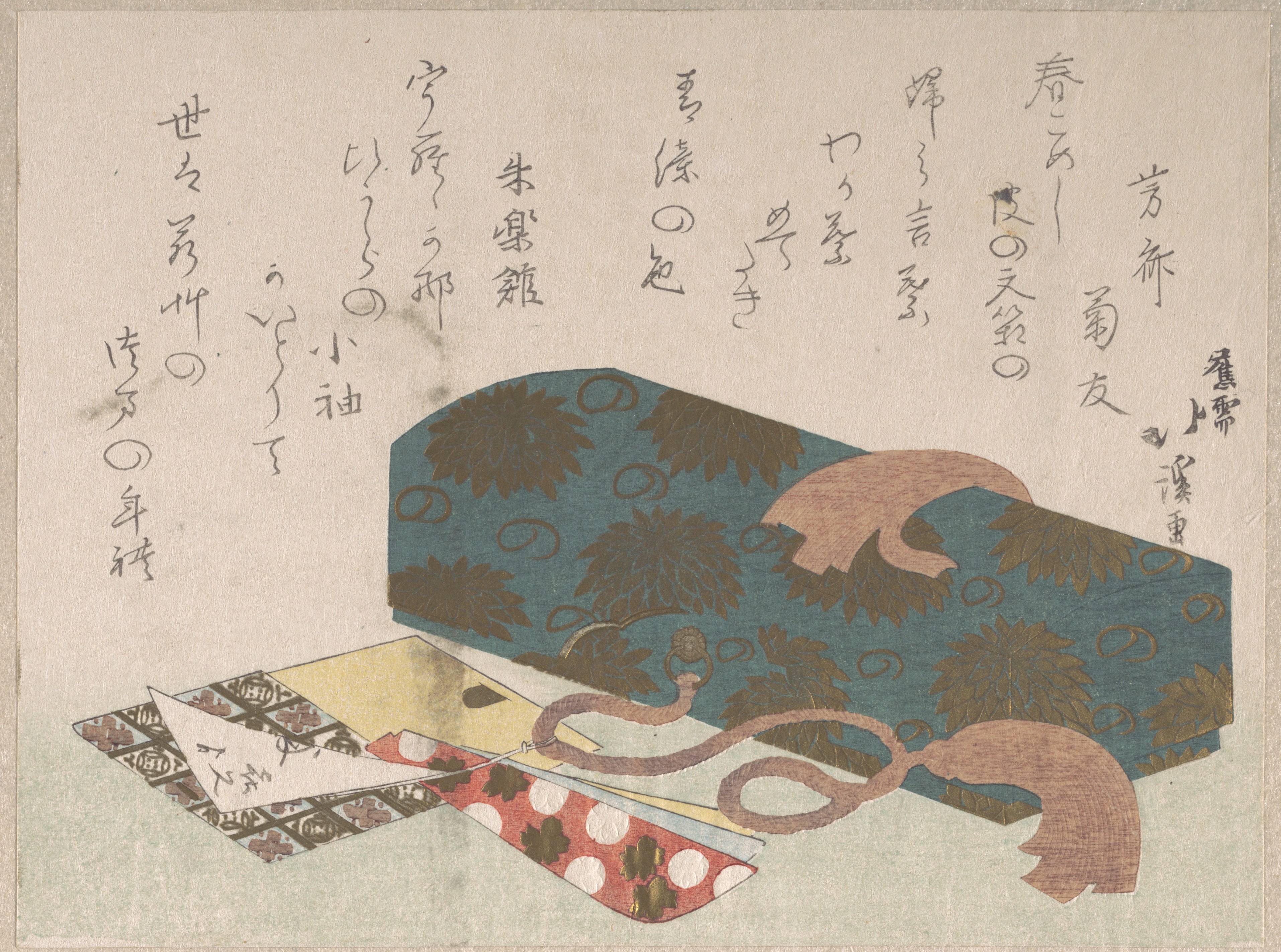
Letter-box and Toothpick Holders
19th century
Part of an album of woodblock prints (surimono); ink and color on paper

Illustration of a Chinese poem, from the series "Picture Book of Chinese Poems (Toshi gafu no uchi)"
c. 1830/44
Color woodblock print; chuban

Kyōka Verse Anthology of Elegant Friends (Kyōka gayū shū) 狂歌雅友集
1826 (Bunsei 9)
Woodblock printed book; ink and color on paper
More Bridges Prints
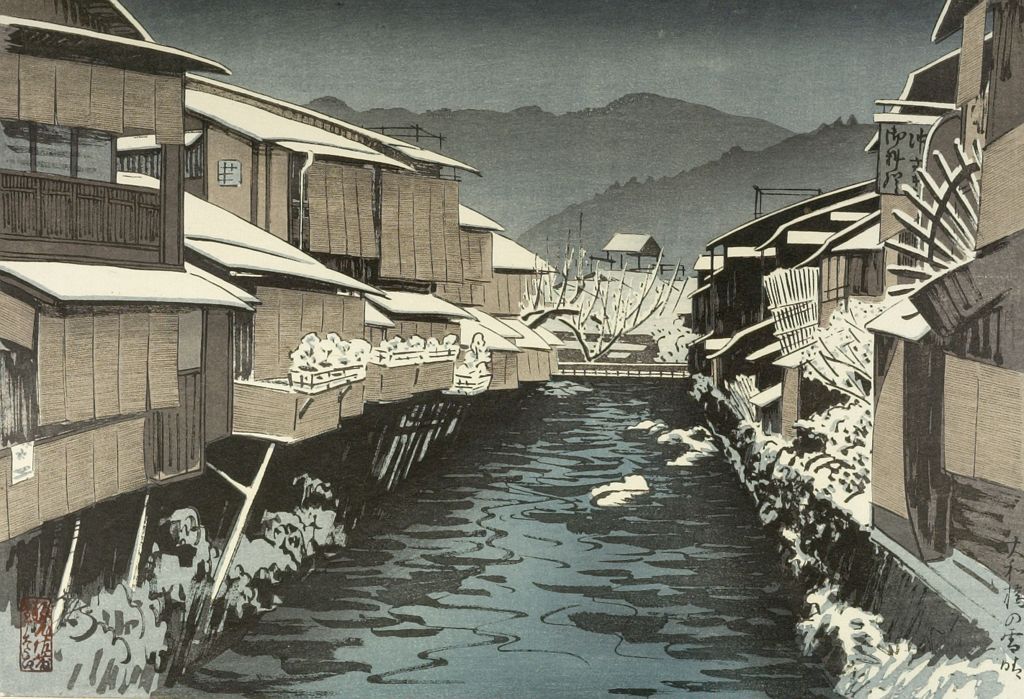
Fair Weather After Snow at Yamato Bridge, Kyoto (Yamato bashi no yukibare), Taishô period, dated 1924
Woodblock print
![Mount Fuji on a Moonlit Night, Kawai Bridge (Tsukiyo no Fuji [Kawaibashi]), from the series "Selection of Views of the Tokaido (Tokaido fukei senshu)" by Kawase Hasui](https://www.artic.edu/iiif/2/d0960668-1e73-339a-b182-fb995a54bff0/full/843,/0/default.jpg)
Mount Fuji on a Moonlit Night, Kawai Bridge (Tsukiyo no Fuji [Kawaibashi]), from the series "Selection of Views of the Tokaido (Tokaido fukei senshu)"
1947
Color woodblock print; oban

Shin Ohashi Bridge (Shin Ohashi), from the series "Twenty View of Tokyo (Tokyu nijukkei)"
1926
Color woodblock print; oban

Sacred Bridge in Nikko (Nikko Shinkyo)
1930
Color woodblock print; oban
Frequently Asked Questions
Willow Bridge (Yanagibashi), from the series "A Series of Willows (Yanagi bantsuzuki)" was created by Totoya Hokkei (魚屋北渓) in c. 1828.
Willow Bridge (Yanagibashi), from the series "A Series of Willows (Yanagi bantsuzuki)" depicts bridges.