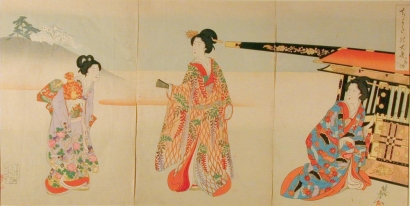
Palanquin
- Medium:
- Woodblock print
- Format:
- Oban
- Source:
- Art Gallery of Greater Victoria
Description
A print depicting a palanquin (kago) — the enclosed carrying chair that was the primary mode of formal transportation for women of rank in Edo-period Japan — either in transit with its occupant or as a standalone subject of historical documentation. The palanquin was a charged social object: access to its privacy and the service of bearers signified specific ranks and social positions, and the elaborate protocols governing its use encoded the hierarchical structure of Edo-period society. Chikanobu's historical imagery often uses such period-specific objects to anchor scenes in their correct historical context.
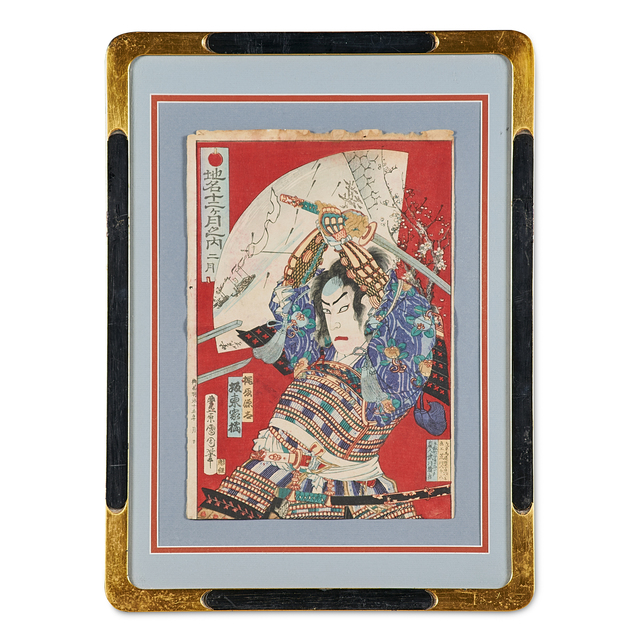
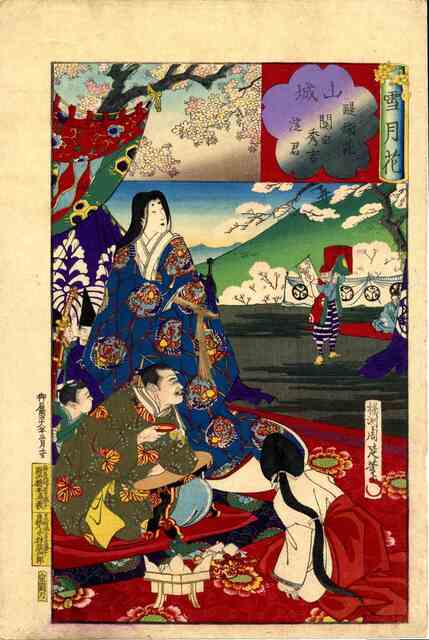
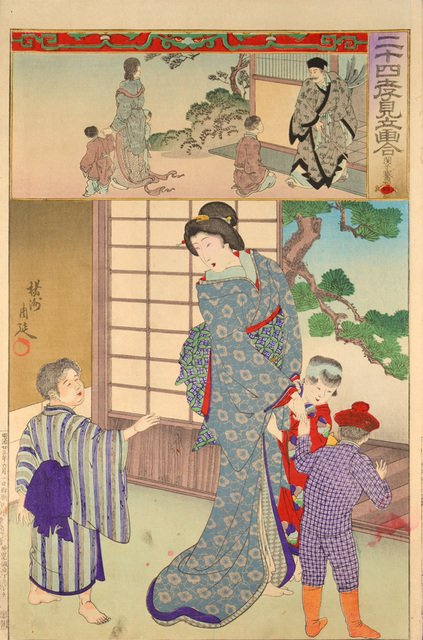
More Prints by Toyohara Chikanobu
More Figures Prints
Featured in Collections
Curated cross-cuts that include this print.
Frequently Asked Questions
Palanquin was created by Toyohara Chikanobu (豊原周延).
Palanquin depicts figures, bijin-ga, and travel scenes.