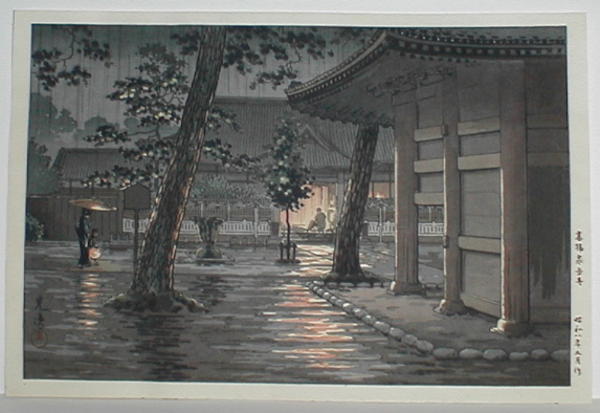
Sengakuji Temple at Takanawa in Tokyo
- Medium:
- Woodblock print
- Format:
- Oban
- Publisher:
- Doi Sadaichi
- Edition:
- Published by Watanabe Shozaburo
- Source:
- Japanese Art Open Database
Description
Sengakuji Temple at Takanawa in southern Tokyo is one of Japan's most historically potent sites — the burial place of the forty-seven ronin, the masterless samurai who avenged their lord's death in 1703 in a story that became the most celebrated tale of loyalty and sacrifice in Japanese culture. Koitsu renders the modest but charged temple grounds with atmospheric depth, the grave markers of the ronin located just beyond the frame but present in every viewer's awareness. The print participates in the great Chushingura story.
More Prints by Tsuchiya Koitsu
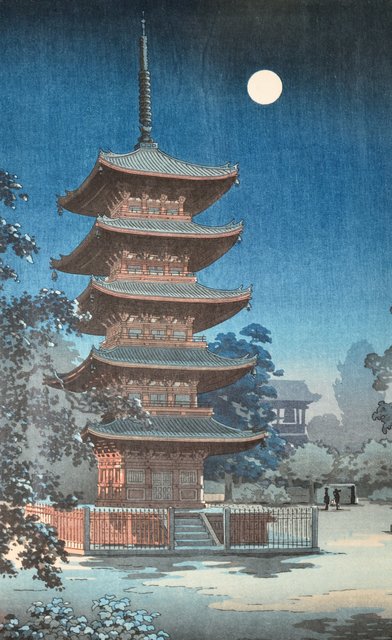


More Temples & Shrines Prints
Fushimi Inari Temple
伏見稲荷
Woodblock print

The Compound of the Tenman Shrine at Kameido in the Snow (Kameido Tenmangu keidai no yuki), from the series "Famous Places in the Eastern Capital (Toto meisho)"
c. 1832/38
Color woodblock print; oban
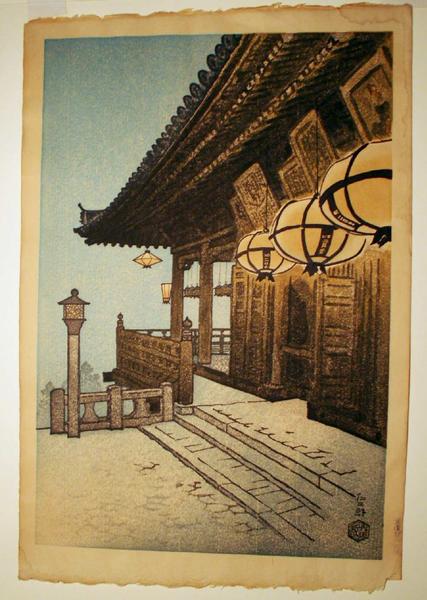
Temple with lanterns
Woodblock print

A Section of the Byodo Temple at Uji (Uji Byodoin no ichibu), from the series "Souvenirs of Travel, Second Series (Tabi miyage dai nishu)"
Uji Byodoin no ichibu
1921
Color woodblock print; oban
Featured in Collections
Curated cross-cuts that include this print.
Frequently Asked Questions
Sengakuji Temple at Takanawa in Tokyo was created by Tsuchiya Koitsu (土屋光逸).
Sengakuji Temple at Takanawa in Tokyo uses Bokashi, on woodblock print.
Sengakuji Temple at Takanawa in Tokyo was published by Doi Sadaichi.
Sengakuji Temple at Takanawa in Tokyo depicts temples & shrines, set at Tokyo.