
A Snowy Gorge on the Fuji River
- Date:
- c. 1842
- Medium:
- Color woodblock print; vertical oban diptych
- Source:
- Art Institute of Chicago
Description
A Snowy Gorge on the Fuji River, dated 1837, is a woodblock print by Utagawa Hiroshige that pairs the Edo ukiyo-e tradition of famous-place imagery with the artist's lifelong interest in winter landscape. The Fuji River runs out of the central highlands toward Suruga Bay, cutting deep gorges through the foothills west of Mount Fuji, and the river became a recurring subject in Hiroshige's mature work as he sought views that combined dramatic topography with the calm of moving water. In this design, the gorge is shown under snow: steep, dark-toned cliffs rise on either side of a pale river, while pines and bare branches catch white deposits along the slopes. Boats or rafts, often used to navigate the swift current downstream, occupy the central waterway, and tiny figures emphasize the scale of the cliffs and the cold. As elsewhere in his snow work, Hiroshige relies on the unprinted paper to read as fresh snow, surrounding it with carefully measured tones of grey, blue, and brown so that the white field carries the picture's main expressive load. This impression is held in the collection of the Art Institute of Chicago. As a landscape print, A Snowy Gorge on the Fuji River is a confident statement of Hiroshige's mid-1830s style: a place real enough to be recognized by contemporaries familiar with the route, but transformed by season and atmosphere into the kind of contemplative image that Edo ukiyo-e at its best could provide.
More Prints by Utagawa Hiroshige


More Landscapes Prints

Lake Kugushi in Wakasa Province (Wakasa Kugushiko), from the series Souvenirs of Travel I (Tabi miyage dai isshu)"
Wakasa Kugushiko
1920
Color woodblock print; oban
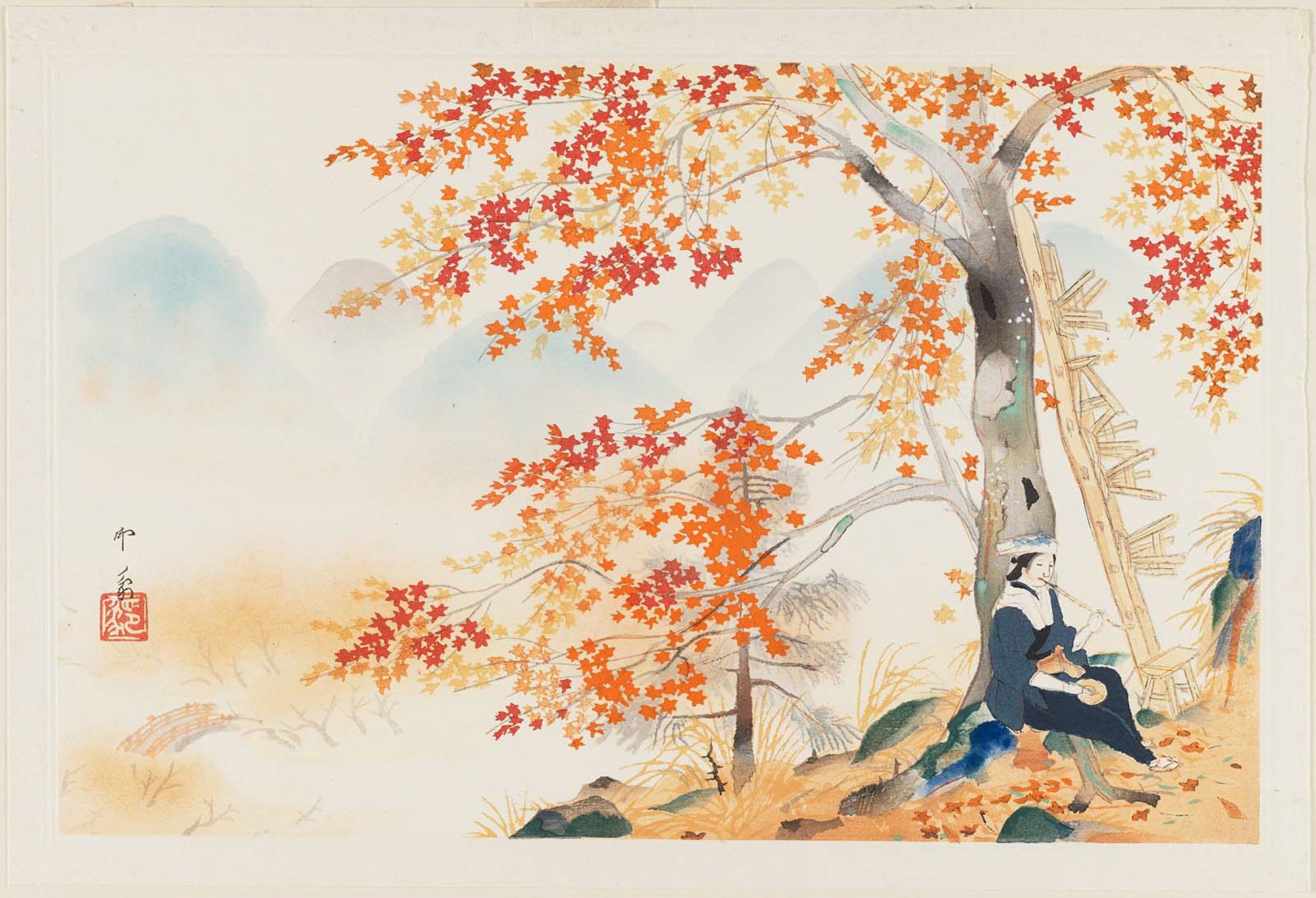
Autumn Maple Leaves at Takao, from the album Eight Views of Kyoto (Kyôto hakkei)
Woodblock print

The Beach at Kaiganji in Sanuki Province (Sanuki Kaiganji no hama), from the series "Collection of Views of Japan II, Kansai Edition (Nihon fukei shu II Kansai hen)"
1934
Color woodblock print; oban

Tea Kettle, section of a sheet from the series "Mirror of Stone Rubbings of Views of the Provinces" (Kohon meihitsu ishizuri kagami)
n.d.
Woodblock print; ishizuri-e, section of harimaze sheet
Featured in Collections
Curated cross-cuts that include this print.
Frequently Asked Questions
A Snowy Gorge on the Fuji River was created by Utagawa Hiroshige (歌川広重) in c. 1842.
A Snowy Gorge on the Fuji River depicts landscapes, mount fuji, and winter.