
Asahina Saburo
- Date:
- 1840
- Medium:
- Color woodblock print; yokonaga surimono
- Source:
- Art Institute of Chicago
Description
Asahina Saburo, dated around 1840 and held in the Art Institute of Chicago, is one of Utagawa Hiroshige's figure subjects drawn from the warrior legends that pervaded Edo popular culture. Asahina Saburo Yoshihide was a Kamakura-period samurai famous in legend for his prodigious strength, his service to the Hojo regents, and his frequent appearances in noh, kabuki, and otogi-zoshi tales. Although Hiroshige is best known for the Edo ukiyo-e landscape print, designs such as this one demonstrate that he also worked within the established repertoire of warrior imagery (musha-e) that had long been a staple of the Utagawa school. The print presents Asahina as a single standing or seated figure rendered at a scale that emphasizes his physical bulk and the elaborate patterning of his armor or robe. Hiroshige uses bold contour lines for the figure and divides the surface into broad zones of color to convey the weight of textiles and lacings, while small details—facial features, hair, weapon furniture—are cut with precision. The vertical format and clear background isolate the warrior so that he reads as an emblematic, almost iconic, presence rather than as part of a narrative scene. For Edo audiences, such warrior prints functioned as visual companions to the storytelling traditions encountered through theater and oral performance, and they kept figures like Asahina Saburo in active circulation as cultural references long after the Kamakura period itself had receded into legend.
More Prints by Utagawa Hiroshige


More Landscapes Prints

Lake Kugushi in Wakasa Province (Wakasa Kugushiko), from the series Souvenirs of Travel I (Tabi miyage dai isshu)"
Wakasa Kugushiko
1920
Color woodblock print; oban
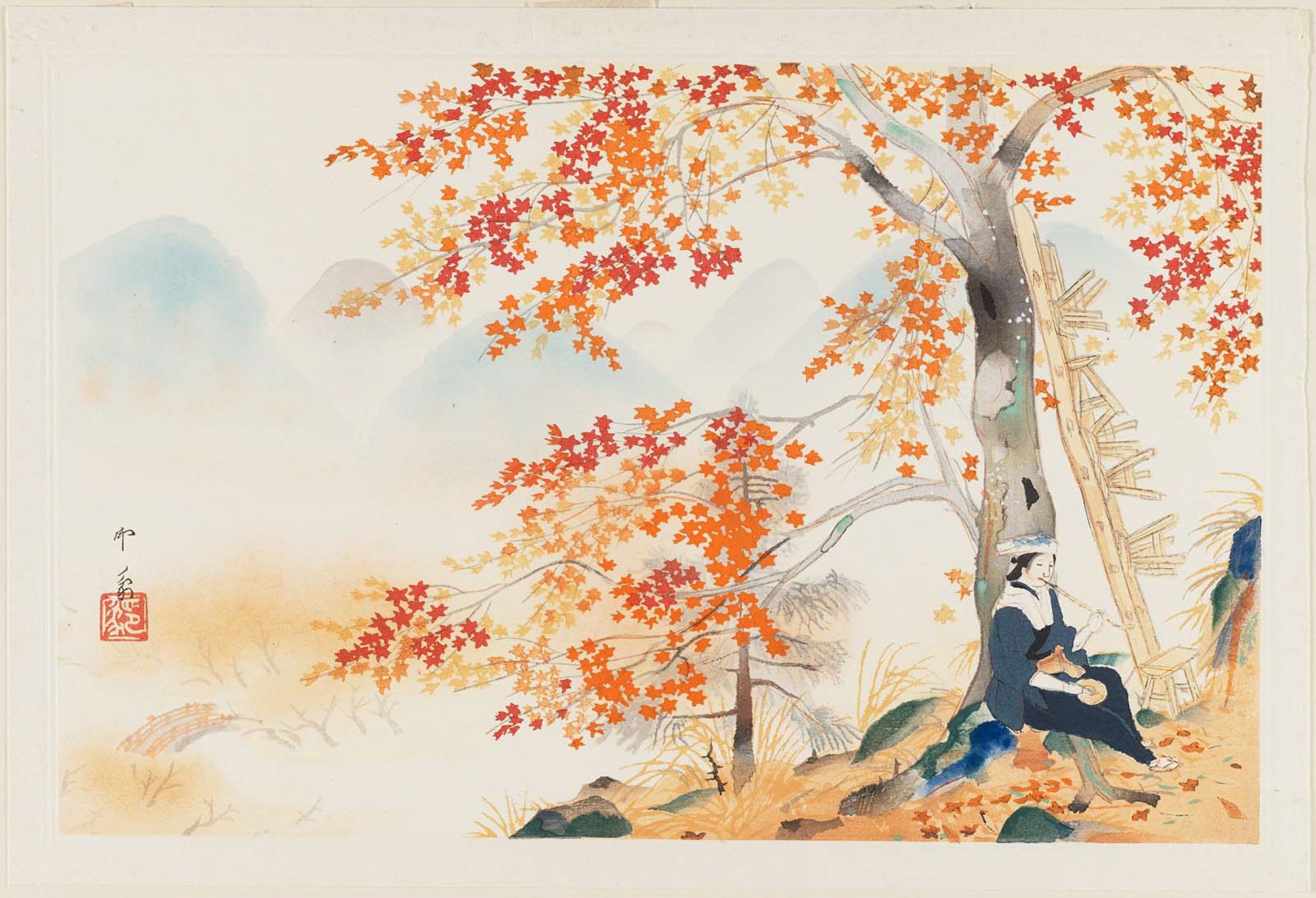
Autumn Maple Leaves at Takao, from the album Eight Views of Kyoto (Kyôto hakkei)
Woodblock print

The Beach at Kaiganji in Sanuki Province (Sanuki Kaiganji no hama), from the series "Collection of Views of Japan II, Kansai Edition (Nihon fukei shu II Kansai hen)"
1934
Color woodblock print; oban

Tea Kettle, section of a sheet from the series "Mirror of Stone Rubbings of Views of the Provinces" (Kohon meihitsu ishizuri kagami)
n.d.
Woodblock print; ishizuri-e, section of harimaze sheet
Featured in Collections
Curated cross-cuts that include this print.
Frequently Asked Questions
Asahina Saburo was created by Utagawa Hiroshige (歌川広重) in 1840.
Asahina Saburo depicts landscapes.