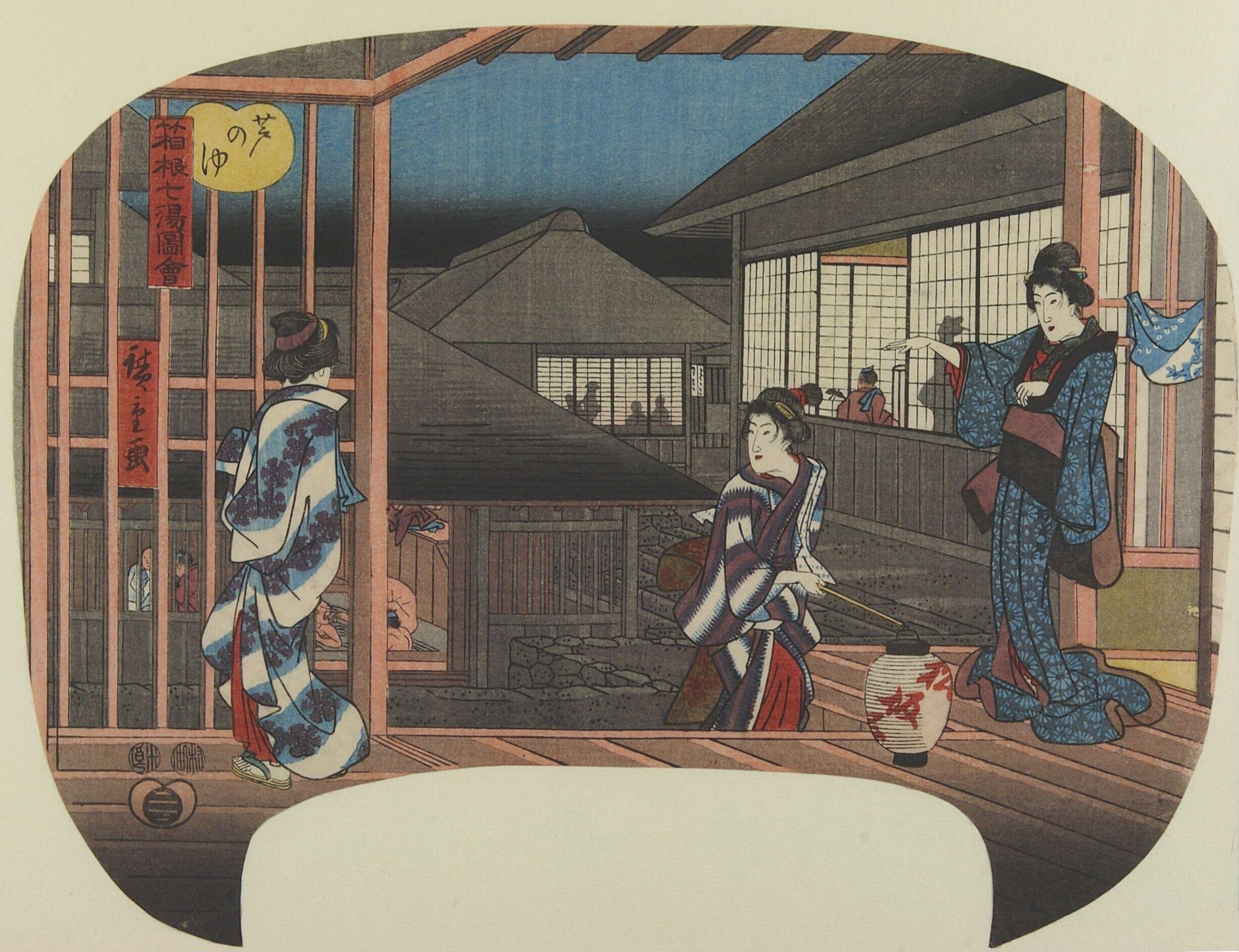
Ashinoyu
- Date:
- 1847-1850
- Medium:
- Source:
- Victoria and Albert Museum
Description
Ashinoyu is a landscape print by Utagawa Hiroshige, dated 1847 and preserved in the collection of the Victoria and Albert Museum, London. Ashinoyu is a hot-spring village in the Hakone highlands of present-day Kanagawa Prefecture, sitting on the slopes between Lake Ashi and the higher reaches of the Hakone caldera. Long valued as one of the seven hot springs of Hakone, it was accessible to travellers on side routes off the Tokaido and became a destination for those seeking the medicinal waters and cool mountain air of the volcanic plateau. Hiroshige's print captures the village's elevated setting, with peaked rooflines of the inns set against the rising flanks of the surrounding hills and the steam-prone slopes for which the area is known. As an example of the Edo ukiyo-e landscape print, Ashinoyu represents Hiroshige's mature interest in the lesser-known waypoints around Hakone, complementing his many Tokaido designs that passed through the main Hakone station on Lake Ashi. By the late 1840s Hiroshige had begun to produce series of print sets on specific localities, and Hakone with its constellation of hot-spring villages provided rich subject matter. The Victoria and Albert Museum's holdings of Hiroshige include strong representation of his later landscape work, and Ashinoyu fits among prints that document the regional travel culture of late Edo Japan. The image rewards attention to its quiet composition, its modest scale, and the way Hiroshige uses architectural punctuation to convey the relationship of village to mountain. For collectors of nineteenth-century Japanese woodblock prints, it offers a glimpse of how Hiroshige approached the Hakone hot springs as a coherent subject in their own right.
More Prints by Utagawa Hiroshige


More Landscapes Prints

Lake Kugushi in Wakasa Province (Wakasa Kugushiko), from the series Souvenirs of Travel I (Tabi miyage dai isshu)"
Wakasa Kugushiko
1920
Color woodblock print; oban
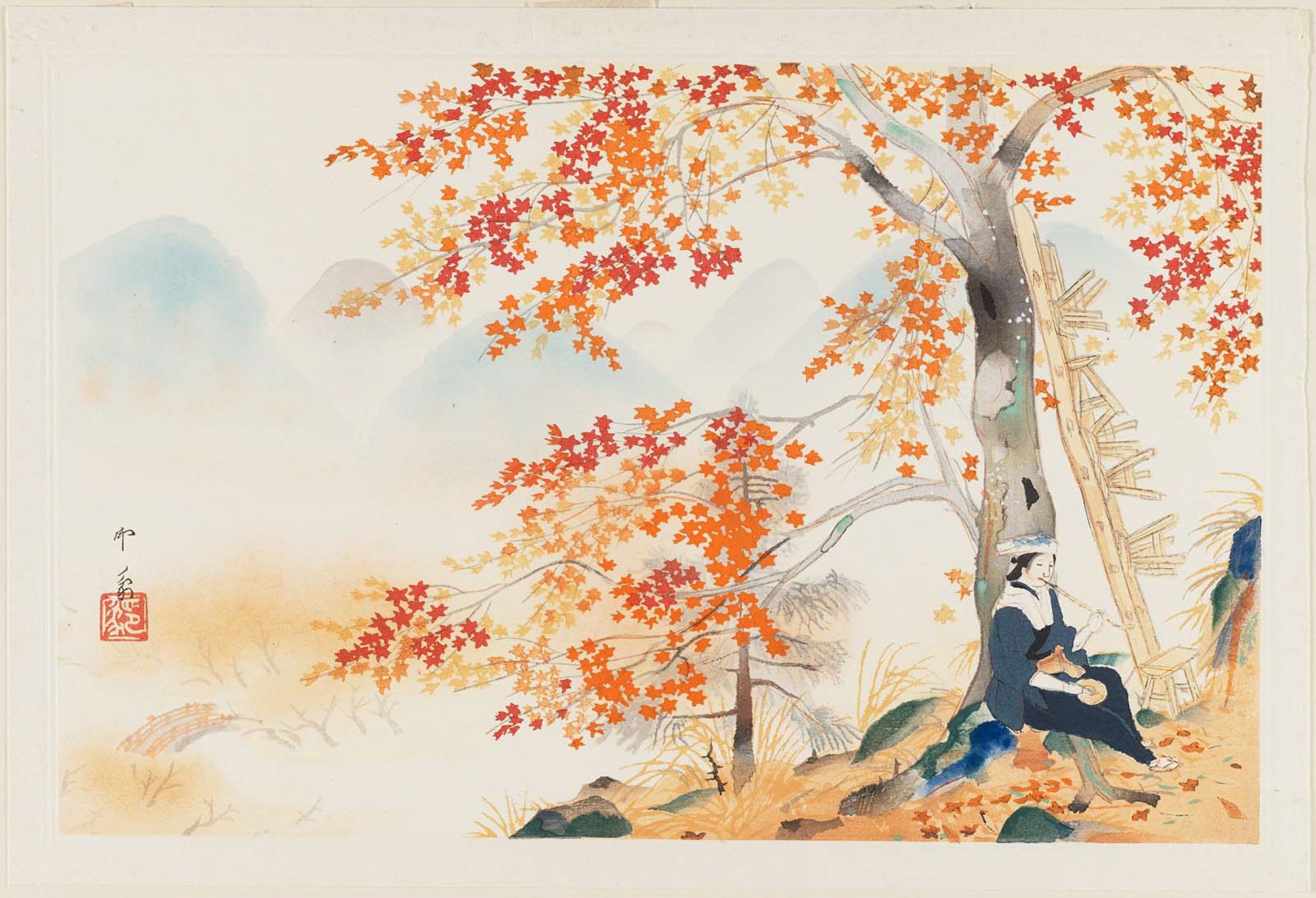
Autumn Maple Leaves at Takao, from the album Eight Views of Kyoto (Kyôto hakkei)
Woodblock print

The Beach at Kaiganji in Sanuki Province (Sanuki Kaiganji no hama), from the series "Collection of Views of Japan II, Kansai Edition (Nihon fukei shu II Kansai hen)"
1934
Color woodblock print; oban

Tea Kettle, section of a sheet from the series "Mirror of Stone Rubbings of Views of the Provinces" (Kohon meihitsu ishizuri kagami)
n.d.
Woodblock print; ishizuri-e, section of harimaze sheet
Featured in Collections
Curated cross-cuts that include this print.
Frequently Asked Questions
Ashinoyu was created by Utagawa Hiroshige (歌川広重) in 1847-1850.
Ashinoyu depicts landscapes.