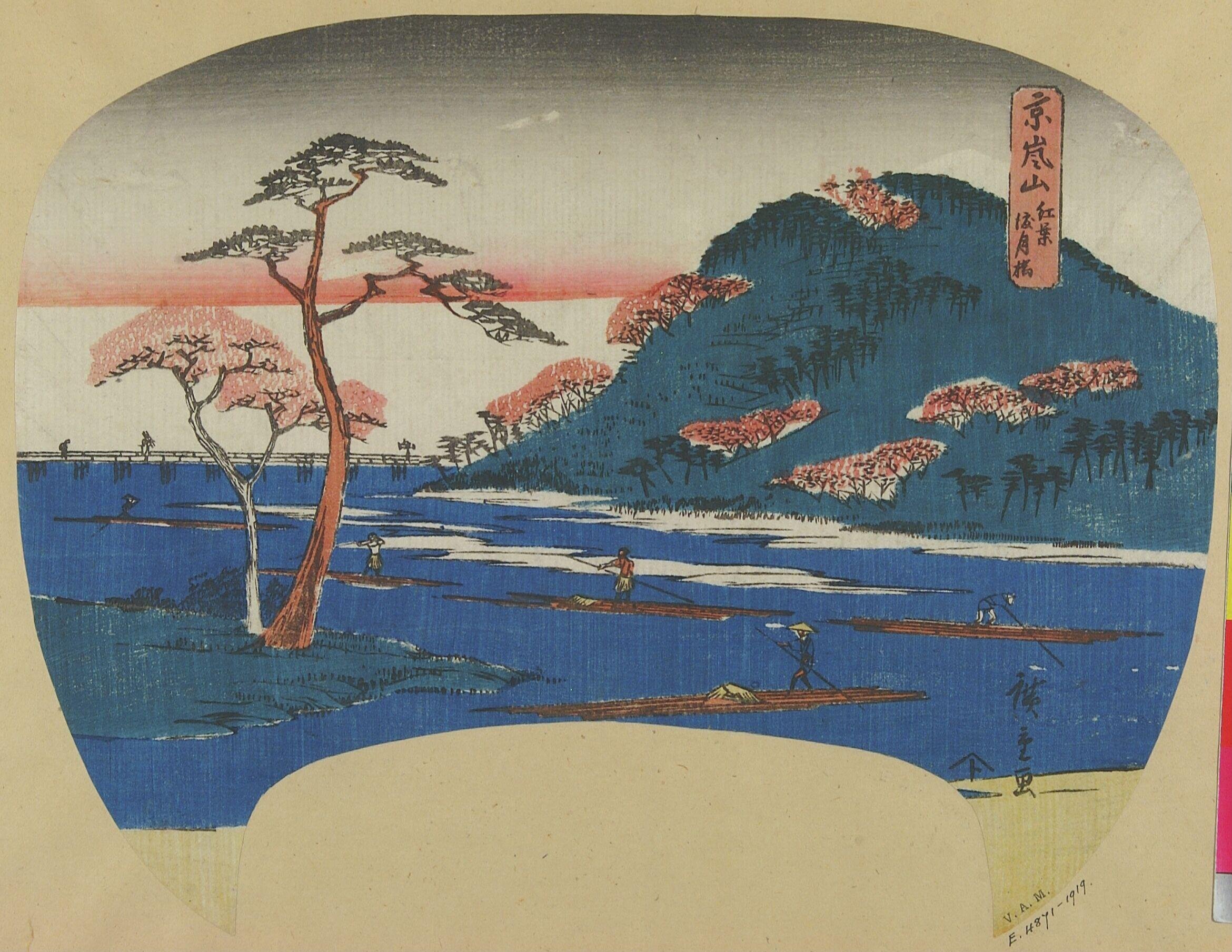
Autumn Leaves and the Togetsu Bridge at Arashiyama in Kyoto
- Date:
- ca. 1840-1842
- Medium:
- Source:
- Victoria and Albert Museum
Description
A fan-shaped print in a rounded, curved-top format shows a wide river with a deep-blue hillside rising on the right, its slopes dotted with clusters of red-orange autumn foliage among dark green pine trees. In the foreground, gnarled pine and a bare-branched maple with pink-red leaves frame the scene from the left bank, while several figures in conical hats pole flat wooden rafts across the water; a low wooden bridge with tiny walking figures spans the river in the middle distance beneath a sky that shifts from grey at the top to a pink-red band near the horizon. Vertical text cartouches at the upper right and the artist's signature at the lower right accompany the composition; the work is Utagawa Hiroshige's 1840 print "Autumn Leaves and the Togetsu Bridge at Arashiyama in Kyoto."
More Prints by Utagawa Hiroshige

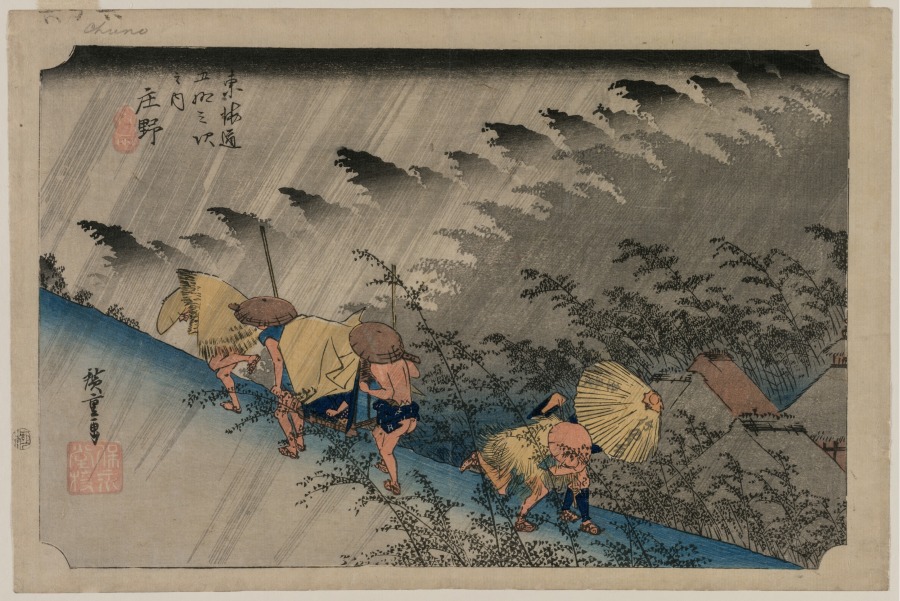
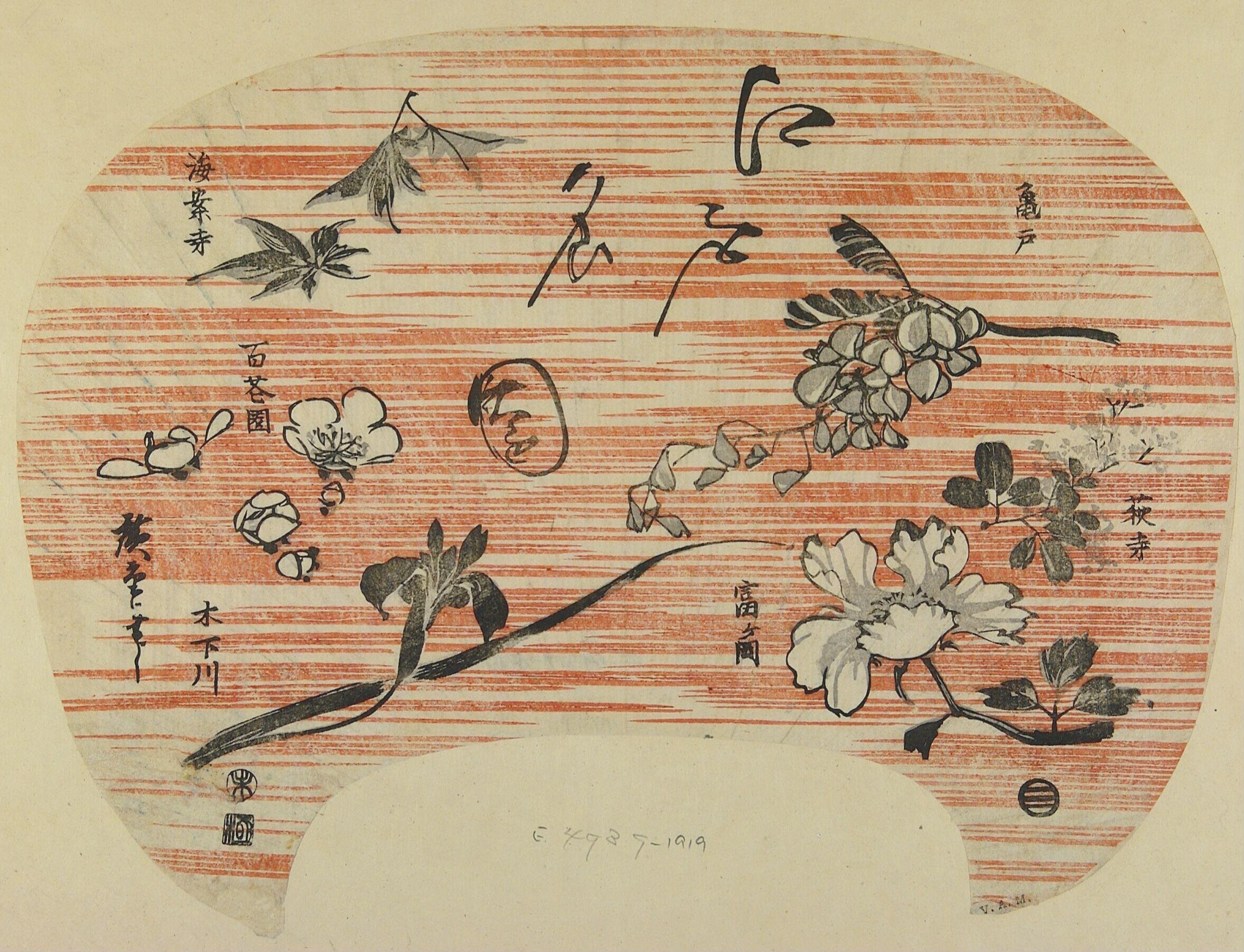

More Landscapes Prints

Lake Kugushi in Wakasa Province (Wakasa Kugushiko), from the series Souvenirs of Travel I (Tabi miyage dai isshu)"
Wakasa Kugushiko
1920
Color woodblock print; oban
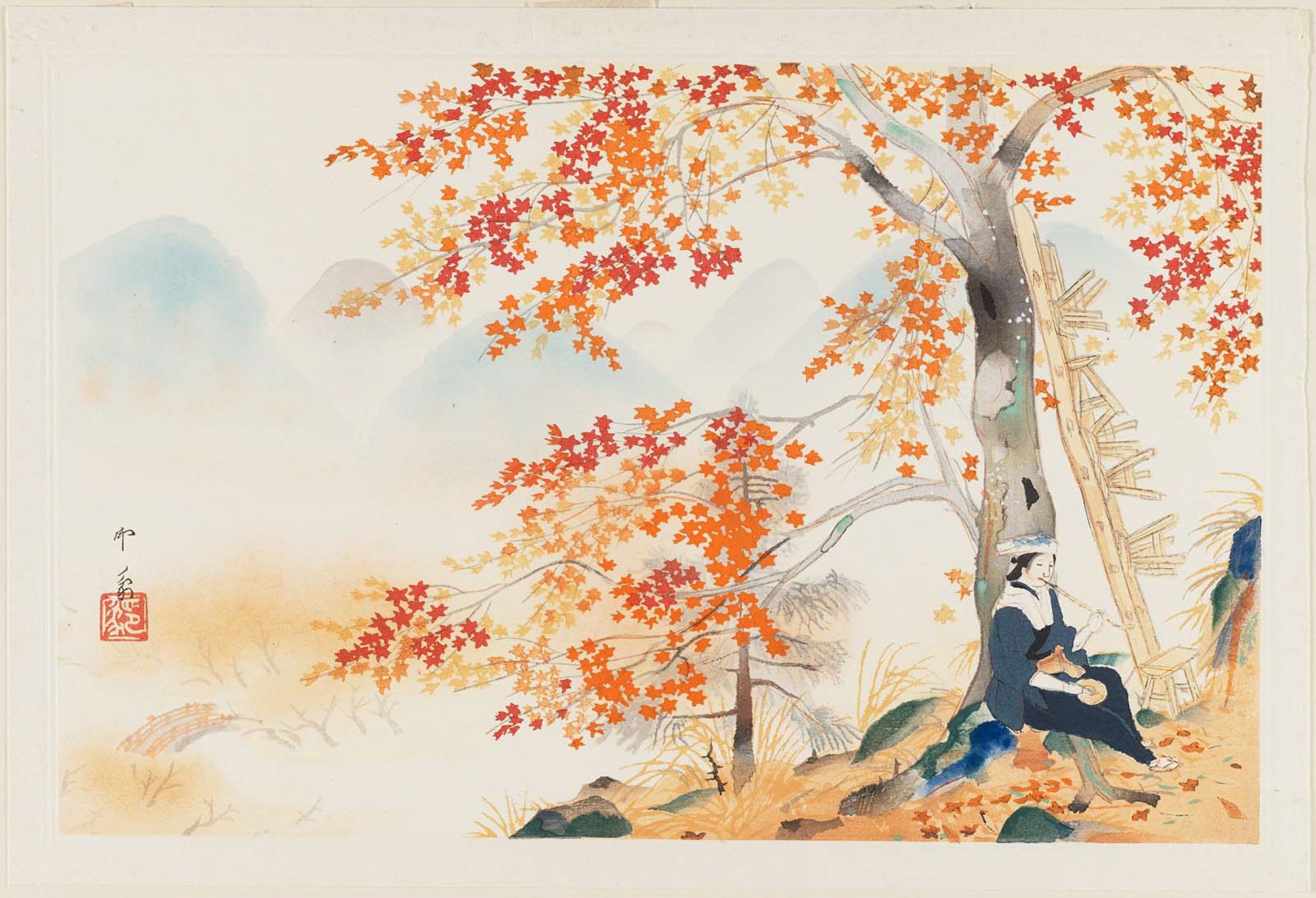
Autumn Maple Leaves at Takao, from the album Eight Views of Kyoto (Kyôto hakkei)
Woodblock print

The Beach at Kaiganji in Sanuki Province (Sanuki Kaiganji no hama), from the series "Collection of Views of Japan II, Kansai Edition (Nihon fukei shu II Kansai hen)"
1934
Color woodblock print; oban

Tea Kettle, section of a sheet from the series "Mirror of Stone Rubbings of Views of the Provinces" (Kohon meihitsu ishizuri kagami)
n.d.
Woodblock print; ishizuri-e, section of harimaze sheet
Featured in Collections
Curated cross-cuts that include this print.
Frequently Asked Questions
Autumn Leaves and the Togetsu Bridge at Arashiyama in Kyoto was created by Utagawa Hiroshige (歌川広重) in ca. 1840-1842.
Autumn Leaves and the Togetsu Bridge at Arashiyama in Kyoto depicts landscapes, bridges, and autumn foliage.