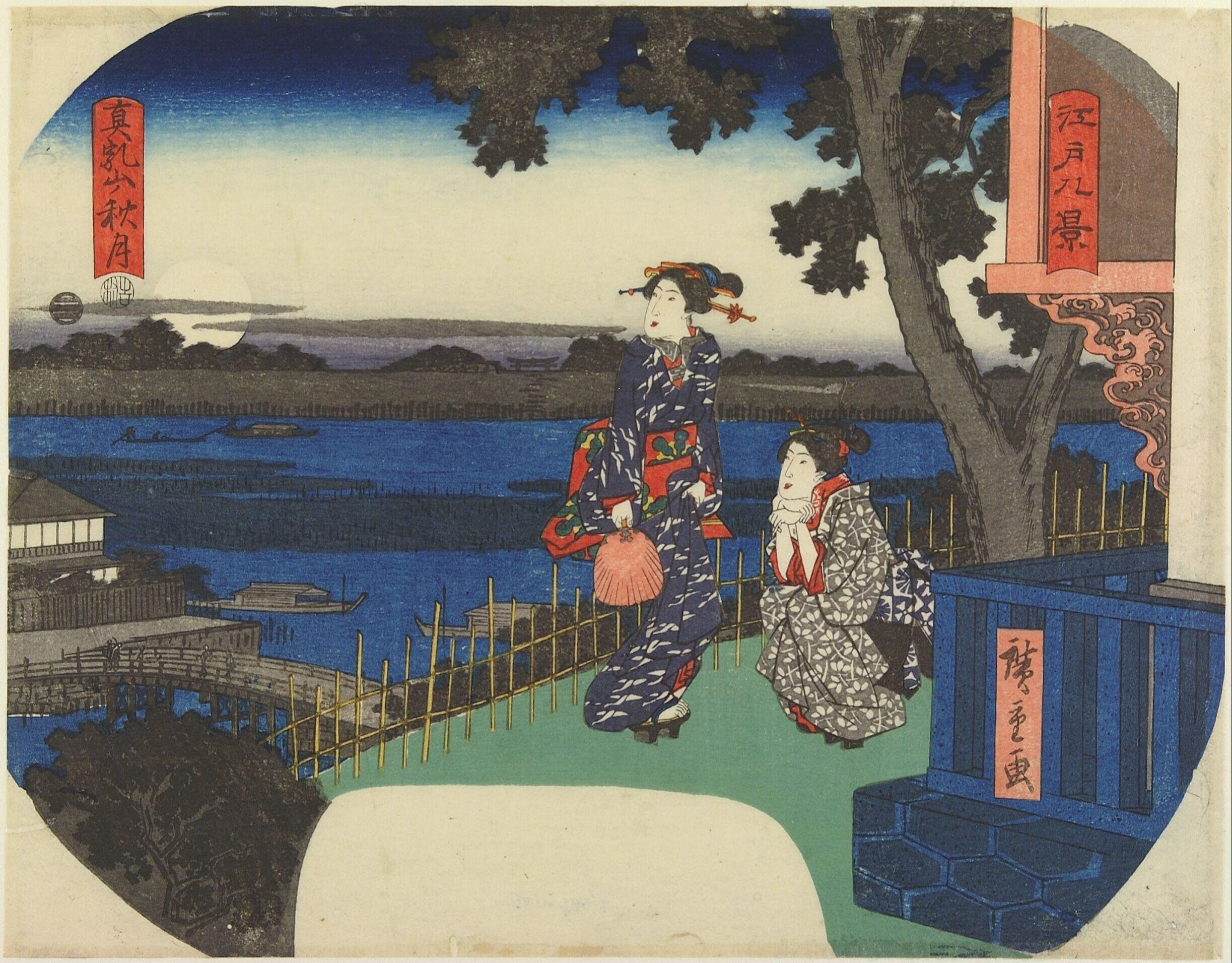
Autumn Moon at Matsuchiyama
- Date:
- 1843-1847
- Medium:
- Source:
- Victoria and Albert Museum
Description
Autumn Moon at Matsuchiyama, dated 1843, is a quintessential meisho-e by Utagawa Hiroshige that connects two of his enduring loves: the topography of Edo and the poetic tradition of moon viewing. Matsuchiyama, a small wooded hill on the western bank of the Sumida River near the gate to the Yoshiwara pleasure district, was a famous spot for lunar autumn outings, especially during the harvest moon of the eighth lunar month. Hiroshige raises the moon high in the upper register and silhouettes the dark cone of the hill, the temple roof of Matsuchiyama Shoden, and the masts of riverboats against a pale sky tinted with the gradated bokashi printing typical of the Edo ukiyo-e tradition. The lower part of the sheet opens onto the river, where a single boat, perhaps a pleasure barge of geisha and clients bound upriver, glides through the moonlit water. The print's lyrical economy, with vast expanses of carefully judged negative space, is characteristic of the landscape print mode that Hiroshige refined throughout the 1840s. The work is preserved in the Victoria and Albert Museum's collection of Japanese prints, where it represents the artist's continuing engagement with Sumida-side moon themes that would culminate in his late views of Edo.
More Prints by Utagawa Hiroshige


More Landscapes Prints

Lake Kugushi in Wakasa Province (Wakasa Kugushiko), from the series Souvenirs of Travel I (Tabi miyage dai isshu)"
Wakasa Kugushiko
1920
Color woodblock print; oban
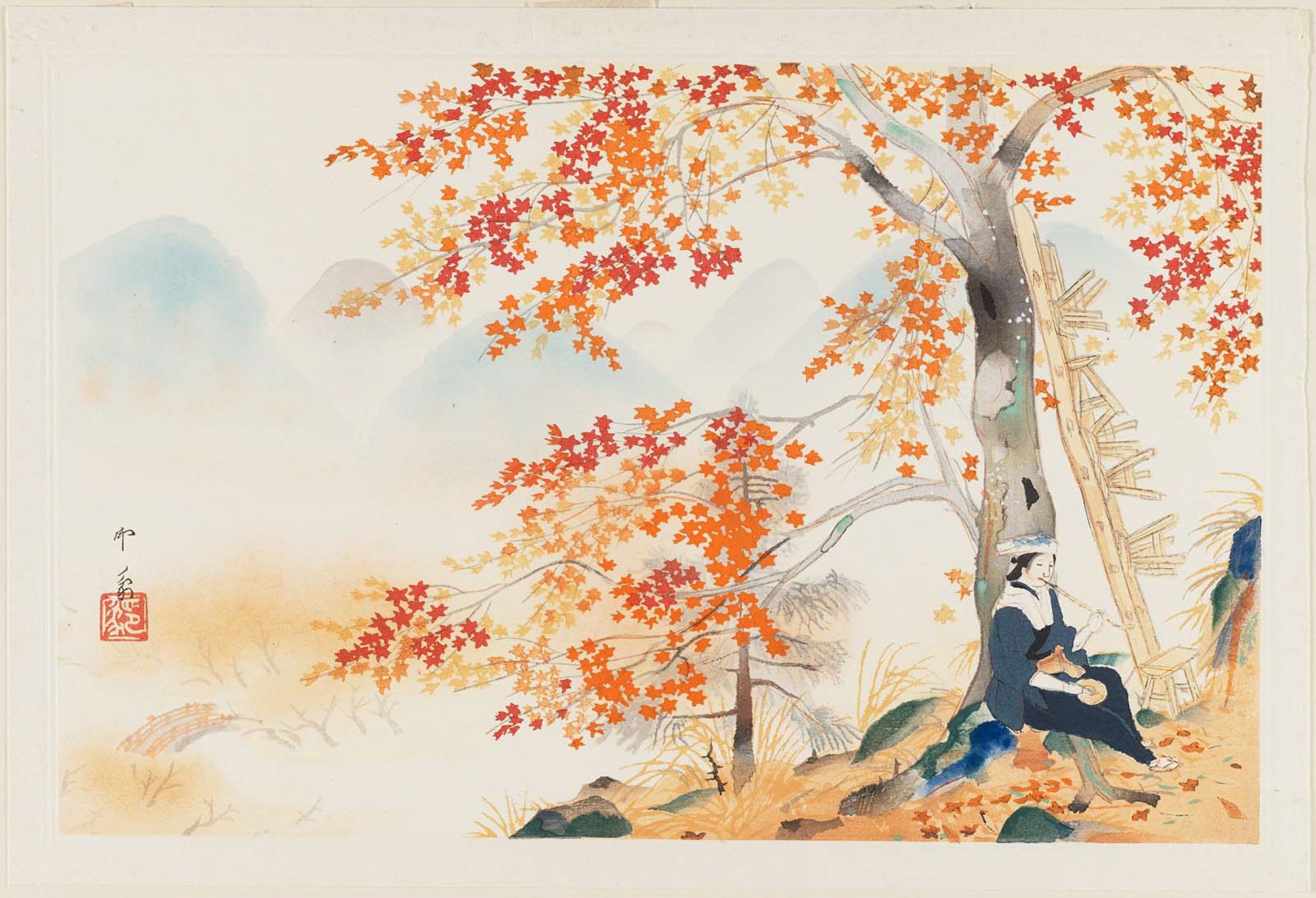
Autumn Maple Leaves at Takao, from the album Eight Views of Kyoto (Kyôto hakkei)
Woodblock print

The Beach at Kaiganji in Sanuki Province (Sanuki Kaiganji no hama), from the series "Collection of Views of Japan II, Kansai Edition (Nihon fukei shu II Kansai hen)"
1934
Color woodblock print; oban

Tea Kettle, section of a sheet from the series "Mirror of Stone Rubbings of Views of the Provinces" (Kohon meihitsu ishizuri kagami)
n.d.
Woodblock print; ishizuri-e, section of harimaze sheet
Featured in Collections
Curated cross-cuts that include this print.
Frequently Asked Questions
Autumn Moon at Matsuchiyama was created by Utagawa Hiroshige (歌川広重) in 1843-1847.
Autumn Moon at Matsuchiyama depicts landscapes, moonlight, and autumn foliage.