
Ayase River and Kanegafuchi (Ayasegawa Kanegafuchi), from the series "One Hundred Famous Views of Edo (Meisho Edo hyakkei)"
- Series:
- One Hundred Famous Views of Edo (print 63 of 118)
- Medium:
- Color woodblock print
- Dimensions:
- 36.6 × 24.3 cm
- Source:
- Art Institute of Chicago
Description
The Ayase River flows through the northeastern fringes of Edo's outskirts in the Katsushika district. Kanegafuchi—literally 'gold valley'—designates a bend in the Ayase River known for its scenic quality and historical associations with textile production. In Hiroshige's Meisho Edo Hyakkei composition, the vertical format presents the river bending through low agricultural land, with willows or other riverine vegetation drooping toward the water surface. The broad floodplain setting, distant from the dense urban core, has a spacious, unhurried quality that distinguishes these peripheral landscape compositions from the more architecturally compressed views elsewhere in the series. Hiroshige uses bokashi gradations to render the pale sky reflected in the river's surface, while small figures punting boats or working along the bank provide scale. This northeastern quadrant of the Meisho Edo Hyakkei series documents a landscape now entirely absorbed into modern Tokyo's urban fabric, giving these prints documentary value beyond their pictorial interest.
More Prints by Utagawa Hiroshige


More Landscapes Prints

Lake Kugushi in Wakasa Province (Wakasa Kugushiko), from the series Souvenirs of Travel I (Tabi miyage dai isshu)"
Wakasa Kugushiko
1920
Color woodblock print; oban
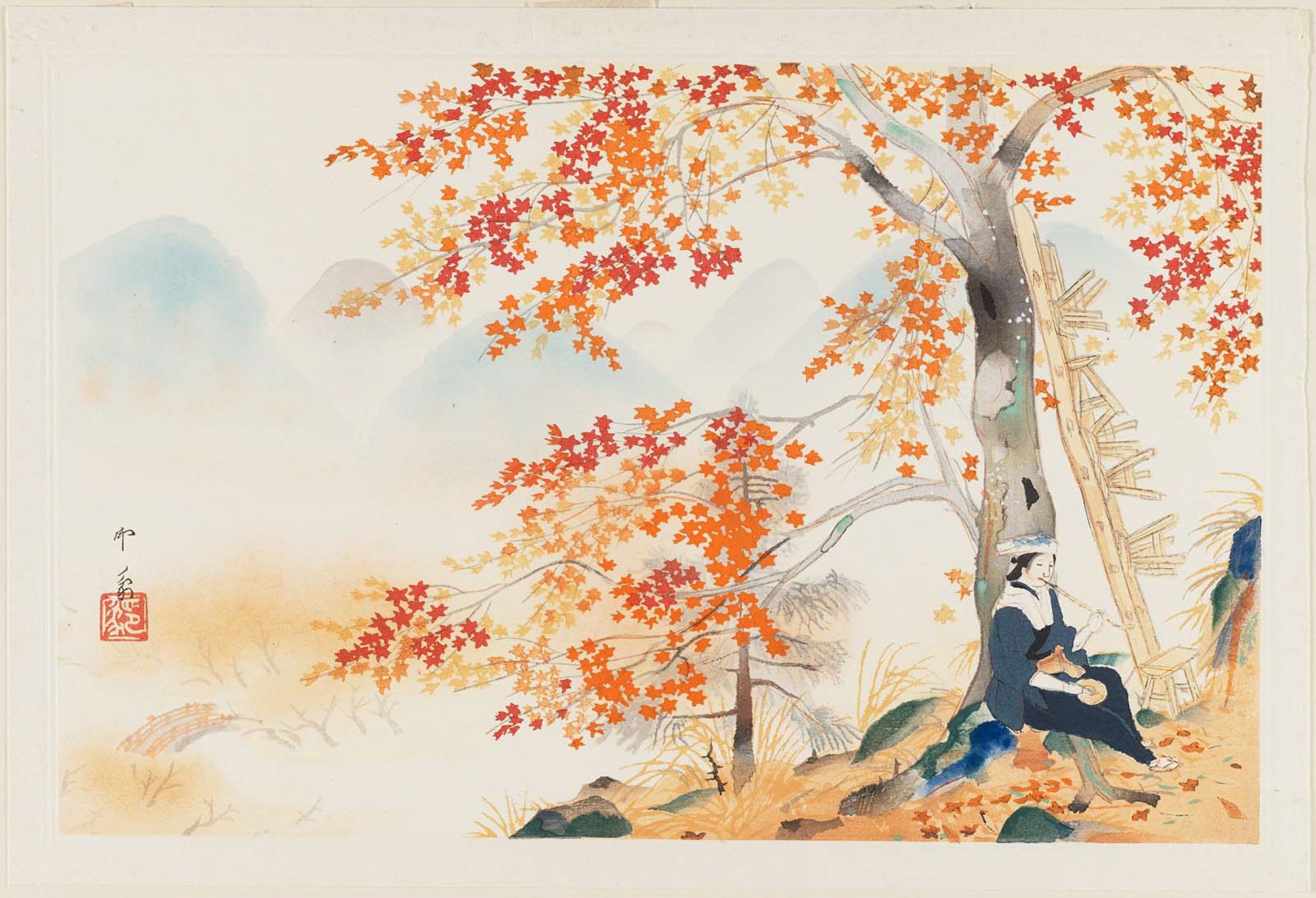
Autumn Maple Leaves at Takao, from the album Eight Views of Kyoto (Kyôto hakkei)
Woodblock print

The Beach at Kaiganji in Sanuki Province (Sanuki Kaiganji no hama), from the series "Collection of Views of Japan II, Kansai Edition (Nihon fukei shu II Kansai hen)"
1934
Color woodblock print; oban

Tea Kettle, section of a sheet from the series "Mirror of Stone Rubbings of Views of the Provinces" (Kohon meihitsu ishizuri kagami)
n.d.
Woodblock print; ishizuri-e, section of harimaze sheet
Featured in Collections
Curated cross-cuts that include this print.
Frequently Asked Questions
Ayase River and Kanegafuchi (Ayasegawa Kanegafuchi), from the series "One Hundred Famous Views of Edo (Meisho Edo hyakkei)" was created by Utagawa Hiroshige (歌川広重).
Yes — Ayase River and Kanegafuchi (Ayasegawa Kanegafuchi), from the series "One Hundred Famous Views of Edo (Meisho Edo hyakkei)" is part of the One Hundred Famous Views of Edo series (print 63 of 118) by Utagawa Hiroshige.
Ayase River and Kanegafuchi (Ayasegawa Kanegafuchi), from the series "One Hundred Famous Views of Edo (Meisho Edo hyakkei)" depicts landscapes, edo & tokyo, and famous places (meisho-e).
Ayase River and Kanegafuchi (Ayasegawa Kanegafuchi), from the series "One Hundred Famous Views of Edo (Meisho Edo hyakkei)" measures 36.6 × 24.3 cm.