
Bikuni Bridge in Snow (Bikunibashi setchu), from the series "One Hundred Famous Views of Edo (Meisho Edo hyakkei)"
- Series:
- One Hundred Famous Views of Edo (print 114 of 118)
- Medium:
- Color woodblock print
- Dimensions:
- 36 × 24 cm
- Source:
- Art Institute of Chicago
Description
Bikuni Bridge (Bikunibashi) spanned a canal in the Kyobashi district of central Edo, in an area of mixed commercial and residential use near the main road south of Nihonbashi. In this snow composition from the Meisho Edo Hyakkei series, Hiroshige renders the bridge and its surroundings under a heavy snowfall, with canal and embankment reduced to simplified forms beneath white accumulation. The composition is notable for its restrained palette: warm amber tones of lanterns or torches contrast sharply with the grey-blue clouded sky and blue-white snow surface. Hiroshige frequently employs such warm-cool contrasts in his snow scenes to create atmospheric depth. Small figures crossing the bridge or sheltering beneath merchant eaves in the background provide narrative incident without disturbing the scene's quietude. The vertical oban format stacks layers of snow-blanketed architecture from the foreground bridge upward through the middle distance, using the pale washi ground as the primary vehicle for representing accumulated snow—a technique standard to nishiki-e snow compositions.
More Prints by Utagawa Hiroshige


More Landscapes Prints

Lake Kugushi in Wakasa Province (Wakasa Kugushiko), from the series Souvenirs of Travel I (Tabi miyage dai isshu)"
Wakasa Kugushiko
1920
Color woodblock print; oban
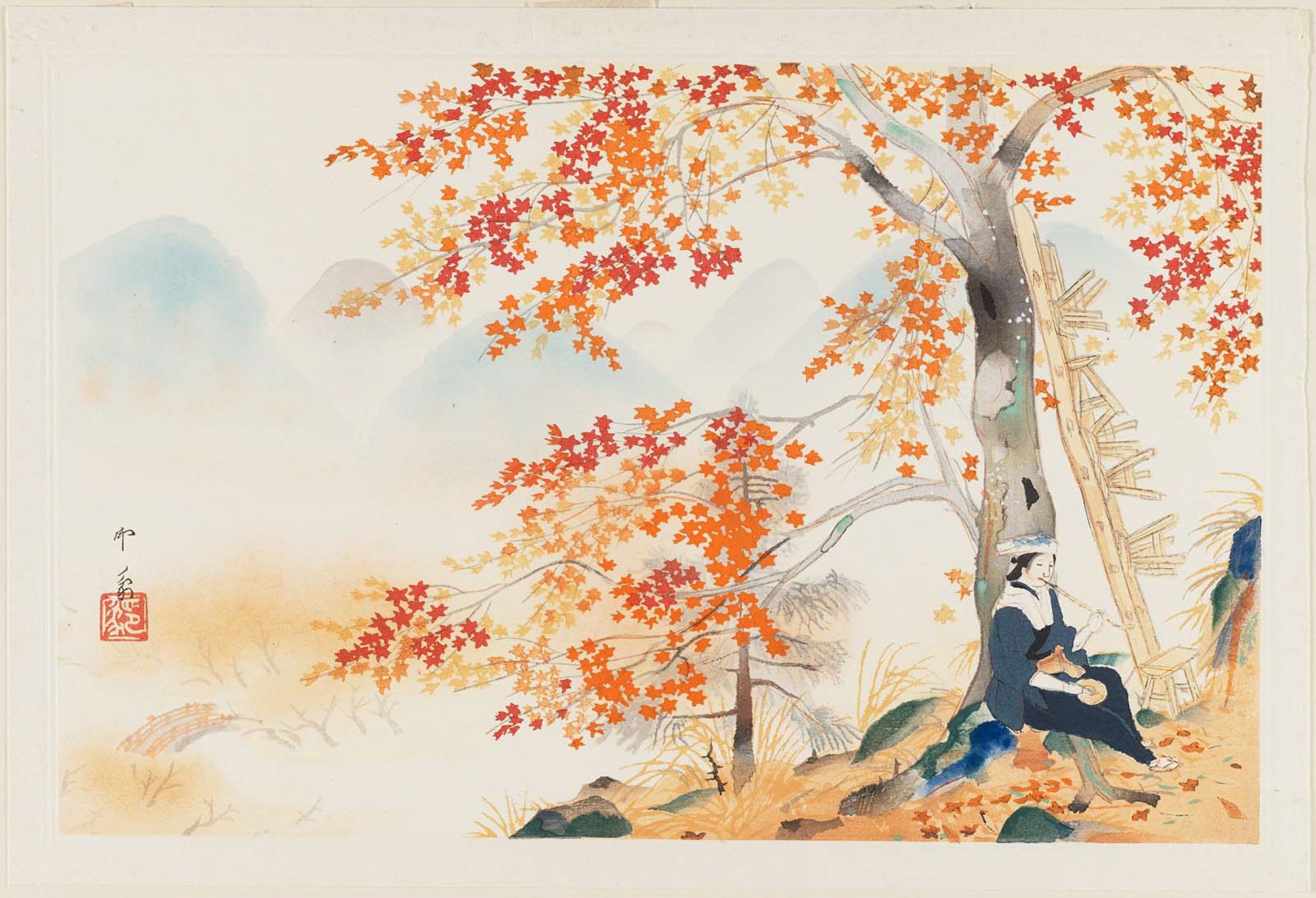
Autumn Maple Leaves at Takao, from the album Eight Views of Kyoto (Kyôto hakkei)
Woodblock print

The Beach at Kaiganji in Sanuki Province (Sanuki Kaiganji no hama), from the series "Collection of Views of Japan II, Kansai Edition (Nihon fukei shu II Kansai hen)"
1934
Color woodblock print; oban

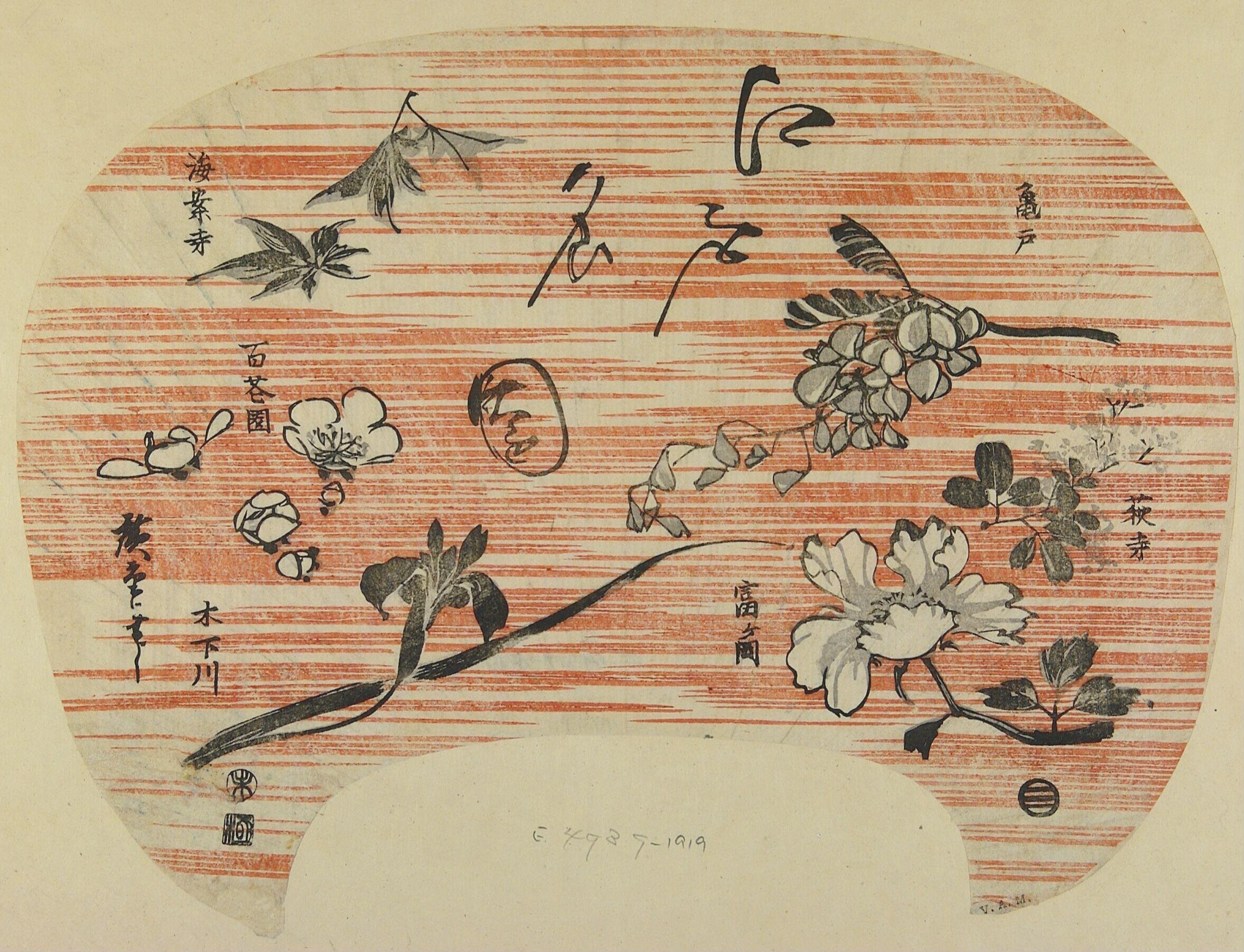
Tea Kettle, section of a sheet from the series "Mirror of Stone Rubbings of Views of the Provinces" (Kohon meihitsu ishizuri kagami)
n.d.
Woodblock print; ishizuri-e, section of harimaze sheet
Featured in Collections
Curated cross-cuts that include this print.
Frequently Asked Questions
Bikuni Bridge in Snow (Bikunibashi setchu), from the series "One Hundred Famous Views of Edo (Meisho Edo hyakkei)" was created by Utagawa Hiroshige (歌川広重).
Yes — Bikuni Bridge in Snow (Bikunibashi setchu), from the series "One Hundred Famous Views of Edo (Meisho Edo hyakkei)" is part of the One Hundred Famous Views of Edo series (print 114 of 118) by Utagawa Hiroshige.
Bikuni Bridge in Snow (Bikunibashi setchu), from the series "One Hundred Famous Views of Edo (Meisho Edo hyakkei)" depicts landscapes, edo & tokyo, and snow scenes.
Bikuni Bridge in Snow (Bikunibashi setchu), from the series "One Hundred Famous Views of Edo (Meisho Edo hyakkei)" measures 36 × 24 cm.